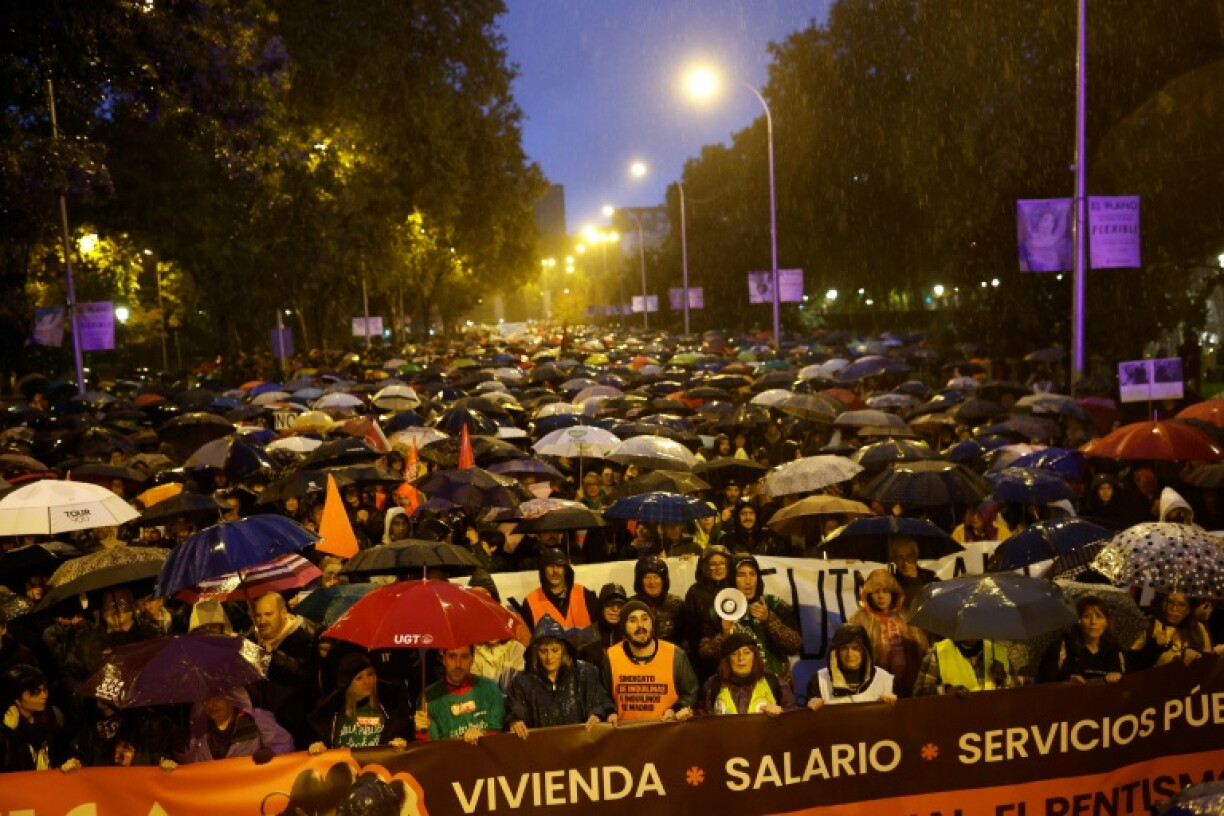
The Spanish parliament on Thursday passed measures restricting evictions and aiming to make housing more affordable, after a general strike and weeks of protests over the issue which catalysed a snap election.
But MPs rejected the automatic renewal of tenant contracts, a key demand of housing activists. The right-wing opposition, which leads most polls before the November 29 vote, has vowed to repeal the measures.
Unaffordable housing has been a running sore for years in Spain but the eviction of 87-year-old Madrid pensioner Maricarmen Abascal from her lifelong home in September, and her subsequent death, sparked national uproar.
Large demonstrations swept the country and protest camps sprang up for weeks in several cities, the largest in Madrid's emblematic Puerta del Sol square.
Aiming to placate the widespread anger, Socialist Prime Minister Pedro Sanchez's government rushed to present two decrees that included greater protection for tenants against evictions and the automatic renewal of tenant contracts.
But his minority government failed to pass them in parliament, prompting Sanchez to call a general election that had been scheduled for 2027.
On Wednesday, hundreds of thousands of Spaniards hit the streets in a general strike over affordable housing, wages and public services that the main unions called after the decrees were rejected.
Sanchez introduced another two decrees that were almost identical to the rejected ones, which were examined on Thursday in a smaller parliamentary council that gave the government a better chance of passing the laws.
The measures that succeeded included some key demands by activists following the eviction of Abascal, who was forced out of her home after the real estate company that owned it drastically hiked the rent.
They restrict the eviction of vulnerable tenants without alternative accommodation until the end of 2030 and curb the acquisition of homes by so-called vulture funds, a much-maligned target of the protests that buy properties at low prices in pursuit of higher returns.
Parliament's Standing Council, made up of 69 members including MPs and the speaker, reflects the size of the groups in the 350-seat chamber which had repeatedly thwarted Sanchez's initiatives.
The stance of pro-business Catalan separatists Junts, whose seven MPs voted down both of the original decrees, was no longer decisive as the party only has one representative in the council.
The main conservative opposition Popular Party, which tops most polls, says the measures will negatively affect the housing market, proposing a building spree as the solution to the crisis.
rbj/imm/ds/phz


