
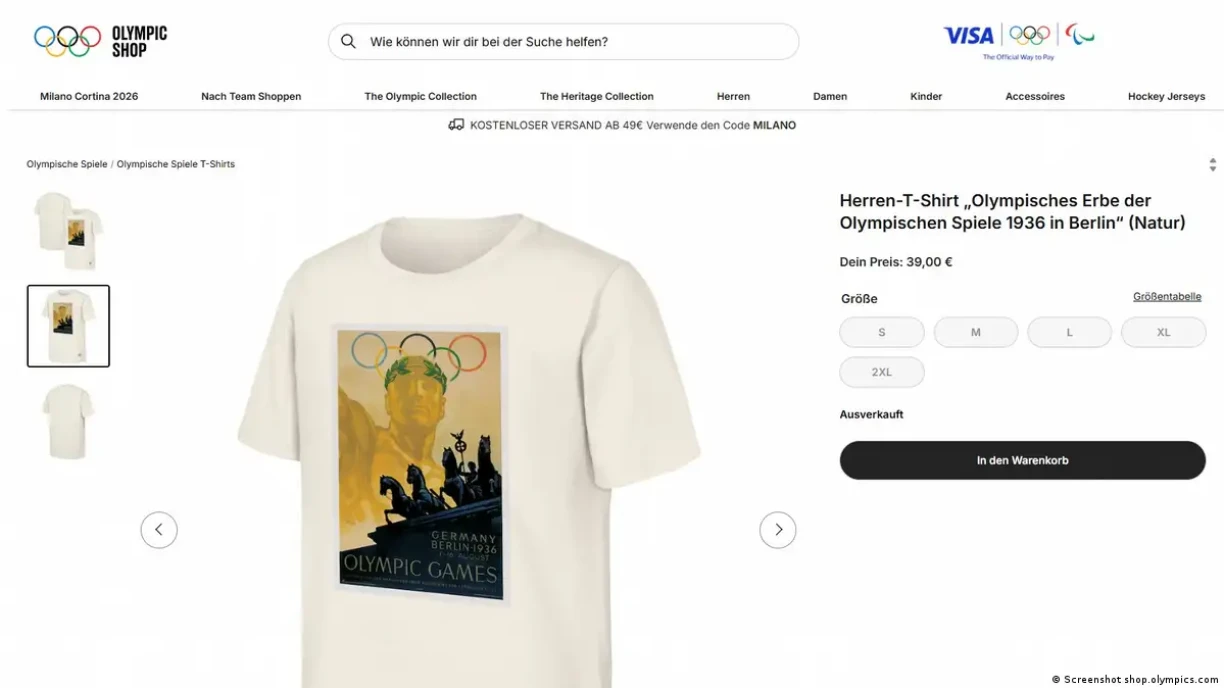
German media reported on Monday that the International Olympic Committee's webshop features a Heritage Collection dedicated to past Games. Among the items was a white T-shirt referencing the Berlin 1936 Games.
The design depicts Berlin’s Brandenburg Gate alongside an athlete wearing a laurel wreath – imagery that reminds of the fascist aesthetic at the time.
Although Berlin had been defined as the host of the Games before Hitler came to power in 1933, the 1936 Olympics became one of the Nazi regime's most important propaganda tools. The event was used to project the ideology of Aryan superiority, all while the regime intensified domestic repression.
In 1936, Hitler's government remilitarised the Rhineland in violation of the Versailles Treaty, advanced its Four-Year Plan aimed at preparing the economy for war, and deepened internal repression under SS leader Heinrich Himmler. Sachsenhausen concentration camp was established that same year.
The issue has also been discussed in Berlin's state parliament, with lawmakers calling for a halt to the sales. Critics, especially from the local Greens, argued that without critical contextualisation, the choice of imagery is problematic for a t-shirt.
On Thursday, the IOC responded to the criticisms, acknowledging the "historical issues" surrounding Nazi propaganda in connection with the Olympic Games 1936, but ultimately defended the product by stressing that the 4,483 athletes from 49 countries that competed throughout those Games cannot be forgotten. The IOC added that the broader historical context is addressed at the Olympic Museum in Lausanne.
The product was allegedly sold out within hours.





