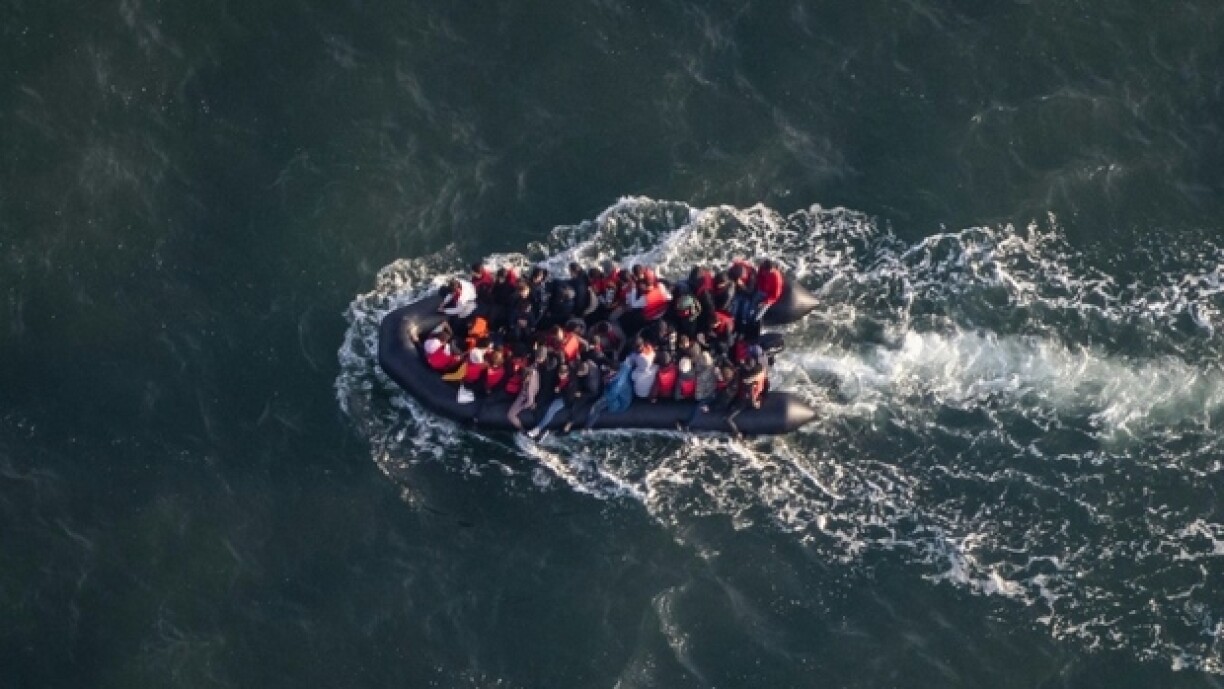
Police and gendarmerie in France have stepped up controls. More and more migrants are being stopped before attempting to cross the Channel, while others are turned back by the coastguard.
Smugglers have therefore been looking for new routes and have now identified Belgian beaches as an alternative. The crossing from Belgium to the UK is even longer than from Calais or Dunkirk, making it even more dangerous.
According to police spokesperson An Berger, attempts are becoming more frequent: since the start of the year, there has been a noticeable increase in small boats departing from the Belgian coast. She explained that in previous years, there were none or perhaps one or two per year.
This year, Berger said, 17 departures have already been recorded, although the true figure is likely higher. She added that many have also been intercepted thanks to increased checks on roads.
A few weeks ago, an inflatable boat was intercepted off the Belgian coast near De Haan after getting into distress and at risk of taking on water and sinking. 19 people had to be rescued by the coastguard and brought ashore.
There was not a single life jacket on board. Behind these risky crossings are human trafficking networks that exploit people without hesitation.
Berger explained that the process is fragmented: migrants are moved in stages, paying additional sums at each point to continue their journey. According to her, different criminal groups are involved at each stage, and nothing is all-inclusive.
She added that migrants are threatened, with some subjected to abuse, including sexual violence. According to Berger, such acts are sometimes filmed to pressure their families into paying more. "It's a criminal world", she concluded.
Migrants can pay up to €2,000 for a single leg of the journey. However, Belgian police and the European Border and Coast Guard Agency, commonly known as Frontex, expect the number of crossings to rise further as the weather improves.





