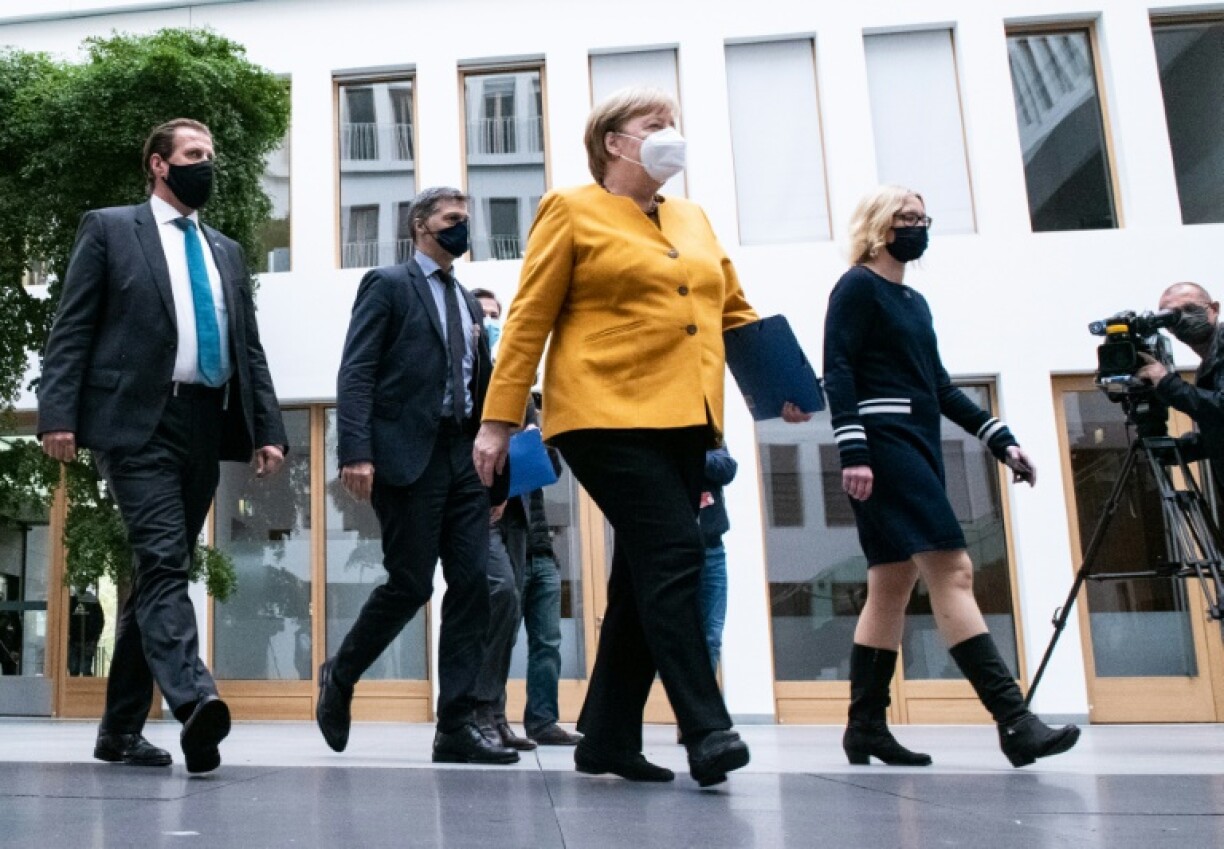
"We are dependent on the cooperation, acceptance and understanding of the people in our country for this to work," Merkel said on the first day of a four-week shutdown of restaurants, bars and cafes as well as cultural and leisure centres.
"It's in everyone's own hands to make this November a joint success, a turnaround," she told reporters in Berlin.
Germany has in recent days registered record numbers of new coronavirus infections, prompting a new round of restrictions in Europe's top economy.
Schools, daycares and shops will remain open however this month in what German media have dubbed a "lockdown light", which contrasts with tougher stay-at-home orders in other European countries.
"If we succeed in slowing the spread of the virus then we will be able to create the preconditions for a bearable December," Merkel said.
Looking ahead to the festive season, she ruled out any "lavish New Year's Eve parties".
But she held out hope that families would be allowed to celebrate Christmas together.
"It will be a Christmas under corona conditions but it should not be a lonely Christmas," the veteran leader said.
Merkel suggested keeping the gatherings small and for people to consider going into "pre-quarantine for a few days" before meeting up with elderly relatives to reduce the risks.
"If we all behave very sensibly in November, we can allow ourselves more freedom over Christmas," she added.
Germany on Monday added another 12,097 Covid-19 cases, bringing the total since the start of the pandemic to 545,027 cases.
A total of 10,530 people have died so far.
The number of coronavirus patients in intensive care has doubled from just over 1,000 people 10 days ago to just over 2,000 now, Merkel said.
The goal of the newest restrictions is to break the momentum of the outbreak so that contact tracers can once again keep up with the chain of infections, she added.
The recent rapid spread of the virus has meant that authorities can no longer tell where an infection originated in every three out of four cases.





