On Thursday, Dublin plays host to the largest event with heads of state and government in the history of Ireland, as over 50 leaders from the so-called 'European political community' will assemble in preparation for an informal summit on Friday. But all without Belgium and the Netherlands.
Belgian Prime Minister Bart de Wever and Dutch Prime Minister Rob Jetten are both facing government crises at home over the state budget and have therefore cancelled their participation at short notice.
In such cases, heads of government can transfer their voting rights to another head of state, i.e. give a power of attorney. And that's where Luc Frieden comes into play. The Luxembourgish Prime Minister will represent the entire Benelux region in Dublin – representing a community 44 times the size of Luxembourg.
Around 50 politicians will be present in Dublin, from Iceland to Armenia and Azerbaijan. Canadian Prime Minister Mark Carney has also been invited again. The European Union is striving for closer relations with Canada, even if a formal associated membership is currently off the table.
The birth of this European political community occurred after the Russian invasion of Ukraine in 2022. Ukrainian President Volodymyr Zelenskyy will therefore also be present. American chief negotiators Jared Kushner and Steve Witkoff are also expected in the Irish capital after their meeting in Moscow with Russian President Vladimir Putin.
The assembly in Dublin will also focus on how Europeans can be involved in the latest negotiations for peace in Ukraine, a question which has proved controversial.
The European member states agree that they want to be at the negotiating table when the future of Ukraine is discussed, but they are still arguing about who should represent the EU there.
In recent days, Italian Prime Minister Giorgia Meloni has stepped up pressure on European Council President António Costa, urging him in a letter to ensure that Friday’s informal summit delivers a clear and unified message. The proliferation of competing initiatives is seen as undermining the EU’s credibility. Meanwhile, Ukrainian President Volodymyr Zelenskyy is also calling on European leaders to finally agree on concrete representatives.
Irish Prime Minister Michael Martin, who currently holds the presidency, said on Thursday that it was obvious that the EU had to show a common line. But it didn't necessarily have to be just one person.
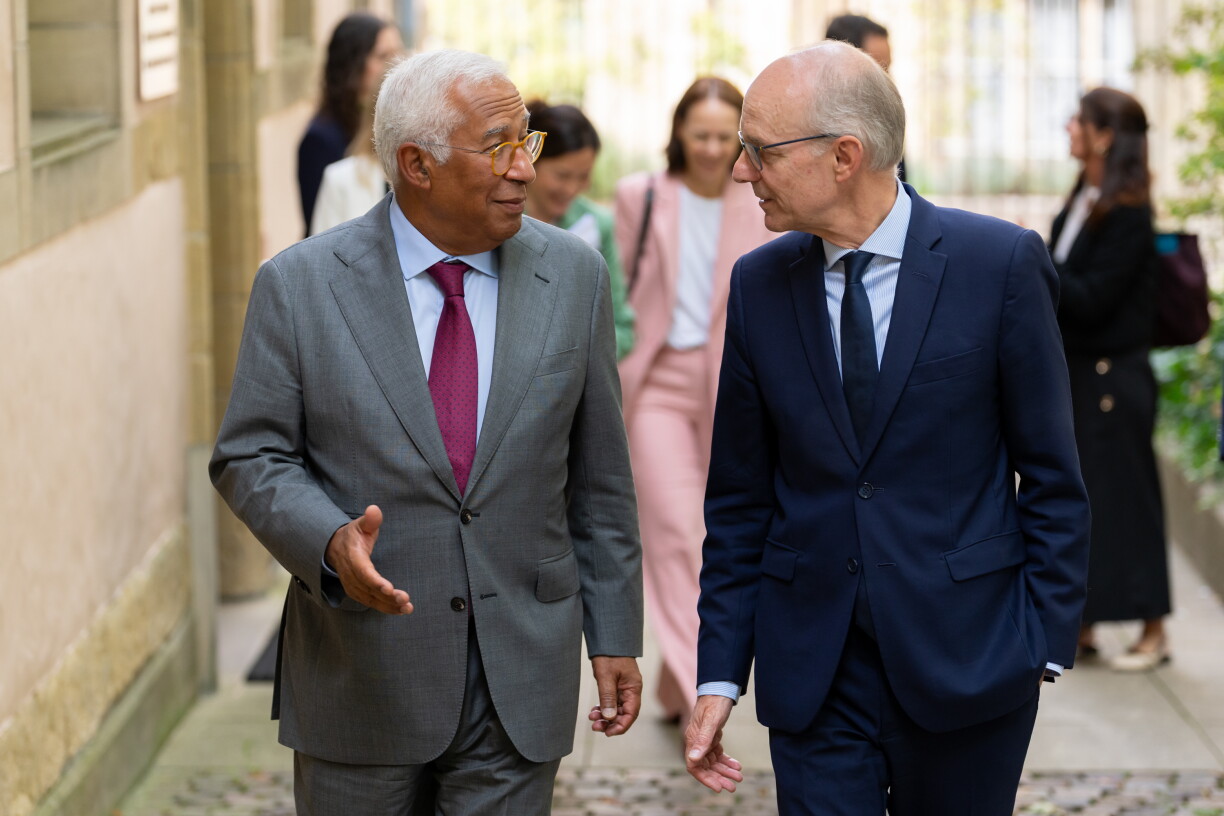
Luxembourg Prime Minister Luc Frieden, on the other hand, was a little less reserved, telling press on his arrival that he felt Antonio Costa was the natural candidate to represent Europe with the Russians and Ukrainians. Costa also has the support of other small countries. They could also accept EU foreign policy chief Kaja Kallas. Finnish President Alexander Stubb, who gets on well with Donald Trump, and Norwegian President Jonas Gahr Störe are also being mentioned as alternatives.
A few months ago, Luxembourg Foreign Minister Xavier Bettel suggested Honorary Minister of State Jean-Claude Juncker could be an option. However, he made it clear in an RTL interview that he would not be available for this task.
Other topics in Dublin include better cooperation in energy and artificial intelligence.


