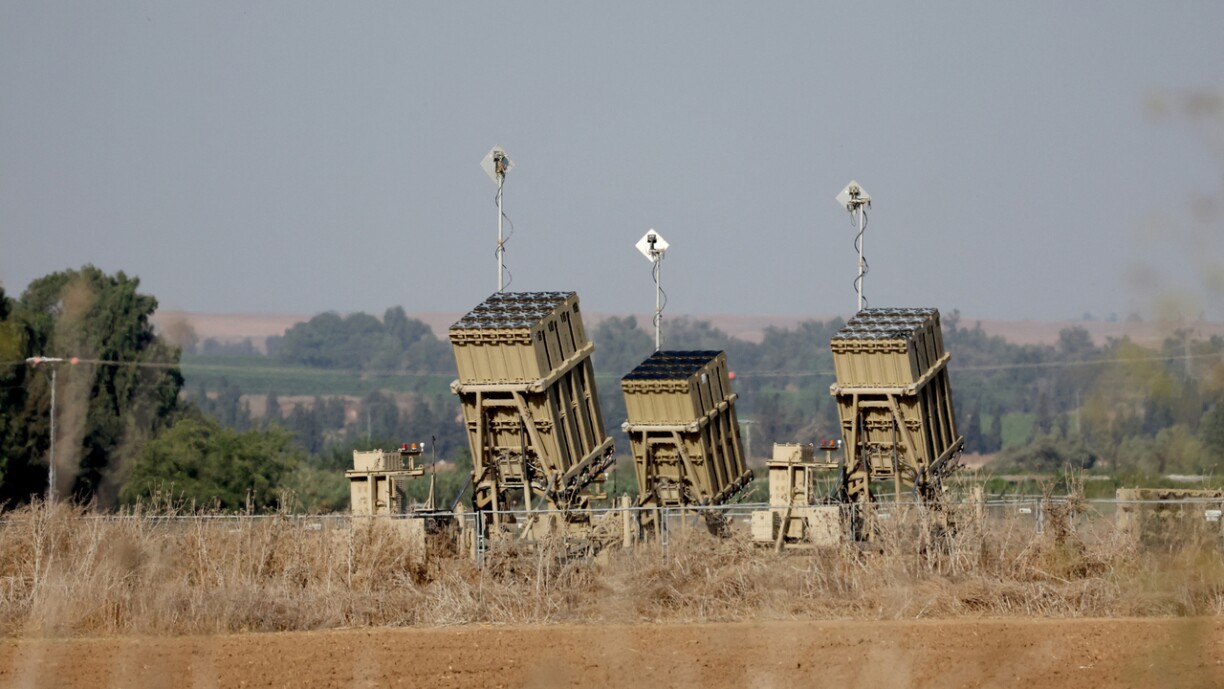
Since 2011, Israel has employed the "Iron Dome" defence system to shield itself from missile attacks.
Considered the most advanced missile defence system in the world, the Iron Dome is designed to intercept short-range missiles and operates with minimal human intervention.
An Iron Dome unit consists of three key components: a radar, a control centre, and up to four rocket launcher batteries. These units are fully mobile, allowing them to be relocated frequently, making them harder to target.
The radar scans the airspace, detecting incoming missiles from up to 70 kilometres away. In a matter of seconds, the control centre calculates the probable impact point. If a missile is headed towards a populated or critical area, the system launches an interceptor to neutralise the threat in midair.
There are approximately a dozen Iron Dome units stationed across Israel, each capable of covering 150 square kilometres and tracking up to six incoming threats simultaneously. The system boasts an interception success rate of around 90%.
Israel continues to invest heavily in its security infrastructure. According to the US-based Centre for Strategic and International Studies, a single Iron Dome battery costs an estimated $100 million, while each intercepted missile costs between $40,000 and $50,000. The system is co-funded and co-produced by the United States.
In addition to the Iron Dome, Israel operates other missile defence systems, including "David's Sling," with a range of 300 kilometres, and "Arrow," capable of intercepting missiles up to 2,400 kilometres away.





