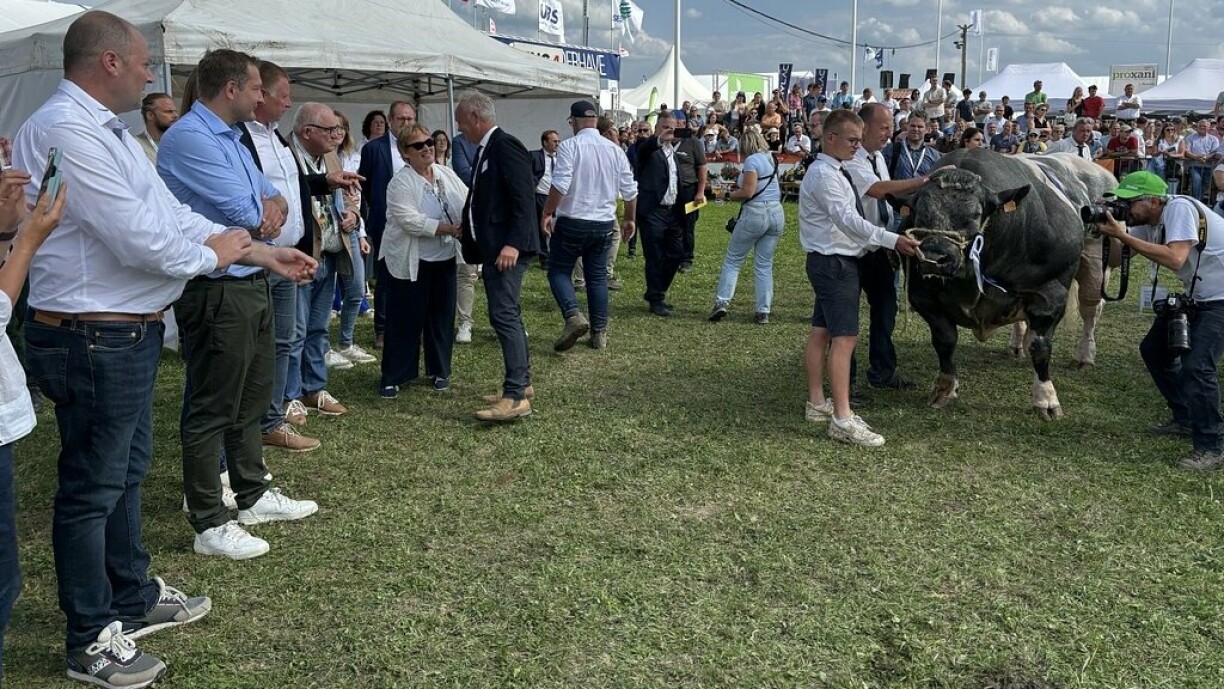
Surrounded by exhibition grounds and open fields, Libramont currently stands as the symbolic heart of agriculture, hosting 2,800 animals, 700 exhibitors, and over 250 activities aimed at drawing in the 200,000 visitors expected this year.
The 2025 edition of the fair – the largest open-air farming event in Europe – is being held under the slogan "Our agriculture: everyone affected, everyone involved!", reminding visitors that their individual choices as consumers influence which kinds of agricultural production will survive.
But Libramont is also a political hotspot. Each year, agricultural grievances take centre stage – especially when farmers haven't already voiced them through street protests. On Saturday afternoon, EU Commissioner for Agriculture and Food Christophe Hansen was well aware of this tension.
He explained that farmers are mainly seeking long-term stability, especially in relation to the future direction of EU agricultural policy and the financial framework supporting it.
Hansen noted that he had met with several Belgian farming unions earlier that day to examine what had recently been proposed in terms of the budget. "There’s still a lot to clarify", he admitted, but stressed the importance of being physically present and in dialogue with farmers now, rather than withdrawing during the summer and risking misconceptions taking hold.
Some farmers took the opportunity to speak to Hansen in person. One of them, Thibaut Desmet from Ferme du Ponceau in Perwez, said he wanted to share both optimism and frustration. He told the Commissioner that while prices for local meat had improved, the industrial sector continued to dominate market dynamics. He called for greater support for regional produce and the quality of Belgian meats, especially in local markets.
Another major topic in the Ardennes is the uncertain future of many farming businesses. Roughly 8,000 of Belgium's 12,400 farms will need to find a successor within the next decade – at a time when farming is increasingly viewed as an undesirable profession.
Hansen acknowledged this challenge and pointed to a new European strategy designed to support generational renewal. He emphasised that both national and EU-level policies must align to make this transition successful.
Financial support is just one part of the puzzle, he added; many older farmers are delaying retirement simply because they lack sufficient pensions. While Luxembourg is in a relatively strong position, the situation is far more difficult in some other countries.





