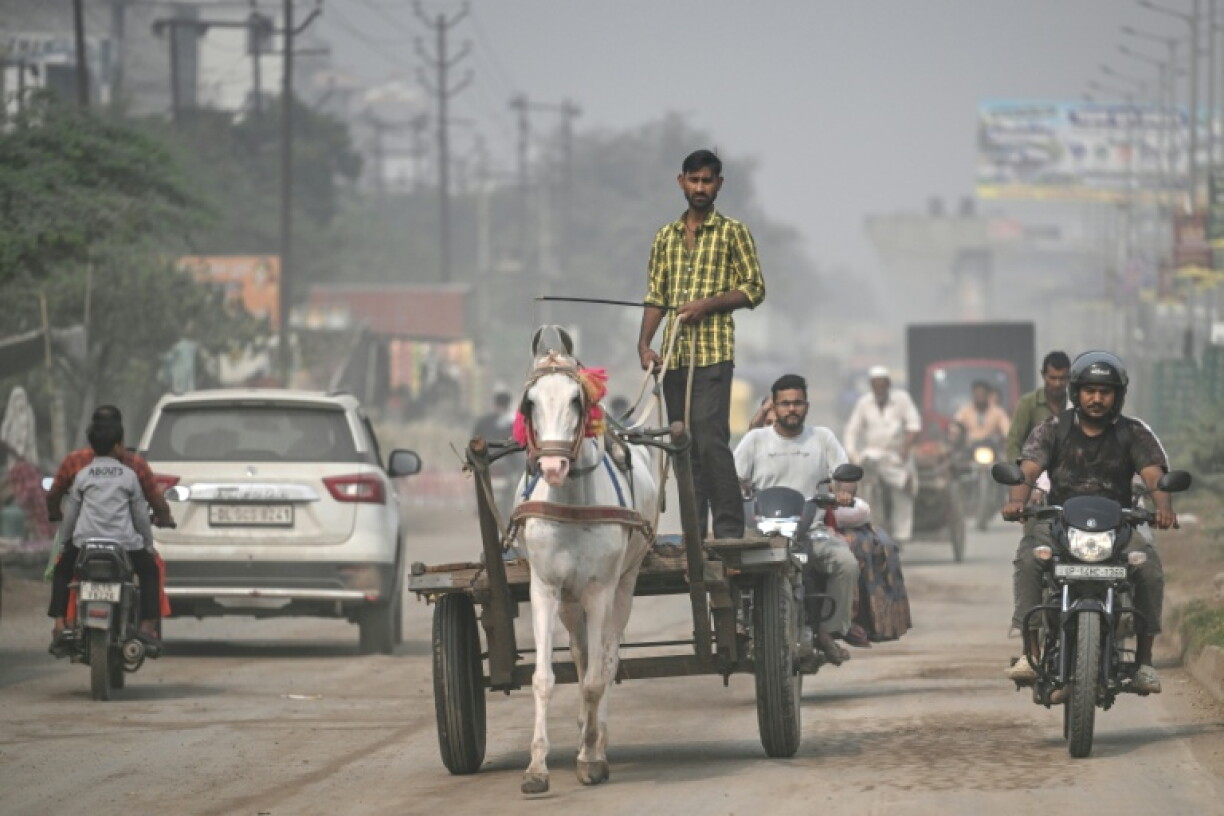
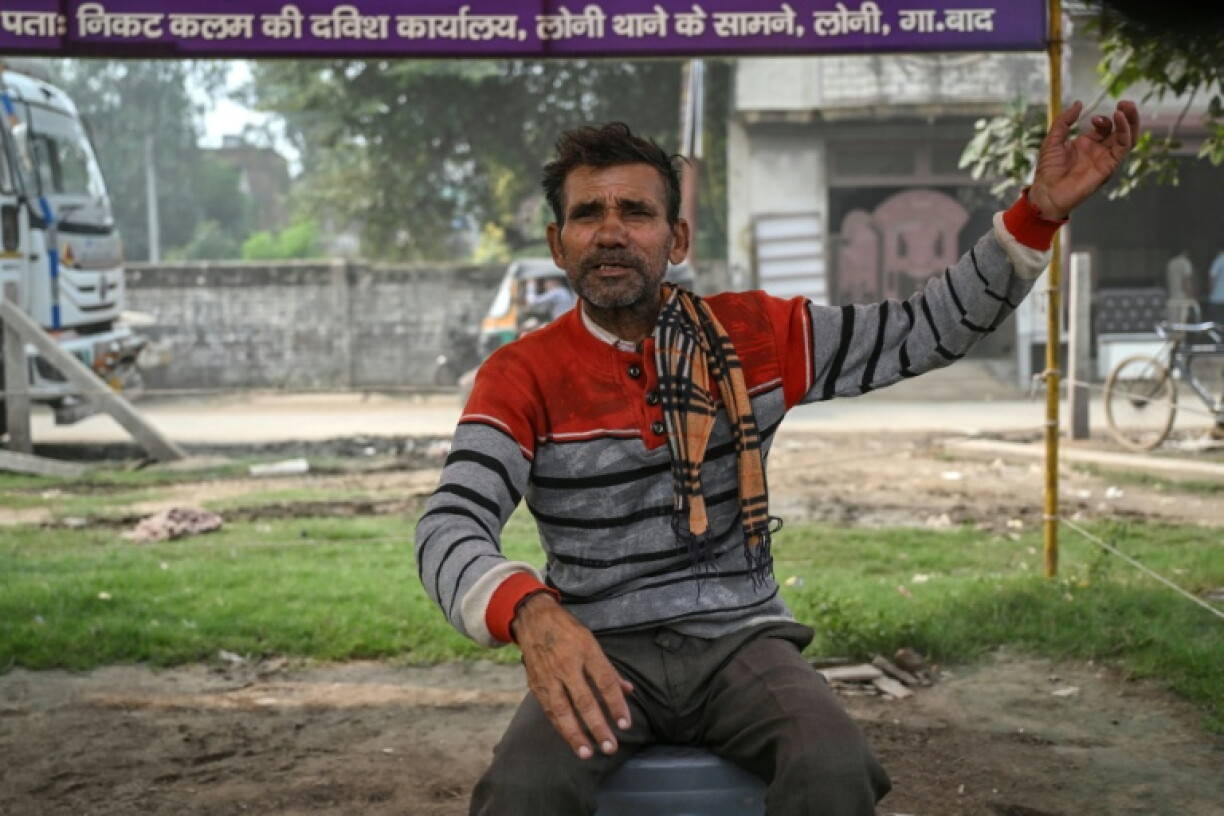
On the outskirts of India's capital, a short motorbike ride through the urban area with the world's worst air pollution leaves salesman Kanwar Singh coated in toxic dust.
"It enters my throat and lungs," the 55-year-old cigarette seller told AFP, running his hands over his clothes to show the fine dust.
"In the evening, I drink hot water and gargle... only then can I breathe easily."
But the dust he brushes off is not the most dangerous threat.
The toxic mix of traffic fumes, power station emissions and agricultural fires includes PM2.5 –- fine particles that penetrate deep into the lungs, with some entering the bloodstream.
Long-term exposure increases the risk of lung cancer and heart disease.
Loni, where Singh lives, was one of five areas in the Delhi metropolitan region -- home to around 30 million people -- to feature among the world's 20 most polluted in an annual ranking by Swiss monitoring firm IQAir. Four other Indian urban areas featured.
Over the year, Loni recorded average PM2.5 concentrations of 112.5 micrograms per cubic metre -- more than 22 times the World Health Organization (WHO)'s recommended annual limit of five micrograms.
During winter pollution peaks, when colder air traps pollutants close to the ground, PM2.5 readings can exceed 800 micrograms per cubic metre -- more than 50 times the WHO's 24-hour guideline.
Fireworks launched to celebrate the Hindu festival of Diwali also worsens the winter smog, with toxic air in parts of New Delhi soaring to more than 58 times the WHO's recommended daily limit on Monday.
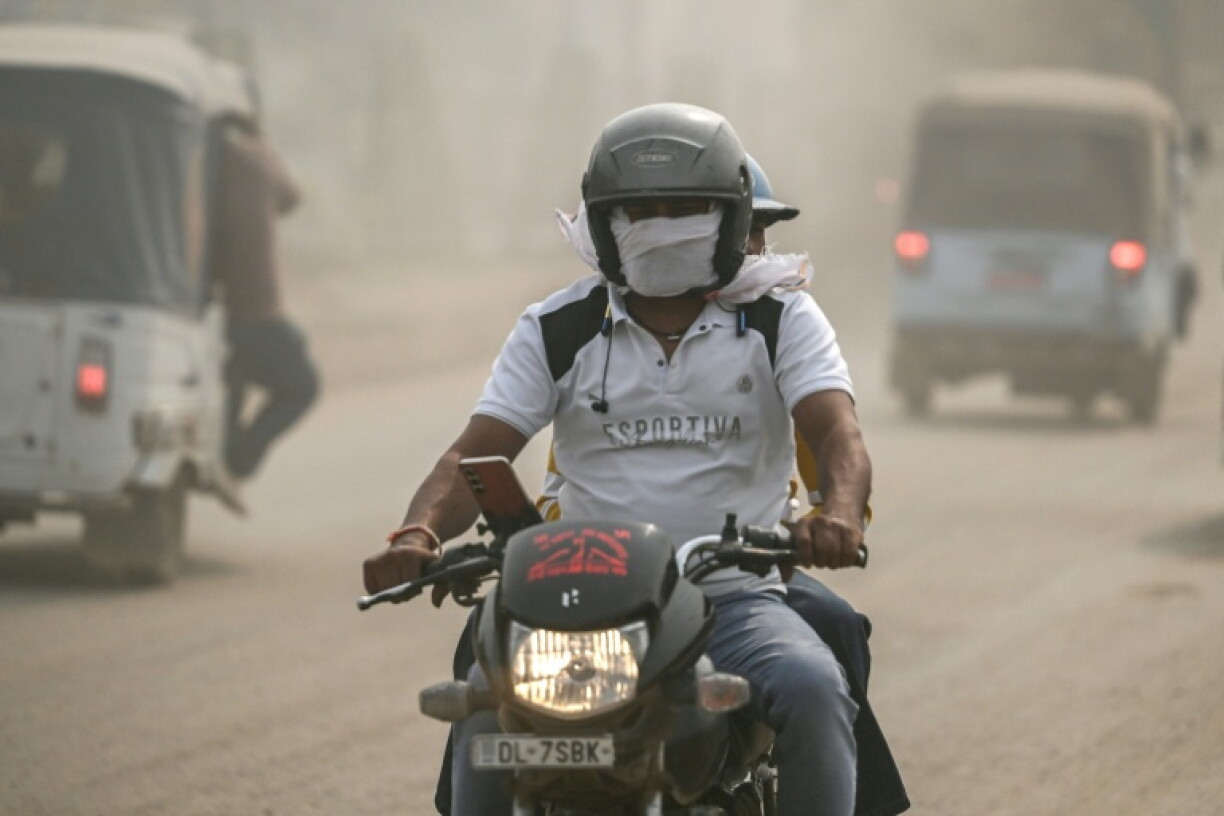
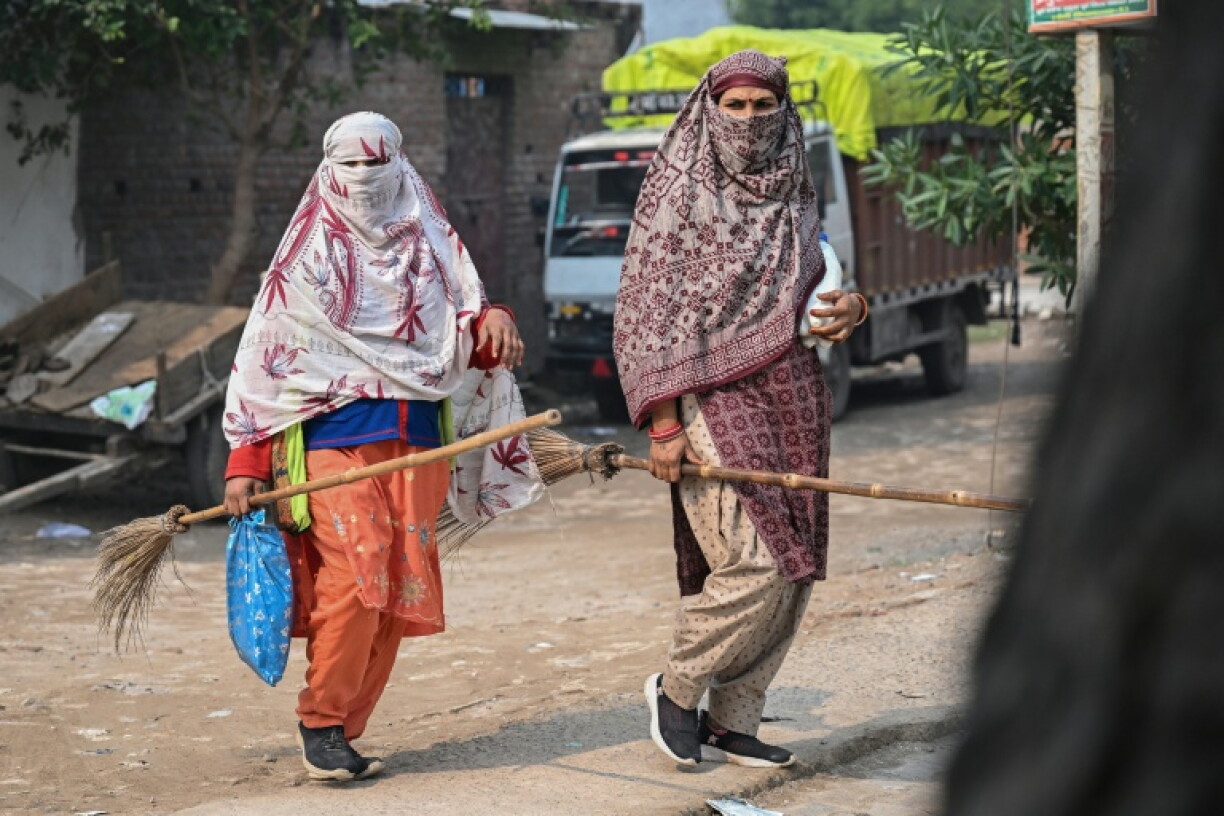
Few residents wear masks, despite the choking dust. Many, like Singh, simply cover their faces with scarves or handkerchiefs.
"We are poor people," said Singh, who earns around $5 a day. "If we had money, we would have bought a flat elsewhere."
Few can afford homes sealed against pollution or expensive air purifiers.
Loni, with a population of more than 700,000, according to latest census figures, is a densely packed industrial hub with factories involved in e-waste processing, textile dyeing, plastic recycling and metalworking.
Inspections by government air-quality officials in August found "widespread non-compliances" with environmental rules, including factories operating furnaces fuelled by wood and coal.
Poor roads, construction dust, vehicle emissions and the burning of dirty fuels compound the problem.
"My eyes are always burning here. I have trouble in my throat, a burning sensation in my eyes and people here fall sick very often, very quickly," housewife Savita Devi, 51, told AFP.
Mornings, when pollution hangs over the area before sunlight disperses some of the haze, also take a toll on her mental well-being.
"I just don't feel like doing anything," she said. "I makes me very uneasy."
The WHO lists air pollution as "one of the greatest environmental risks to child health".
Air pollution was linked to an estimated 17,188 deaths in Delhi in 2023, nearly 15 percent of the total, making it the city's biggest individual risk factor, an analysis by Finland-based Centre for Research on Energy and Clean Air (CREA) found.
Devi said her grandchildren often fell sick when pollution levels surged.
"If you consult a doctor, he will say it's infection," she said. "But here, infections happen because of this pollution."
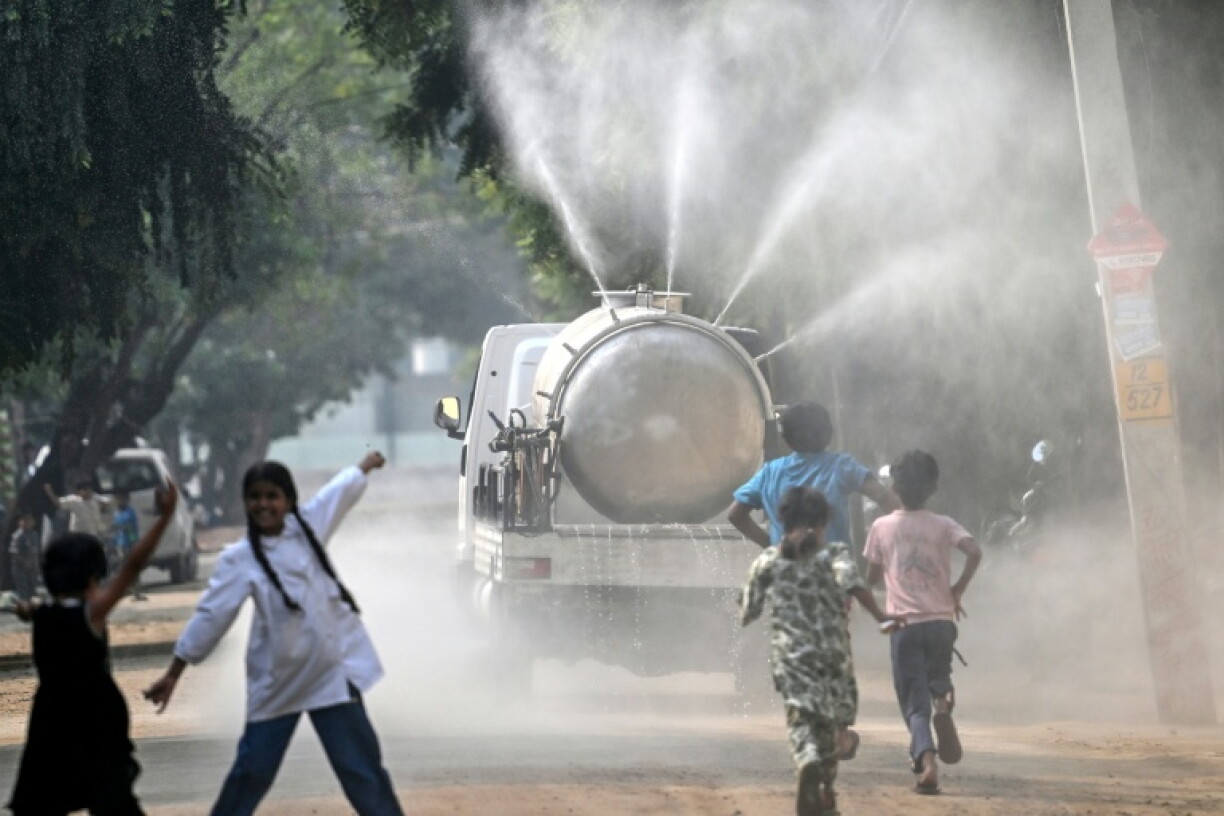
Authorities have deployed water-sprinkler trucks to suppress road dust, but the measure does little to tackle finer PM2.5 pollution from traffic and industry.
"A dust-free road is everyone's responsibility," a roadside government hoarding reads.
The relief is fleeting, residents said, with dust returning within an hour as traffic and construction churn it back into the air.
"Dust keeps coming," said shopkeeper Inamul Khan, 27. "We have to wash things two or three times, all our clothes, bedding, everything gets ruined," he added.
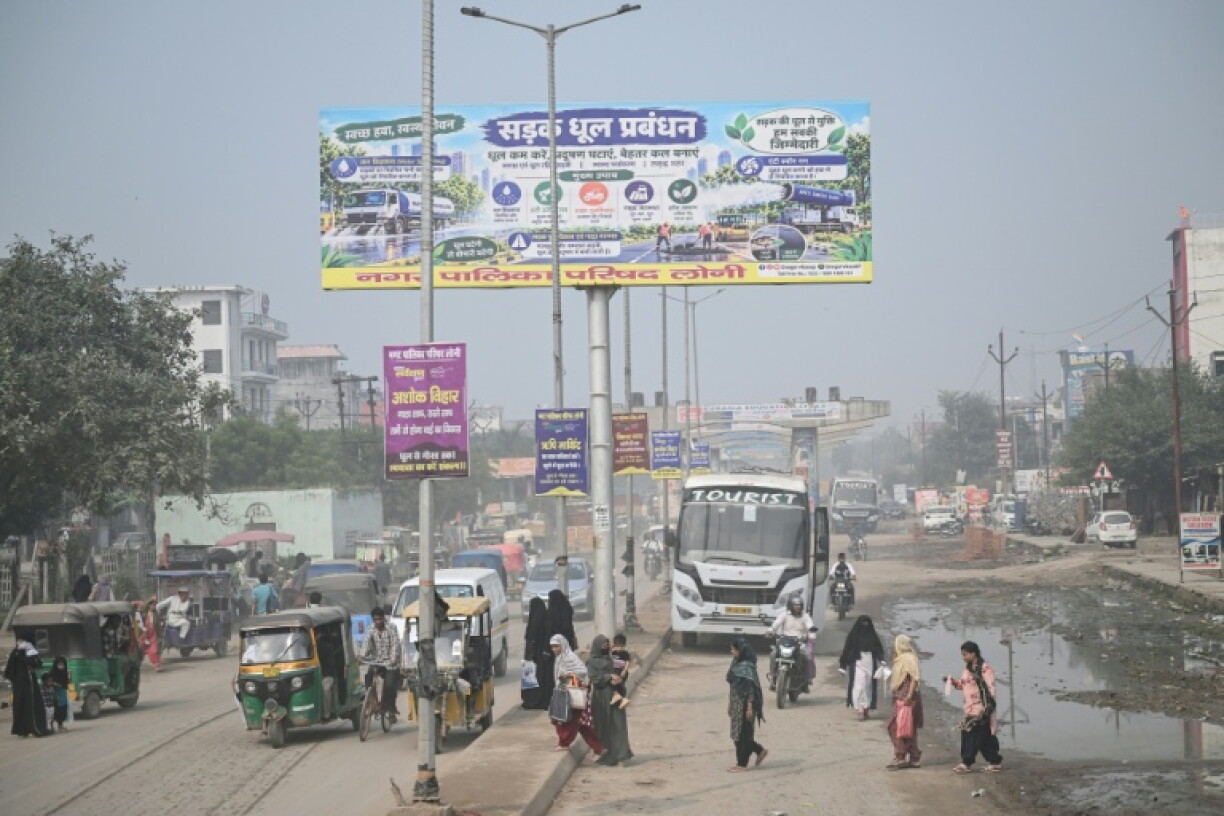
He watched as a sprinkler truck sprayed an adjoining road under construction.
"When there's so many crowds and road construction going on, how much can they do?"
For Singh, who has respiratory problems, the worst days mean staying indoors, but also means he cannot earn.
"I keep a face mask or cloth on, and take my medicine just to stay alive," he said.
ash/pjm/cms


