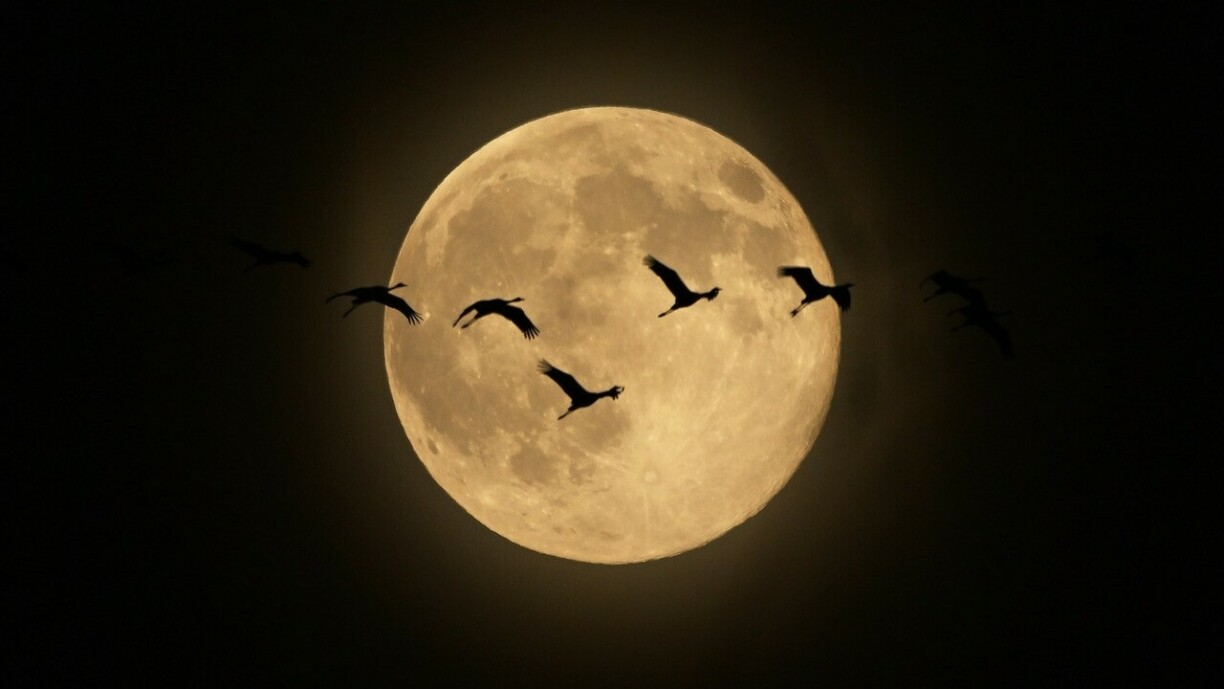
On Wednesday evening at 23.16 the Moon came particularly close to Earth, with the distance narrowing to only 356,400km. Normally, the Moon is over 400,000km away.
When the Moon sits low on the horizon, it appears bigger than when it is high in the sky. This effect, known as the 'moon illusion', is purely psychological. Just above the horizon, we can compare the Moon to the landscape and nearby objects. Higher in the sky, the human eye lacks spatial cues, making the Moon seem farther away.
Historically, the November full moon was called the 'fog moon', reflecting the season's frequent mist. In Germany, each month's full moon has its own traditional name. Before modern calendars and clocks, people often oriented themselves by natural events.
The term 'beaver moon' originates in North America and is linked to Indigenous people, as beavers are said to be particularly active in November. Other stories mention hunters who set traps during this period to catch beavers for their warm pelts.
Clear weather meant the exceptionally bright Moon was visible with almost no interruption, and many of you sent in photos. All submissions are displayed in our gallery.
If you also captured striking images of this rare natural event, we are happy to publish them online. Send your photos to foto@rtl.lu and, ideally, include the location where they were taken.





