Quantum computers? Sounds like something straight out of science fiction, doesn’t it?
But are you aware that a quantum computer could one day crack your Visa card? Or even the encryption protecting your WhatsApp chats and online banking?
Efforts are already underway to stop exactly that from happening, including in Luxembourg.
In the latest episode of 'Ziel mier keng!', the science.lu-Team from the Luxembourg National Research Fund (FNR) dives into what a quantum computer actually is, what makes it so revolutionary, and whether we should all now be losing sleep over our passwords.
It also answers the question of whether, in the future, everyone will be walking around with one of these quantum computers in their mobile phone. Infos block: 'Ziel mier keng!' airs on RTL Télé following the science programme 'Pisa'.
For this video, science.lu teamed up with Dr Florian Kaiser, a quantum technology expert at the Luxembourg Institute of Science and Technology (LIST).
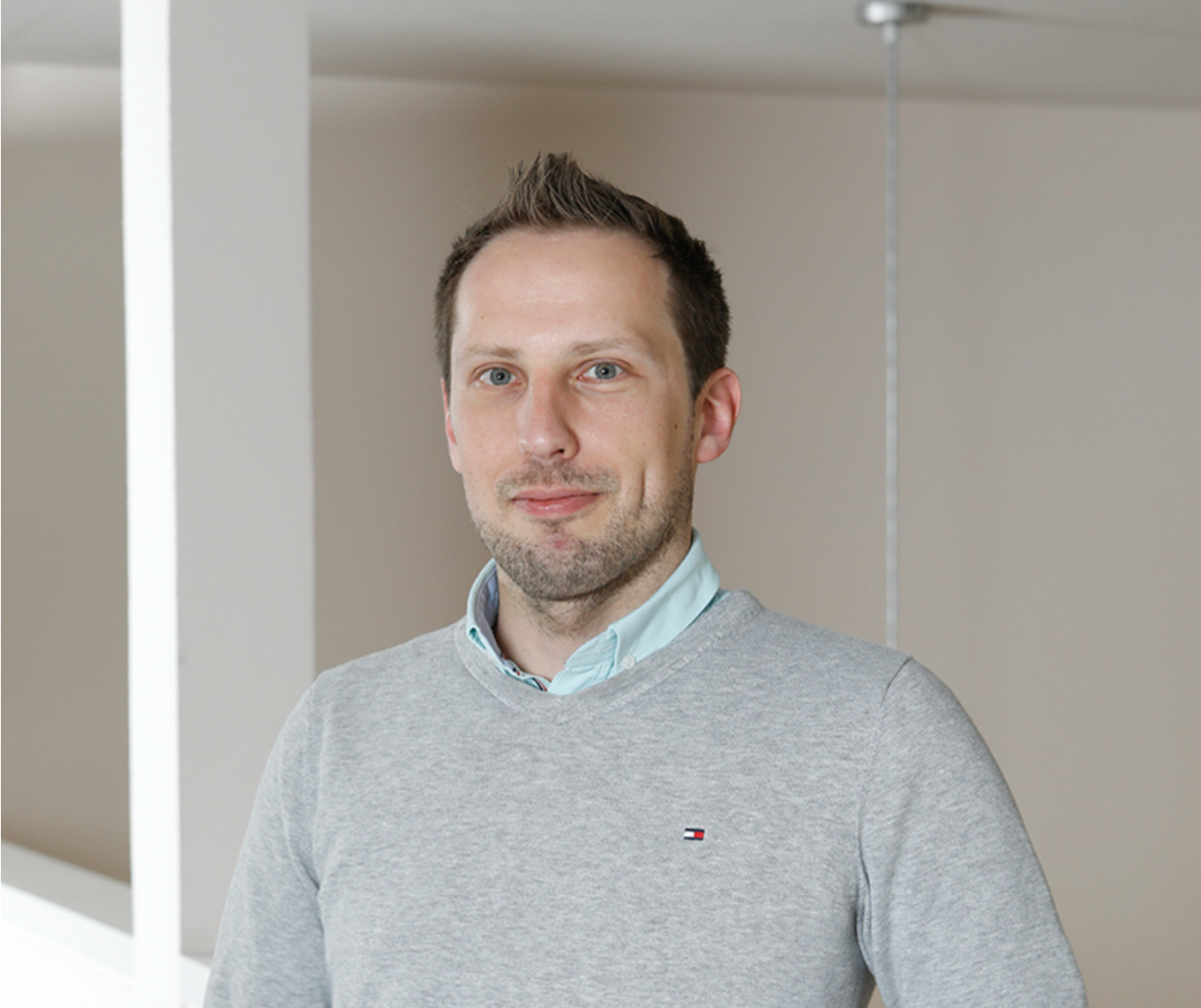
Quantum computers are a national priority – and potentially revolutionary.
Where they truly shine is in handling enormous sets of possibilities. In such tasks, they far outperform standard computers – and even supercomputers. They could, for example, help develop new medicines or materials, solve highly complex optimisation problems, accelerate research, boost the economy... etc. More on this later in the article.
But quantum computers are not better at everything. For everyday tasks – writing emails, streaming videos, calculating spreadsheets – they actually perform worse than an ordinary laptop.
Unfortunately, however, they also come with risks.
Take the encryption that protects our data today. It relies on a mathematical key that involves breaking down huge numbers into their prime factors. While even today’s high-performance computers would need thousands – or even millions – of years to solve such problems, a quantum computer could potentially crack them in just minutes or hours.
There isn’t currently a quantum computer powerful enough to crack our encryption. Florian Kaiser estimates that we're still at least ten years away from that point – probably longer.
But things could suddenly move very fast. That's why we need to be prepared when the time comes.
Another reason to be prepared is the "collect now, decrypt later" principle. We have to assume that data is already being gathered today, with the intention of decrypting it as soon as quantum computers become available.
To prevent this, researchers are already developing "quantum-safe" encryption methods to keep your data protected from quantum computers in the future. Banks, insurance firms, and other large companies around the world are already implementing the first standards. Some web browsers and chat apps are also already using these systems.
And Luxembourg is no exception. Researchers at institutions like the LIST and the University of Luxembourg are working on quantum systems and encryption – exploring, for instance, how to make LuxTrust quantum-safe.
Or to ensure that, in the future, everyone has quantum-secure internet access at home.
In short, this isn't science fiction anymore – it's already a reality today.
But let’s start with the basics: what exactly is a quantum computer, and why is it capable of such incredibly fast calculations?
For decades, the computer chips powering our computers have been getting ever smaller, faster and more powerful. According to Moore’s law, the number of transistors on a computer chip doubles roughly every two years.
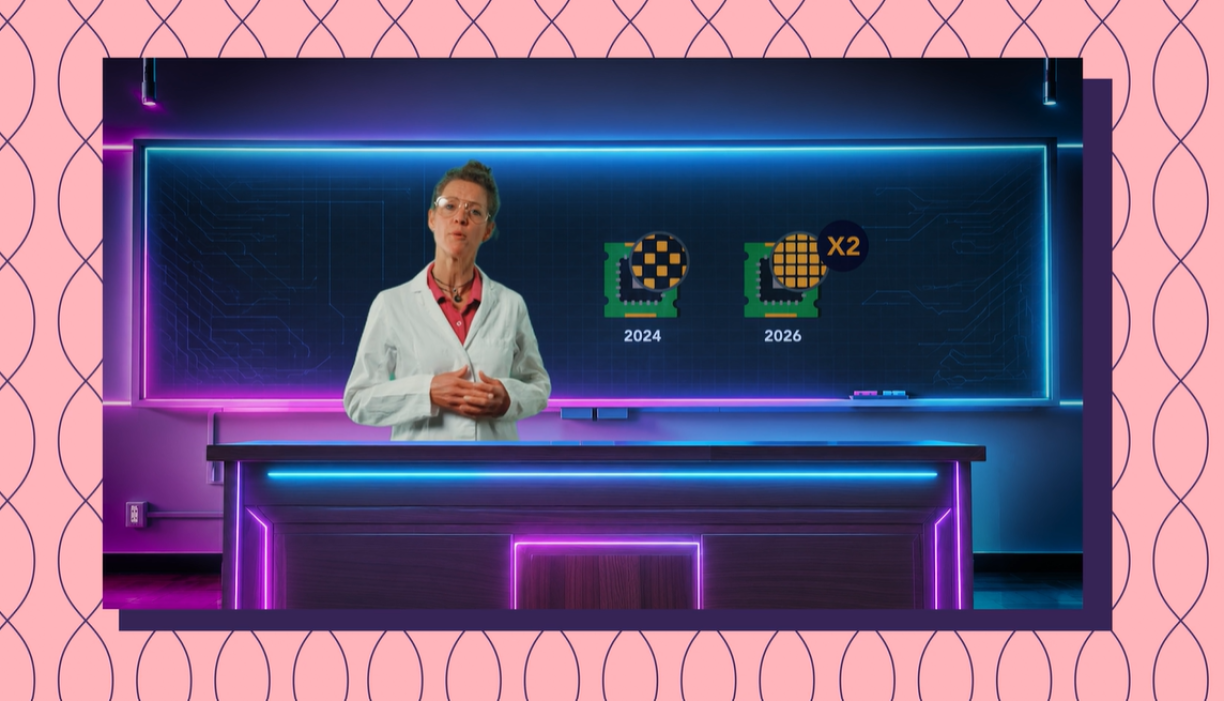
Simply put, this means that computer chips are getting smaller and smaller, and more and more powerful.
Transistors, the tiny circuits used for computing, are often just a few nanometres in size on modern computer chips. A nanometre is a billionth of a metre! Absurdly small!
At this scale, we're approaching a threshold: the line between normal physics and quantum physics. When chips get even smaller, different physical laws suddenly come into play, namely those of quantum physics. And these are very strange, because they don't match anything we experience in everyday life.
In our everyday experience of "normal" physics, a light switch, for example, is either on or off. A ball is either in the goal or it misses.
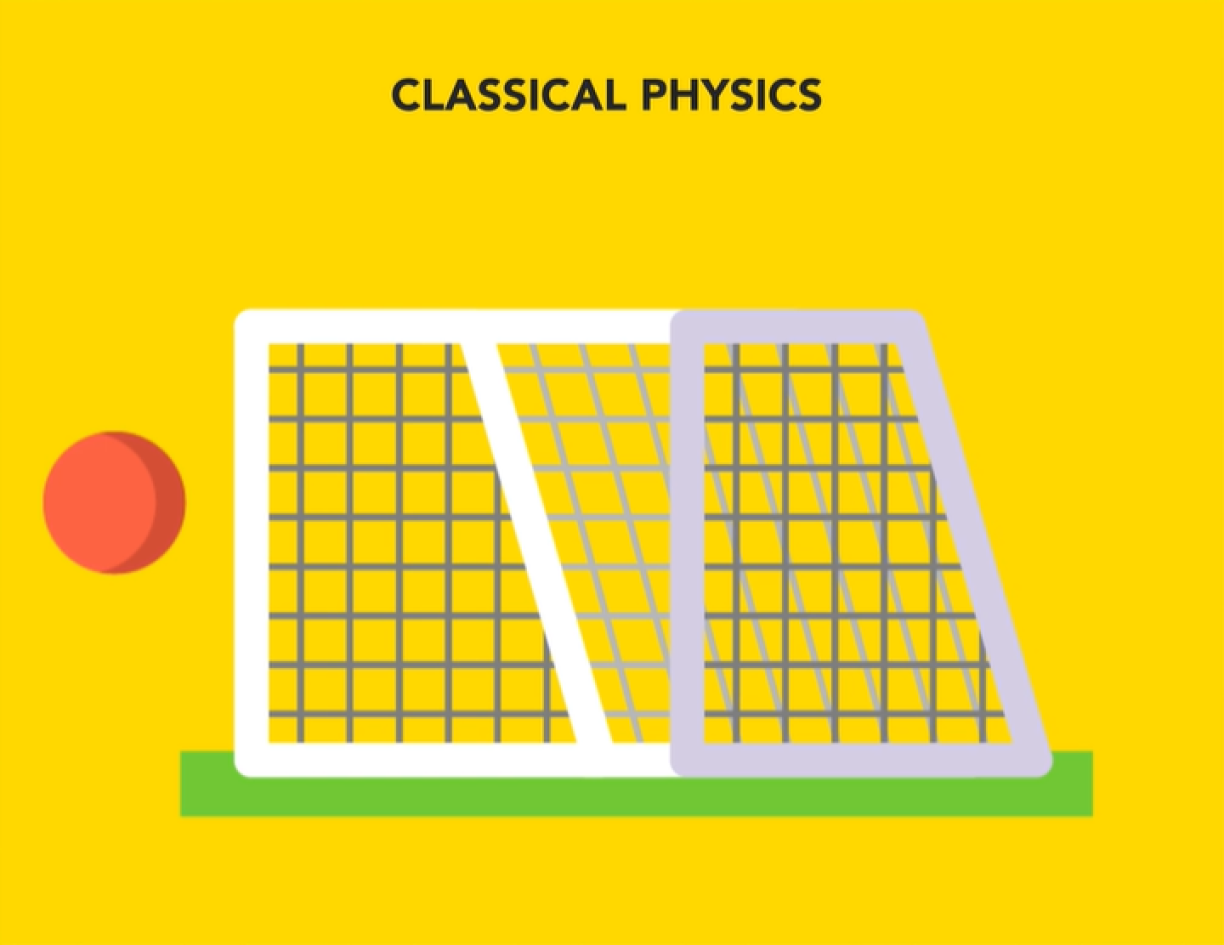
In the world of the very small, the quantum realm, different rules apply. Here, we are at the level of individual atoms or even smaller particles like electrons. And these can be in multiple places at once and occupy several states simultaneously.
That might be hard to imagine, and it sounds absurd, but this has actually been known for over a century and has been proven time and again in experiments.
Quantum computers harness these strange quantum phenomena to their advantage.
Conventional computers calculate using bits – those tiny circuits on a chip we mentioned earlier, which are either switched on or off. A bit is therefore either a 0 or a 1. Everything a computer does, every picture, every email, every app, is ultimately a series of 0s and 1s.
A quantum computer uses so-called quantum bits, or qubits for short. These consist of atoms, ions, electrons, photons or other particles from the quantum world. And thanks to quantum physics, a qubit isn't limited to just 0 or 1 – it can be both at the same time, or anything in between. That means it can represent many more possibilities at once. This phenomenon is called superposition.
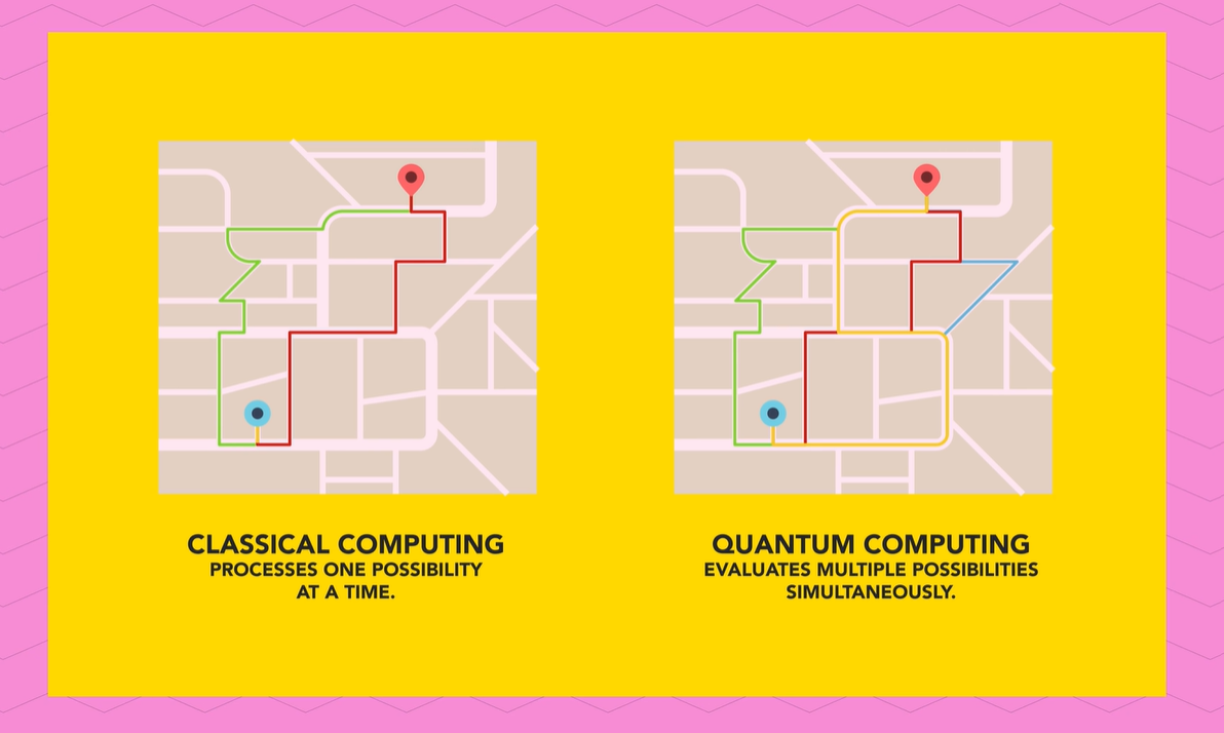
A common analogy: imagine a sat nav calculating the fastest route, or a postal worker planning the most effective delivery route. A normal computer would test each possible route one after another. A quantum computer, however, can test all routes simultaneously. Naturally, this makes it much faster.
There is also a second phenomenon: two qubits can be connected in such a way that the state of one directly affects the other – no matter how far apart they are.
That is called entanglement. Incidentally, Einstein referred to this phenomenon as "spooky action at a distance."
Entanglement allows qubits to work together more effectively, helping the system weed out poor solutions much more quickly. Both superposition and entanglement are what give quantum computers their incredible speed – provided these effects can actually be controlled. Unfortunately, doing so is far from straightforward and requires an immense amount of effort, which is a major drawback of quantum computers.
To make a quantum computer work, you have to isolate the qubits from the rest of the world almost perfectly.
For example, you need incredibly good vacuum chambers, and some systems have to be cooled down to minus 273 degrees Celsius – colder than outer space!
It is also crucial to ensure that they have almost no contact with the outside world, as that would disrupt the delicate system.
So no, a quantum computer like that won’t be in your mobile phone anytime soon.
You won’t be having a quantum computer at home anytime soon, either.
That would be like expecting people to soon have a nuclear power station in their basement.
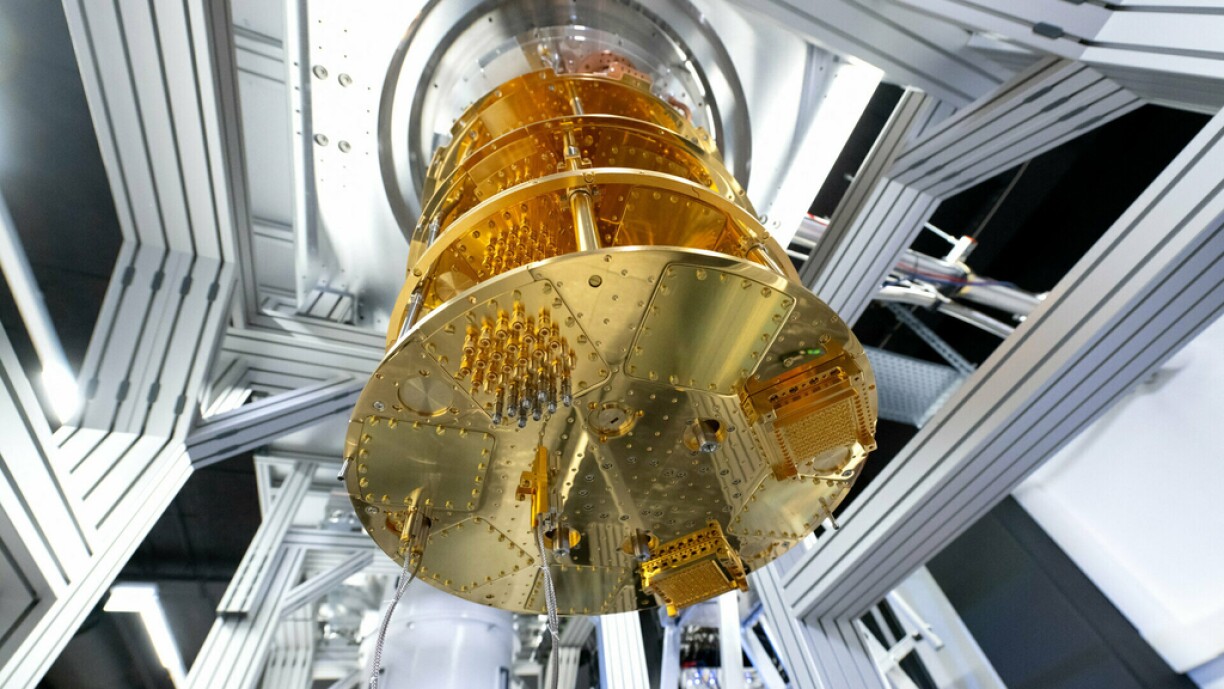
Quantum computers are, at least for now, huge golden contraptions that look like chandeliers sitting right in the middle of specially shielded labs.
They will be geared towards large corporations, research institutes and governments – accessible via the cloud for specific tasks – rather than the mass market.
Today's most powerful quantum computers have only a few hundred qubits. To launch a serious attack on our current encryption methods, however, you would need several million stable qubits. So, for now, there is no immediate risk on that front.
What’s more, Florian Kaiser points out that quantum computers are still prone to a lot of computational errors because they can't yet be isolated perfectly from the outside world.
That said, progress is moving at breakneck speed.
Quantum computers are no longer science-fiction. They harness the strange rules of quantum physics to solve problems that would be impossible for conventional computers.
This presents a huge opportunity for medicine, research, and the economy. And that’s why so many countries and companies are investing in it. And here in Luxembourg, we have our own national quantum strategy as well.
But quantum computers won’t replace your laptop. And they could pose a threat to our digital security.
When exactly will we master this complex technology of quantum computers well enough to really get going? No one can say for sure. But work is already underway today to prepare us for it.
Author: Jean-Paul Bertemes (FNR)
Editors: Michèle Weber, Linda Wampach, Anouk Ewen (FNR)
Peer Review: Dr. Florian Kaiser, Luxembourg Institute of Science and Technology (LIST)
Translation: Tom Weber
Video Direction & Cut: Dominique Weber (SKIN)
Camera: Constantino Danopoulos (SKIN)
Teleprompter: Max Stoltz (SKIN)
Illustrations : George Dos Santos, Noémie Brück, Anton Stepine (SKIN)





