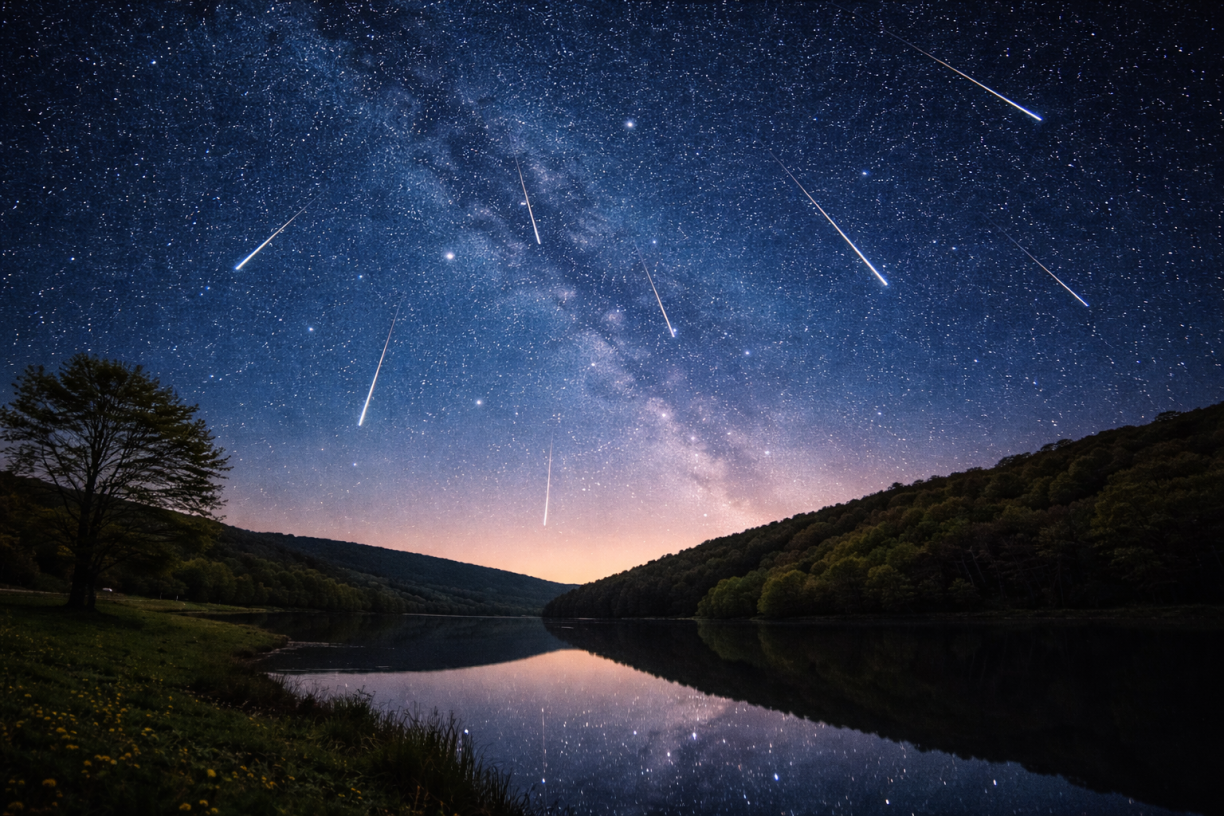
The shower has been observed for around 2,700 years, with the earliest known record dating back to 687 BC in China. It is caused by the debris left behind by Comet C/1861 G1 Thatcher, a long-period comet that takes roughly 415 years to orbit the Sun.
As those tiny fragments enter our atmosphere at enormous speed, they burn up high above us and create the bright, short-lived streaks we call meteors or, more informally, “shooting stars”.
The Lyrids might not be the loudest or richest display of the year, but they do have a reputation for occasional bursts of stronger activity. Quiet, fast, and occasionally unpredictable, this meteor shower rewards everyone willing to step outside, leave the lights behind, and give the night a little patience.
They are swift, often bright, and can occasionally leave glowing trails behind them. Some can be especially striking, producing what observers call fireballs: unusually bright meteors that stand out far more dramatically than the average streak.
In Luxembourg, the timing this year is quite favourable. The best time to watch the Lyrids will be from 11.30pm onwards, with conditions improving after midnight as the radiant climbs higher.
Speaking about the radiant, as the name suggests, the Lyrids have their radiant in the constellation Lyra, around the bright star Vega. But that does not mean you should stare directly at Lyra.
In fact, NASA notes that meteors often look longer and more impressive when seen away from the radiant. The best approach is simply to sit back or use a reclining chair and watch a broad, dark section of sky.
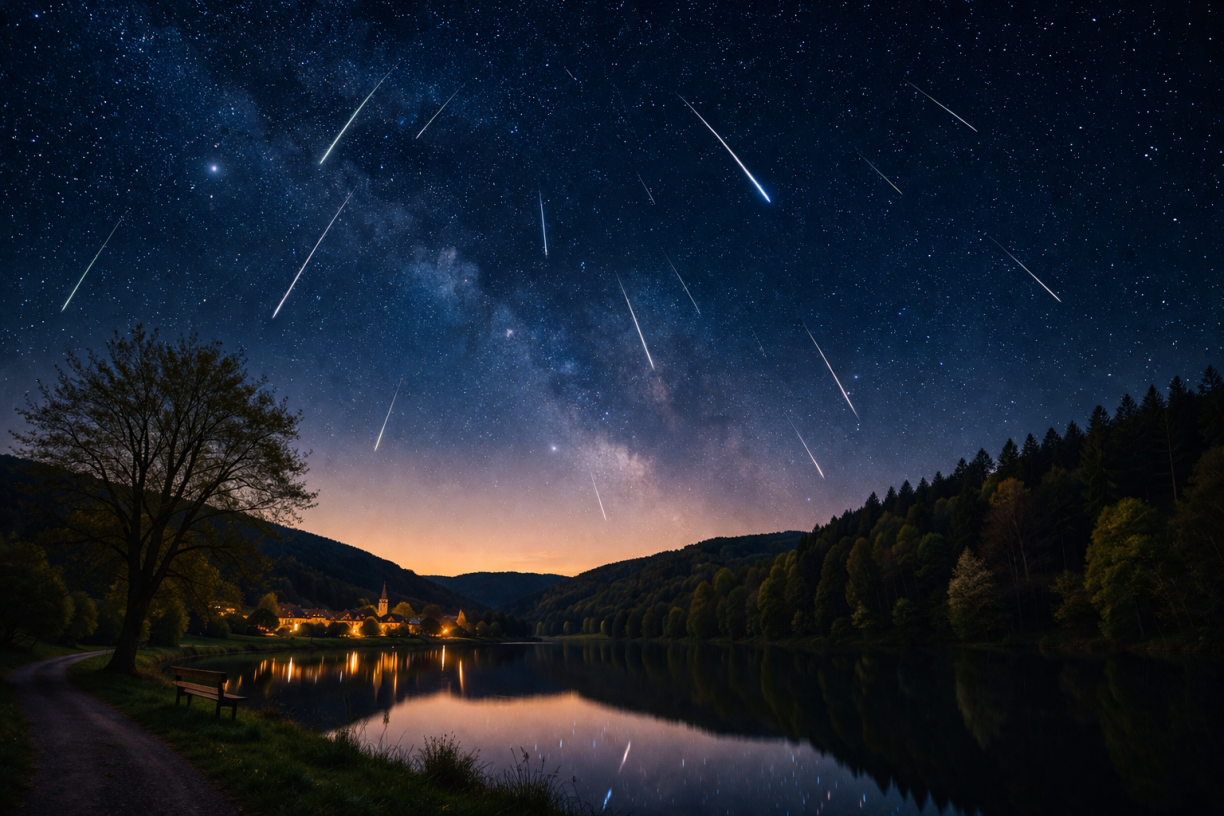
As always, where you observe from matters enormously. In Luxembourg, the darkest skies remain in the north, particularly in the Oesling, around the Haute-Sûre, and in the wider area of the Parc naturel de l’Our.
These regions offer darker horizons and far less intrusive artificial light than the centre or south of the country. A particularly fitting location this year is Stärepark Pëtschent in Putscheid, which was listed by DarkSky International on 28 March 2026 as a recognised dark-sky community in Luxembourg.
That said, you do not need to cross the whole country to enjoy the Lyrids. Just getting a little way out of Luxembourg City or other bright urban areas can make a major difference, allowing many more meteors to become visible.
Meteor showers are not about telescopes or magnification. They are about darkness, comfort, and time.
And comfort matters more than many people expect. April may feel mild by day, but once you are standing still at night, the cold quickly finds you. Bring warm layers, a blanket, or ideally a reclining chair. A hot drink helps, too.
Most importantly, give your eyes at least twenty minutes to adapt and try not to ruin your night vision by checking your phone. The longer you wait, the richer the sky becomes.
The Lyrids are special. They are subtler than the Perseids or the Geminids. Older, quieter, more restrained. They ask a little more from the observer, but they give something back in return: the simple thrill of watching ancient comet dust burn across a spring sky above Luxembourg.
On the night of 22 April, it will be worth stepping outside. Not because the Lyrids promise a storm, but because they offer a reason to slow down, look up, and reconnect with a sky that still has moments of wonder left for those willing to meet it.





