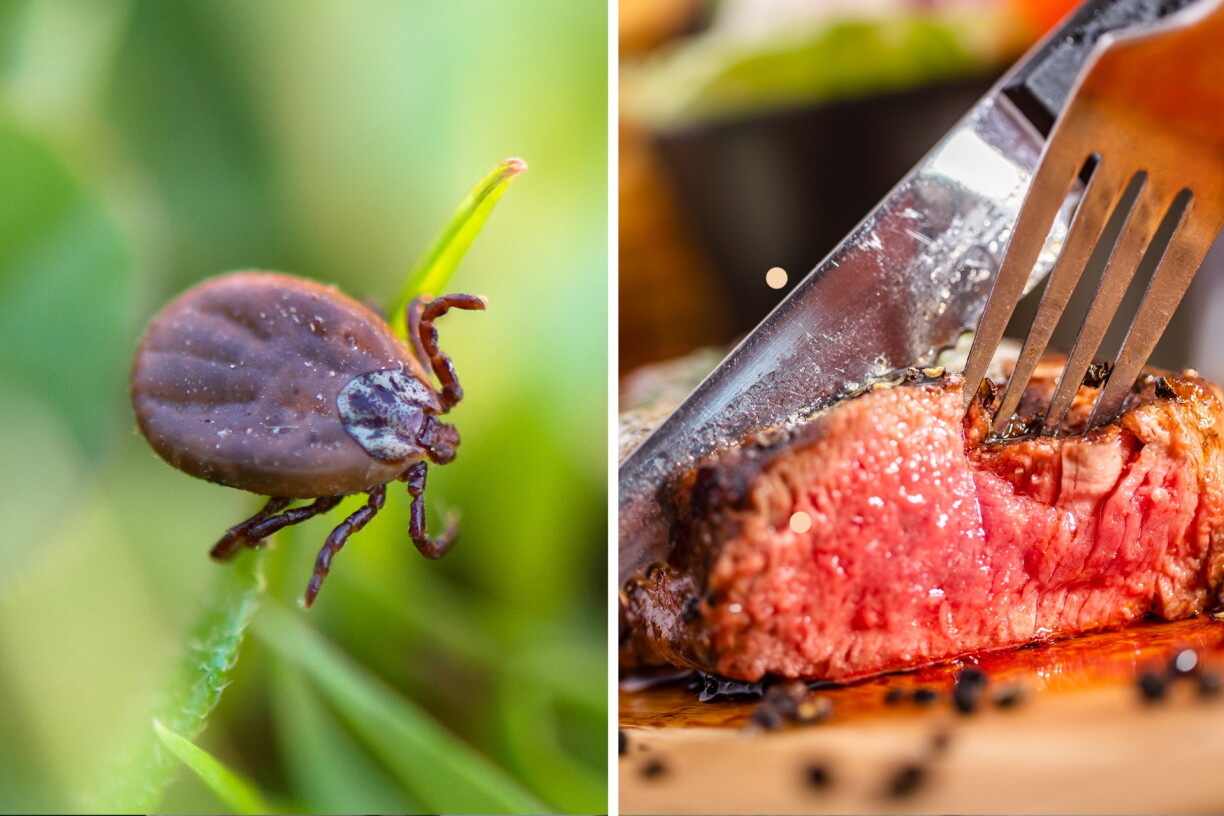
29-year-old Paul Metz was bitten by a tick in 2015 while still in high school. Shortly afterwards, he developed a rash that kept returning, often accompanied by abdominal discomfort.
Blood tests eventually revealed the presence of alpha-gal antibodies, leading to an unusual diagnosis: alpha-gal syndrome, a red meat allergy triggered by a tick bite.
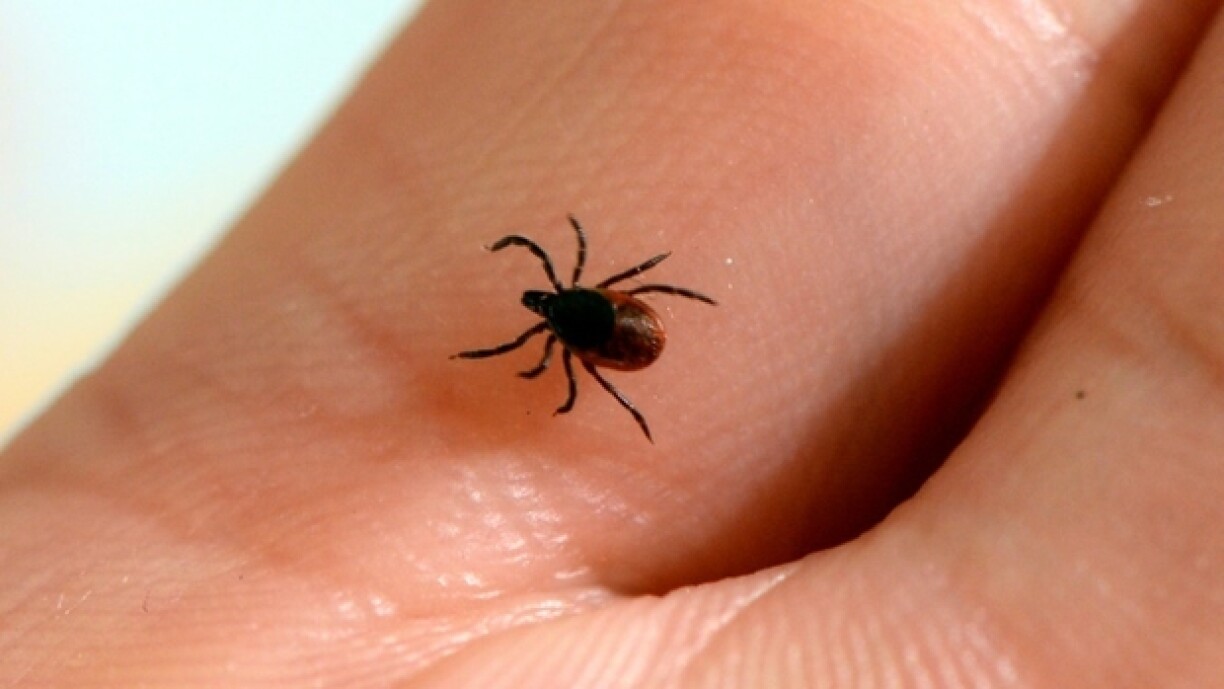
When a tick bites, it injects saliva into the skin. This saliva can contain alpha-gal, a sugar molecule found in most mammals but not in humans. Some people develop antibodies against alpha-gal after a tick bite. However, having these antibodies does not necessarily mean they will become allergic.
While many people remain symptom-free, a small proportion go on to develop alpha-gal syndrome, an allergy triggered by eating mammalian meat such as beef, pork, venison or rabbit. In more severe cases, people may also react to dairy products or gelatin, which is found in some sweets and medications.
One of the most unusual aspects of alpha-gal allergy is that symptoms typically appear several hours after eating, usually between two and eight hours later. Symptoms vary widely and can include abdominal pain, nausea, vomiting, itching, and breathing difficulties. In severe cases, the reaction can lead to anaphylactic shock, a potentially life-threatening condition.
If a person exercises or drinks alcohol after a meal, symptoms can develop more quickly.
At the LIH, Dr. Christiane Hilger and her team are leading the ImmunoGal study to better understand the condition. Researchers are following people who have recently been bitten by ticks to analyse how their immune systems respond and why some develop alpha-gal syndrome while most do not.
Factors such as the duration of the tick bite or age may play a role, but many questions remain unanswered.
There is currently no cure for alpha-gal syndrome. Patients are advised to adapt their diet according to the severity of their allergy and to avoid further tick bites, as repeated exposure may strengthen the immune response.
However, there is some good news. In certain cases, antibody levels gradually decrease over time, allowing the allergy to become milder or even disappear completely. That is what happened to Paul Metz. Over the years, his antibody levels declined and he is now able to eat red meat again.

Ticks become active when temperatures rise above 12 to 15°C. They are commonly found in tall grass, waiting to attach themselves to passing animals or humans. To reduce the risk of bites, experts recommend wearing long, light-coloured clothing when spending time in nature and checking your skin carefully afterwards.
People who have recently been bitten by a tick can participate in the LIH's ImmunoGal study. The project aims to determine whether participants develop alpha-gal antibodies and to help researchers better understand the allergy.
To take part, participants must be at least 18 years old and contact the LIH within 48 hours of detecting the tick bite. If possible, the tick should be brought to the consultation.
You can find more information here.





