It was the morning of 30 June 1908 when the sky over central Siberia suddenly lit up. A large object, probably a small asteroid or comet fragment, entered Earth's atmosphere and exploded above the Tunguska region.
Luckily, the explosion took place over a remote area with no cities beneath it. Yet the blast flattened tens of millions of trees across more than 2,000 square kilometres of remote forest. To this day, it remains the largest asteroid-related impact event in recorded history.
It is also why the United Nations later proclaimed 30 June as a day to raise awareness about asteroid risks, science, and planetary defence.
In Luxembourg, this year's Asteroid Day Festival will take place at Cercle Cité on 26-27 June, with talks, workshops, and activities open to the public. The programme brings together scientists, astronauts, educators and space professionals, with discussions touching different topics.
This is often the topic that attracts the most attention. The idea behind planetary defence is simple: if we discover a potentially dangerous object early enough, we have time to study it and possibly change its path. That is why astronomers constantly monitor near-Earth objects, calculate their orbits and check whether any could pose a future risk.
NASA's DART mission became the symbol of this work in 2022, when a spacecraft was deliberately crashed into Dimorphos, a small asteroid moonlet orbiting the larger asteroid Didymos. The target posed no danger to Earth and was chosen purely as a test.
The result was historic: for the first time, humanity intentionally changed the motion of a celestial body. Not through a Hollywood-style explosion, but through a carefully planned experiment in orbital mechanics. That is exactly the point: planetary defence is all about preparation.
Europe is now following up with Hera, an ESA mission launched in 2024 and expected to reach the Didymos system in November 2026. Hera will study the impact site and help scientists understand how effective the deflection really was.
This is where asteroids become more than potential threats. In recent years, missions have moved far beyond simple flybys: spacecraft can now orbit these small worlds, touch their surfaces and even bring samples back to Earth.
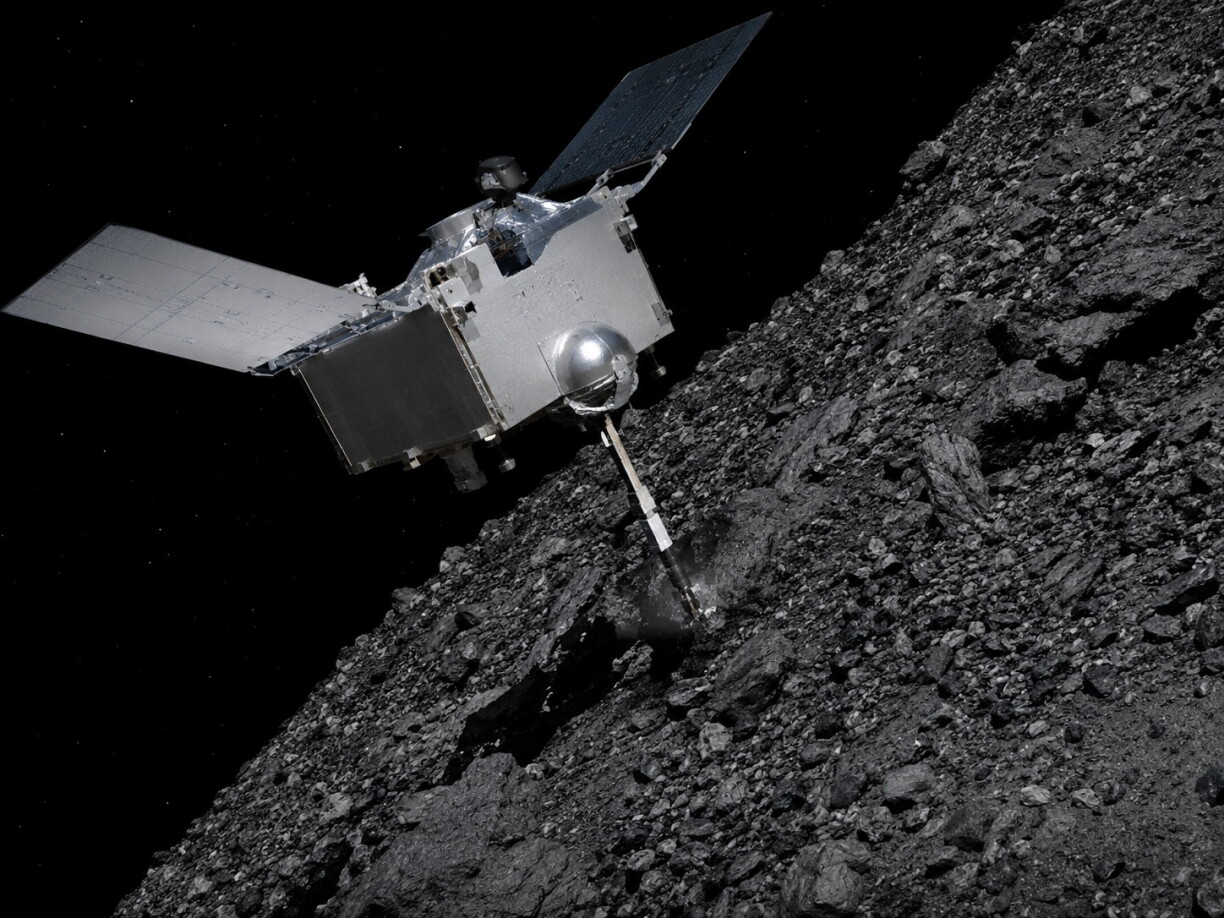
NASA's OSIRIS-REx mission, for example, brought back samples from the asteroid Bennu in 2023. Because many asteroids have preserved ancient material from the early Solar System, those samples are helping scientists study the chemistry that existed before Earth became the planet we know today.
Missions like this teach us how the Solar System formed, how to engineer spacecraft for extreme environments, and how far we can extend human knowledge without leaving Earth.
Space is still often seen as a field reserved for astronauts, pilots, or rocket engineers, but in reality, the modern space sector is much broader. It needs engineers, of course, but also software developers, data scientists, doctors, communicators, and many others. A mission is built by teams with quite different skills.
Over the past decade, Luxembourg has developed a dynamic space ecosystem, making space part of its long-term economic and scientific strategy. Led and supported by the Luxembourg Space Agency, the sector focuses on space resources, satellite services, innovation and research.
Asteroid Day can make that ecosystem more visible and easier to understand, especially for young people who are curious about space but unsure whether there is a place for them in it.
This may sound less spectacular than asteroid deflection or spacecraft missions, but it is just as important. Good space education teaches curiosity, critical thinking and scientific reasoning.
Asteroids are a perfect example. They bring together physics, geology, engineering and international cooperation. They also raise practical questions: how do we know where an object will be in the future? And how do we explain complex science without creating panic?
These are not only space questions. They are public questions.
Tunguska showed what can happen when a cosmic object arrives without warning. Asteroid Day reminds us that the real answer is not fear, but knowledge, preparation and cooperation.





