The recording of information requires personal contact and is in fact is vital for virus tracing as the process can be prone to errors.
The government is prepared to employ more staff to continue manual contact tracing where necessary.
However, civil servants would be preferred for the job as it involves the handling of many personal and thus private details. According to Bettel, the government does not completely rule out the use of an app, if the circumstances required it and if it would work efficiently. But the PM remains unconvinced.
In his answer to a question by Pirate Party MP Sven Clement, the Prime Minister remained sceptical to the idea of a tracing app. He pointed out that there was no uniform European app, and that such an app had to be useful for the country's efforts, rather than 'in general'.
Bettel also addressed the general public and reminded residents to remain vigilant, refrain from throwing big parties, and respect the sanitary regulations.
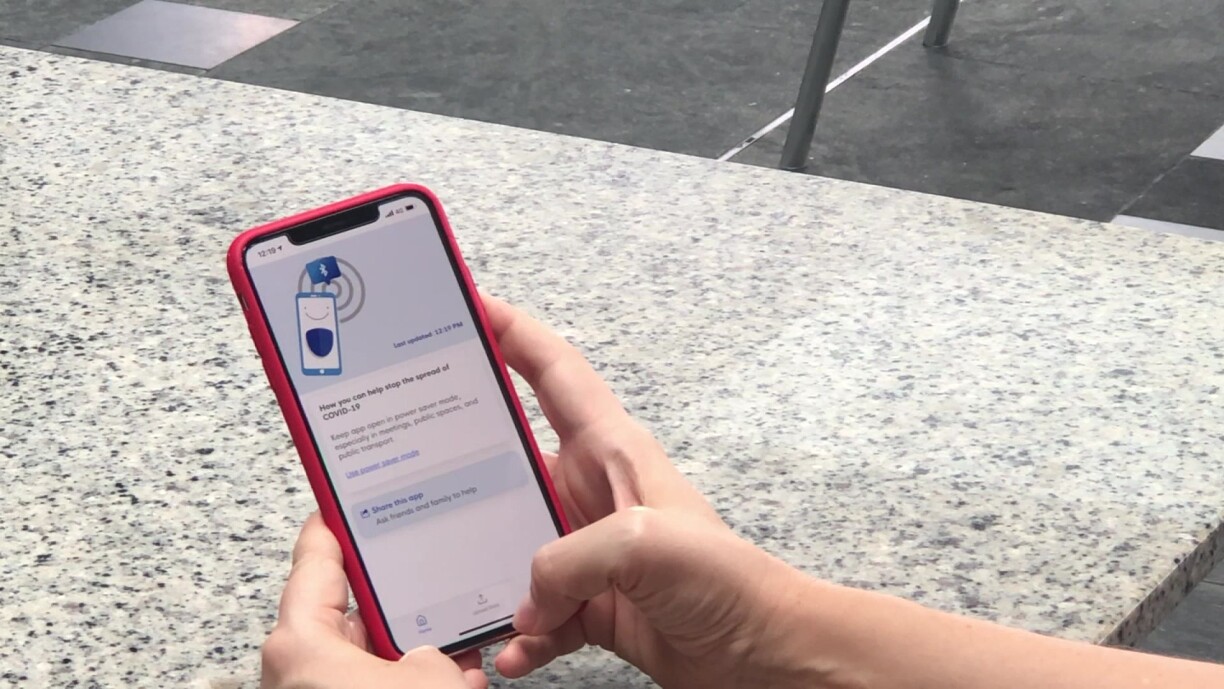
Since last week, the German tracing app can be downloaded and used in Luxembourg. However, how does the German app work in the Grand-Duchy, and what are its main features?
Decentralised data storage is a key phrase in this debate. The app records prolonged contact with another app, i.e. another person, whenever the required social distance is not met. However, the data is only stored on the individual phones, which means it would not (or rather should not), be contained on a central database.
Daniel Lücking is employed as a journalist for the newspaper Neues Deutschland in Berlin and has closely followed the development of the German tracing app: "The alert is also only registered on the owner's smartphone. Thus, movements cannot be traced back. This is a good solution as the use of the app is voluntary"
When users receive an alert from the app, it is recommended that they take a test as soon as possible. This is expected to help detect possibly infected individuals more swiftly and then have them self isolate, remaining in quarantine. This in turn should reduce the probability of them infecting further people.
Prof Claude Muller, virologist at the Luxembourg Institute of Health (LIH), explains that this model is based on individual responsibility: "If you receive such an alert, it is up to you if you take the necessary measures or not. This also depends on the circumstances in which the app would be used in Luxembourg. And if people don't participate or don't download the app, it doesn't work"
Daniel Lücking also stressed that it would also have to be ensured that labs have enough capacities: "If someone turns up with an alert from the app then it is necessary to test that person quickly so that they don't have to wait too long for their result while they are in self-quarantine"
In Germany, people receive a code once they have been tested positive for the virus. This code can then be entered into the app in order to alert other people. This way, the circulation of false alerts can be avoided. However, according to Damien Dietrich, expert for digital technologies at the LIH, this also represents a first issue for the Luxembourgish user:
"The app should be adapted to allow users to enter such a code. This is to say that if I go to a lab or my GP and are tested positive, I should also receive a code which I can then enter into the app. Or we would have to use the German codes, which is of course also an option"
The three experts agree that whether Luxembourg uses the German app or develop our own, the software should work across borders.
The app should also be in accordance with data protection regulations, which would increase acceptance among the population.
The app can also only contribute to tracing, if a major part of residents is willing to download and use the app voluntarily.





