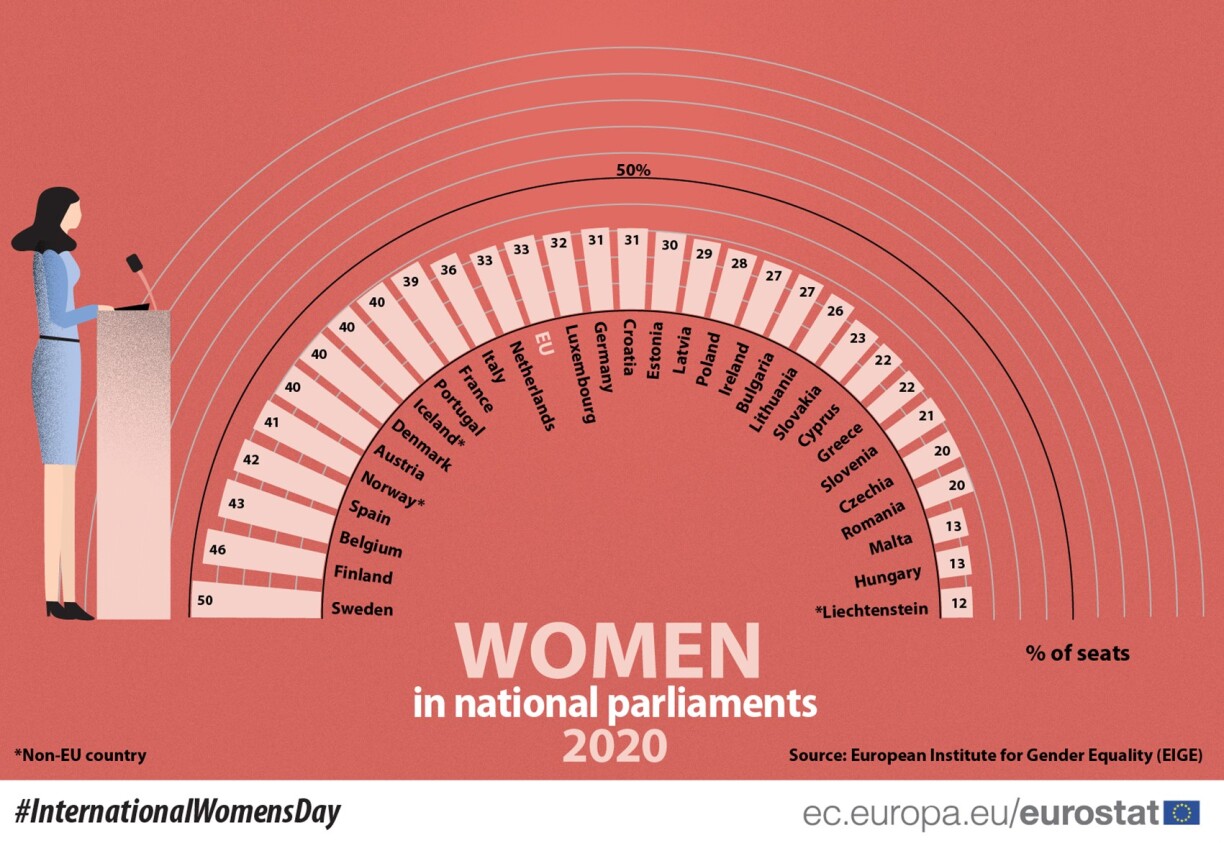
In the wake of International Women's Day last week, a report from the EU's statistics agency, Eurostat, shows that Luxembourg lies below the EU average in terms of both female parliamentarians and members of government.
In effect, 19 of the 60 MPs in the Chamber of Deputies are women, corresponding to 32%.
That places Luxembourg just under the EU average of 33%, in 11th place out of the 27 EU member states.
The Grand Duchy thus lags far behind countries such as Sweden, where 50% of parliamentarians are women, although it remains a significant improvement on Hungary, where only 12% are female.
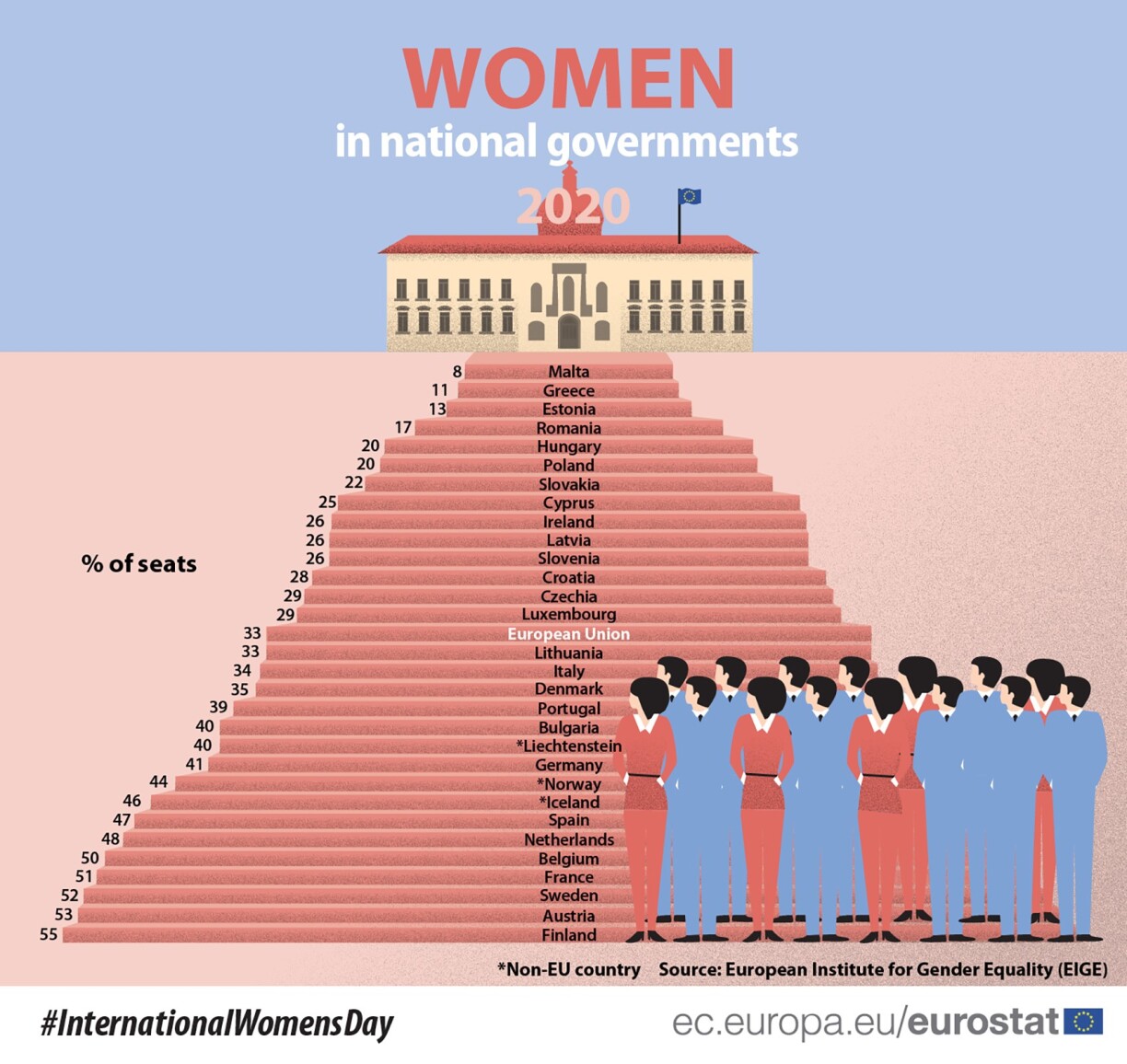
It's the same story in the government, too.
Five of the 17 government ministers in Luxembourg are women, representing 29%.
Again, that places Luxembourg's government just under the EU average, which is also 33%.
That makes Luxembourg the EU's median country in terms of women in government, in 14th place out of 27.
Delving deeper, though, it's clear that women in Luxembourg's government hold less prestigious positions than their male counterparts.
The Prime Minister (Xavier Bettel) and both Deputy Prime Ministers (Dan Kersch and François Bausch) are men, while men lead the Ministries of Defence (Bausch), Finance (Pierre Gramagna) and Foreign Affairs (Jean Asselborn).
Indeed, no woman has ever served as Prime Minister, Minister of Finance or Minister of Defence in Luxembourg.
The highest-ranking female members of the current Bettel administration are Taina Bofferding, who leads the Ministry of the Interior as well as being Minister for Gender Equality, and - in the midst of a global pandemic - Minister for Health Paulette Lenert.
In terms of Luxembourg's political parties themselves, the picture is more balanced.
For the CSV, while Frank Engel is the party's (controversial) president, Martine Hansen is the leader in the Chamber of Deputies.
The roles are reversed for the DP: Corinne Cahen is the president, but Gilles Baum leads the party in the Chamber.
The LSAP have men in both positions, while the Greens have a female co-president (Djuna Bernard) and a female leader in the Chamber (Josée Lorsché).
Overall, it's clear to see that Luxembourg has a long way to go before its political system truly reflects our society.





