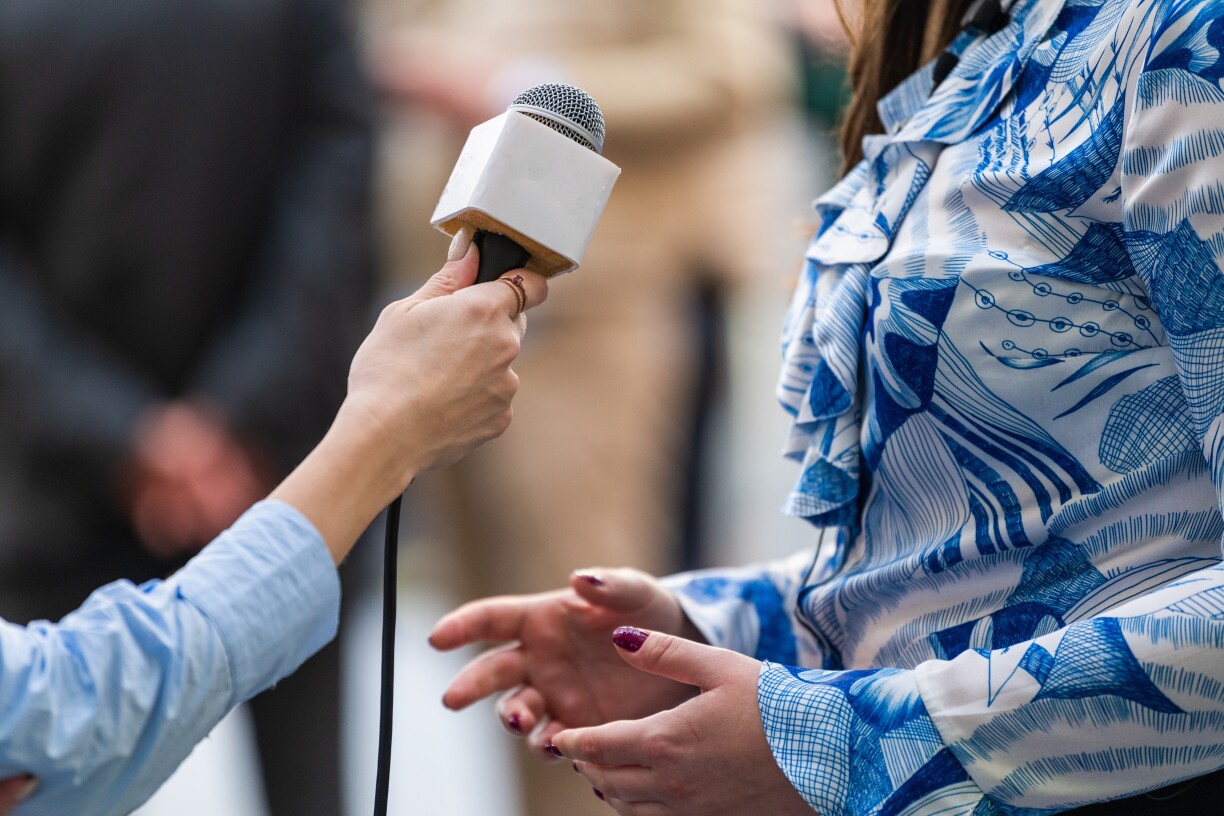
Women remain significantly underrepresented in Luxembourg's news media, according to findings from the latest Global Media Monitoring Project. The international research initiative evaluates the qualitative and quantitative presence of women in news coverage worldwide. For the 2025 edition, researchers analysed all news output from a single, ordinary day – 6 May – in the Grand Duchy.
The results for Luxembourg were presented at a press conference held by the National Women's Council and the advocacy platform CID Fraen an Gender, with analysis provided by researchers from the Luxembourg Institute of Socio-Economic Research (LISER).
On the monitored day, 153 journalists produced 179 articles and reports mentioning a total of 526 people. The analysis of this data, using various indicators, revealed a clear gender disparity, as explained by LISER researcher Carole Blonde-Hanten.
"The report shows very clearly that women are still underrepresented," Blonde-Hanten stated. "First, they are mentioned less in the media," the researcher explained, adding that there are also fewer female journalists, reporters,, and presenters.
The data confirms this imbalance. Only 30% of the 526 people mentioned in the news were women. While this represents a 10% increase since 2010, a substantial gap remains. Additionally, women were more frequently cited in reports on topics like culture and health.
"Women still remain concentrated in fields that are not considered as prestigious in our society compared to, say, business or politics," Blonde-Hanten noted.
The underrepresentation extends beyond subject matter to the journalists themselves. On 6 May, just 33% of the reporters and writers were women – a figure that has actually decreased from 39% in 2010. According to Blonde-Hanten, these findings underscore the need to break down professional stereotypes at an early stage.
Blonde-Hanten emphasised that media representation shapes future society. "Children are building our society of tomorrow," she stated. "If something is already going wrong there – because what we see in the media now, we also see in other areas – you can talk to children about stereotypes, you can really break them down with them," she said.
According to Minister Delegate for Media, Elisabeth Margue, this message has resonated with political leaders. She noted that existing conventions with media organisations already mandate the consideration of equal opportunities.
Margue added that the government has incorporated this principle into the new media reform framework, which establishes the Luxembourg Independent Media Authority (ALIM). "The government will also clearly write into the law: we would like a balanced representation of women and men," she affirmed.
The minister also indicated that ALIM will be empowered to remove certain content, primarily material deemed discriminatory, with the new authority able to intervene directly in such cases.
The full results of the study are available on the website of CID Fraen an Gender.





