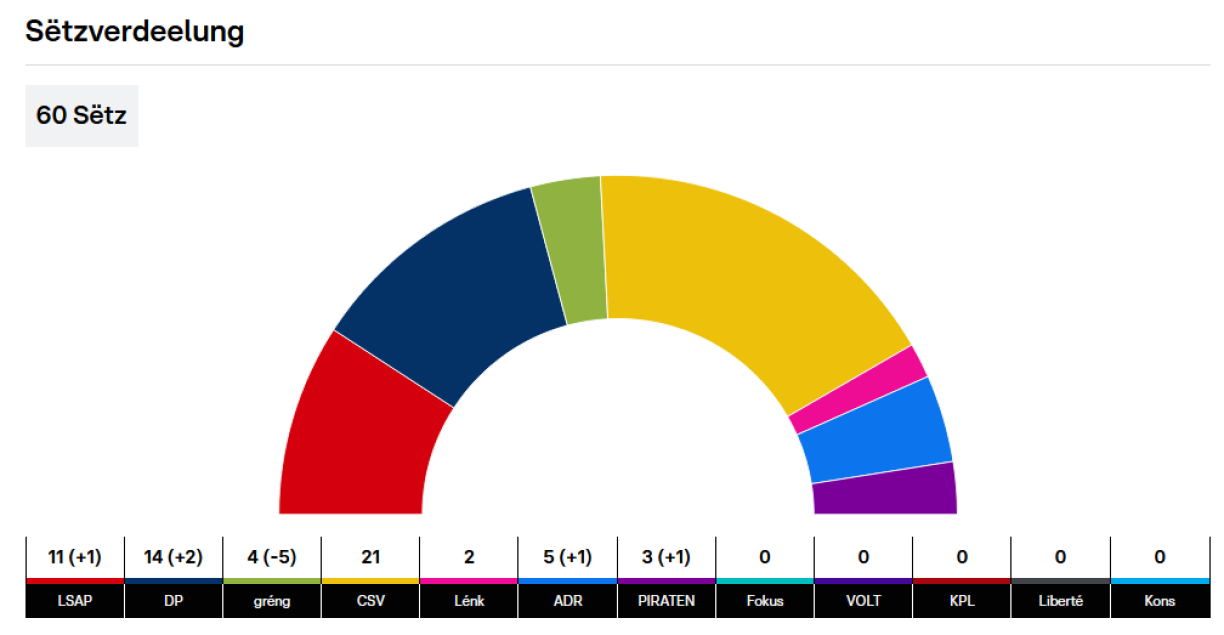
The outcome of Sunday's election was remarkably unpredictable, creating an atmosphere where anything seemed possible. Until the final moments, the trajectory of victory and the distribution of seats remained uncertain. However, the verdict is now unequivocal: the current government coalition fell short of securing enough votes to maintain their majority, securing only 29 out of the required 31 seats.
In a surprising turn of events, the Green Party, which emerged as a major victor in the 2018 elections with a gain of three seats, experienced an unexpected setback on Sunday night, losing five seats. This loss, a rarity in Luxembourgish politics, adds a new dimension to the political landscape.
Furthermore, smaller parties, such as Déi Lénk and the KPL, as well as recently established entities like Fokus, Volt, and Liberté-Fräiheet, failed to secure any additional seats. The absence of electoral gains extended beyond the major players. In contrast, it was the ADR and the Pirates who found themselves buoyed by voter support. Both parties have now added a seat each in the Chamber of Deputies, resulting in a total of five and three seats respectively.
The Christian Christian Social People's Party finally got their revenge. Left in the opposition for a decade during the minority coalition years, despite being the strongest party in the country, the CSV will now return to government.
Luc Frieden, whose return to politics represented a sense of renewal for the party, in spite of his detractors, accomplished what he set out to do, with the CSV maintaining a majority of votes. Now Frieden is eyeing a two-party coalition in government.
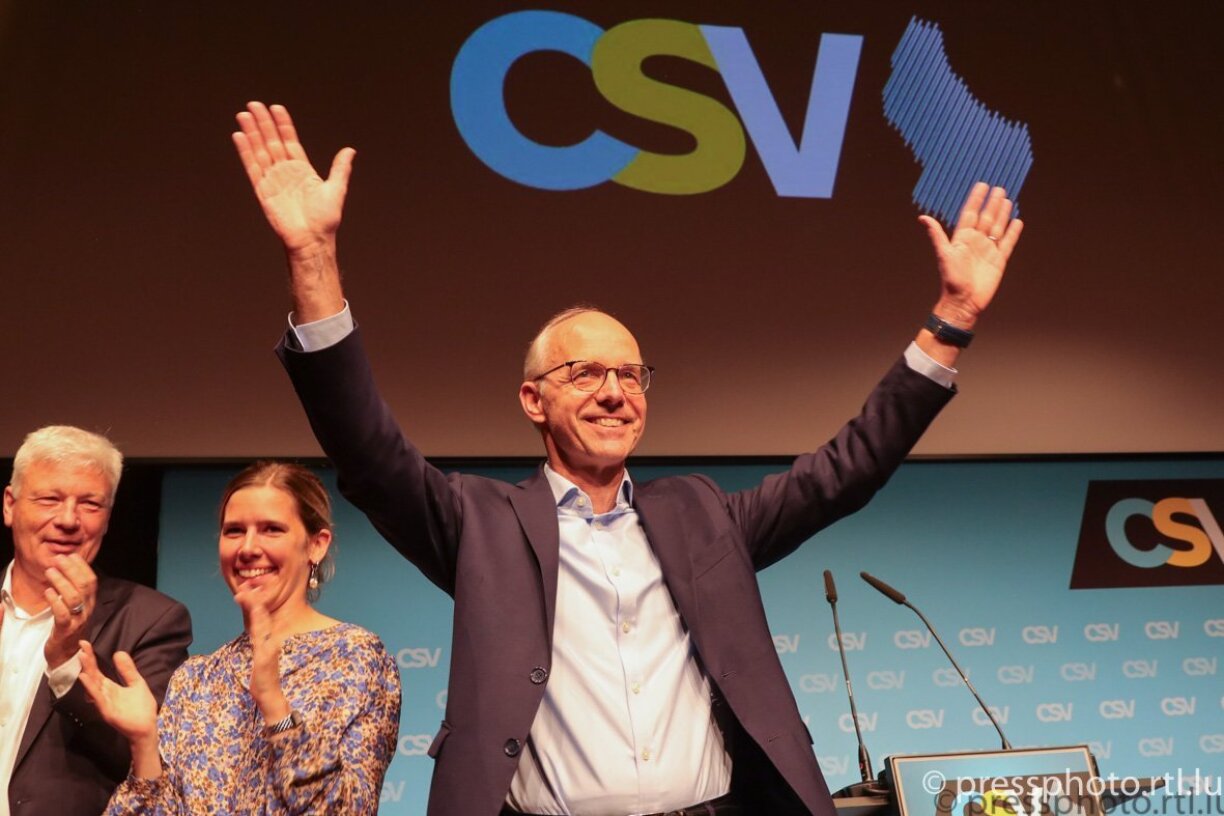
At the end of election night, Frieden stated that this result was a little unexpected, but that voters clearly said that the CSV plays an important role in the country. He underlined that they now have more than a third of all seats in the Chamber. The former minister, who held several portfolios under Jean-Claude Juncker, also said that while some stated that the CSV was not a party of the future, the electorate made the choice to put them in the government regardless.
he CSV currently holds enough seats to potentially form a coalition with either the DP or the LSAP. The Democratic Party, following a decade in power, garnered additional support, securing two more seats in parliament. This elevation places them as the second-strongest party in the nation, boasting a total of 14 seats. Meanwhile, the LSAP also experienced a modest gain, obtaining one additional seat, though their overall count stands at 11.
“With the results have achieved tonight, I think my party can claim a responsibility to be a part of the new government.”, stated DP lead candidate Xavier Bettel, soon after the official results were published.
Paulette Lenert summarised the situation quite clearly. “With the result, there are two possibilities.” Either a CSV-LSAP coalition that worked for many years in the Grand-Duchy, or a CSV-DP coalition. During her first speech of the night at the LSAP headquarters at the Melusina club, she stated that she was open to talks with the CSV. “I can only be satisfied. We have convinced the voters.”, she added. Lenert also expressed satisfaction with her personal result in the eastern district, where the LSAP gained 4% of votes. However, she regretted that the party failed to convince voters enough to win additional seats in the North and in the East, which would have put them on a par with the DP.





