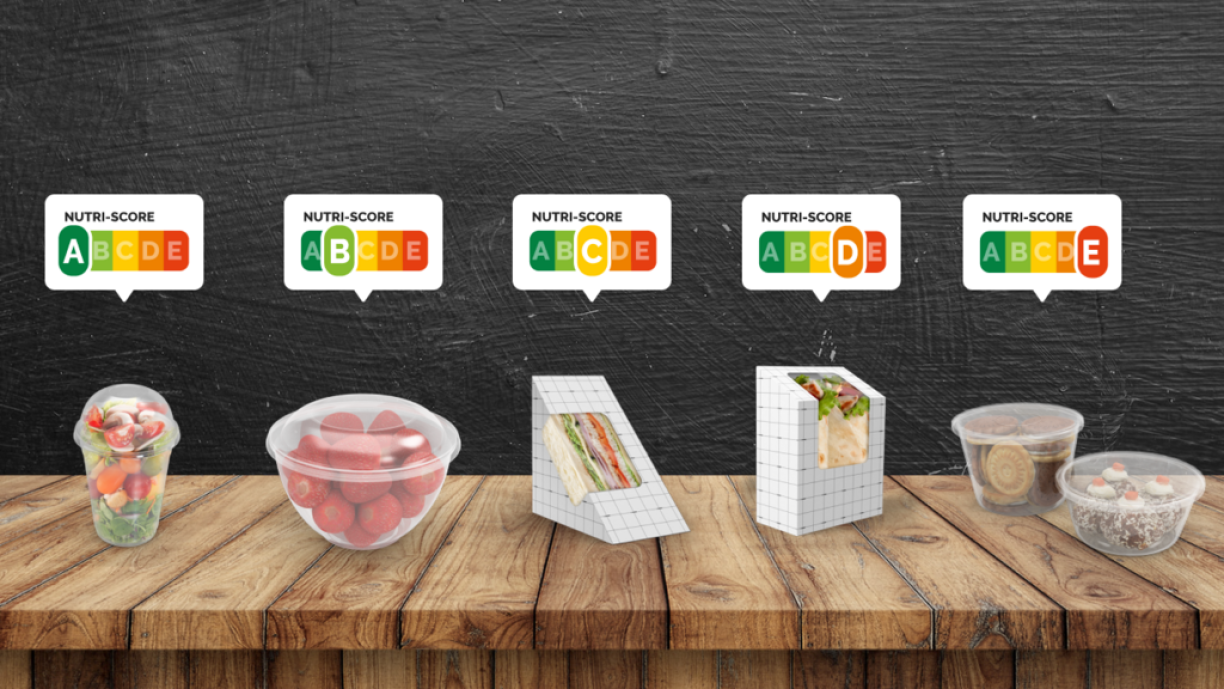
Since 2021, this labelling system has been available on packaging for Luxembourg-based companies. A recent study, presented by the Ministry for Consumer Protection on Monday, sheds light on its reception among the population and businesses.

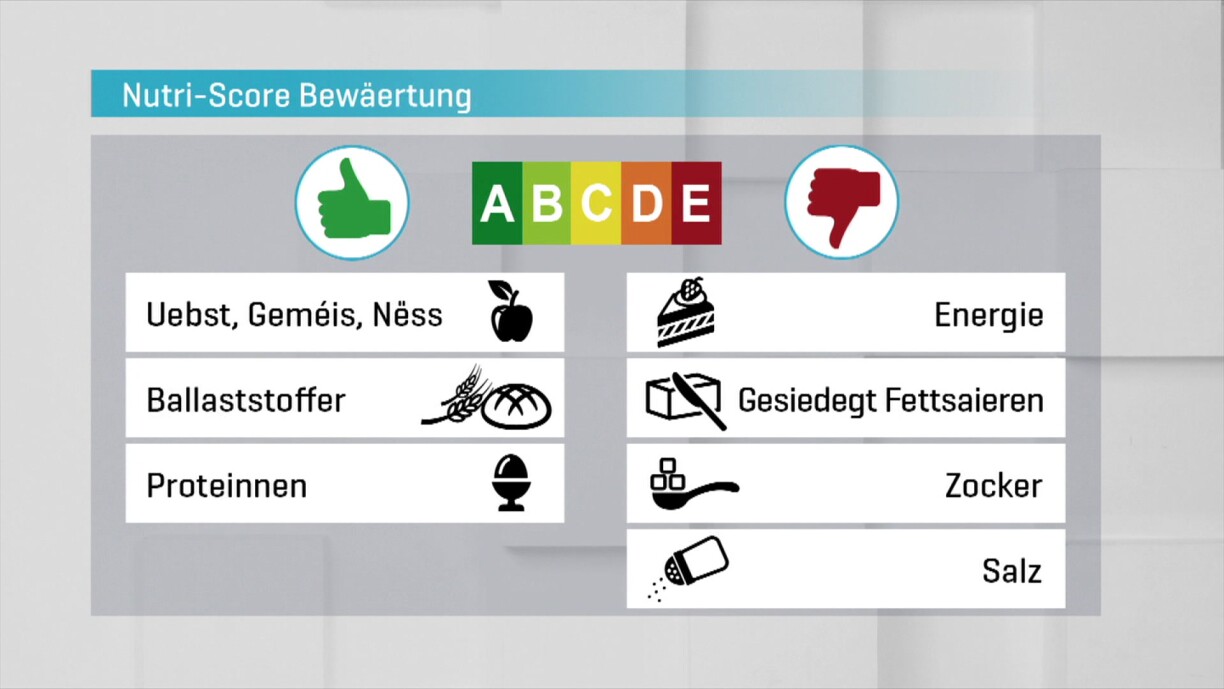
Categorised from "A" to "E," the Nutri-Score classifies food into five groups, with "A" representing the healthiest and "E" denoting the least nutritious option.
The scoring system takes various factors into account, including protein, fibre, fruit, vegetables, nuts, energy content, saturated fat, sugar, and salt per 100 grammes.
Each of these factors is assigned an individual points score in accordance with how healthy or unhealthy it is deemed to be.
These individual scores are then added together to obtain a final score, i.e., the product's overall Nutri-Score.
The Nutri-Score is a food labelling system that is currently used by companies in seven European countries on a voluntary basis. In Luxembourg, six companies were using it by the end of April.
It is important to understand that the score's significance is limited to the respective food categories. Having products only from the "A" (green) category in one's shopping basket does not necessarily guarantee a healthy and balanced diet. In addition, some products can never qualify for an "A" label due to their composition.
Critics have questioned the Nutri-Score, arguing that it overlooks certain factors, such as the fact that certain products are only consumed in small doses (e.g., olive oil) and the exclusion of sweeteners, colourings, or preservatives from the assessment.
On a positive note, the score may prompt manufacturers to refine their recipes and offer healthier products.
For detailed information on energy content and specific nutrients, consumers can refer to the mandatory nutritional value table, which must be printed on all packaging by law.





