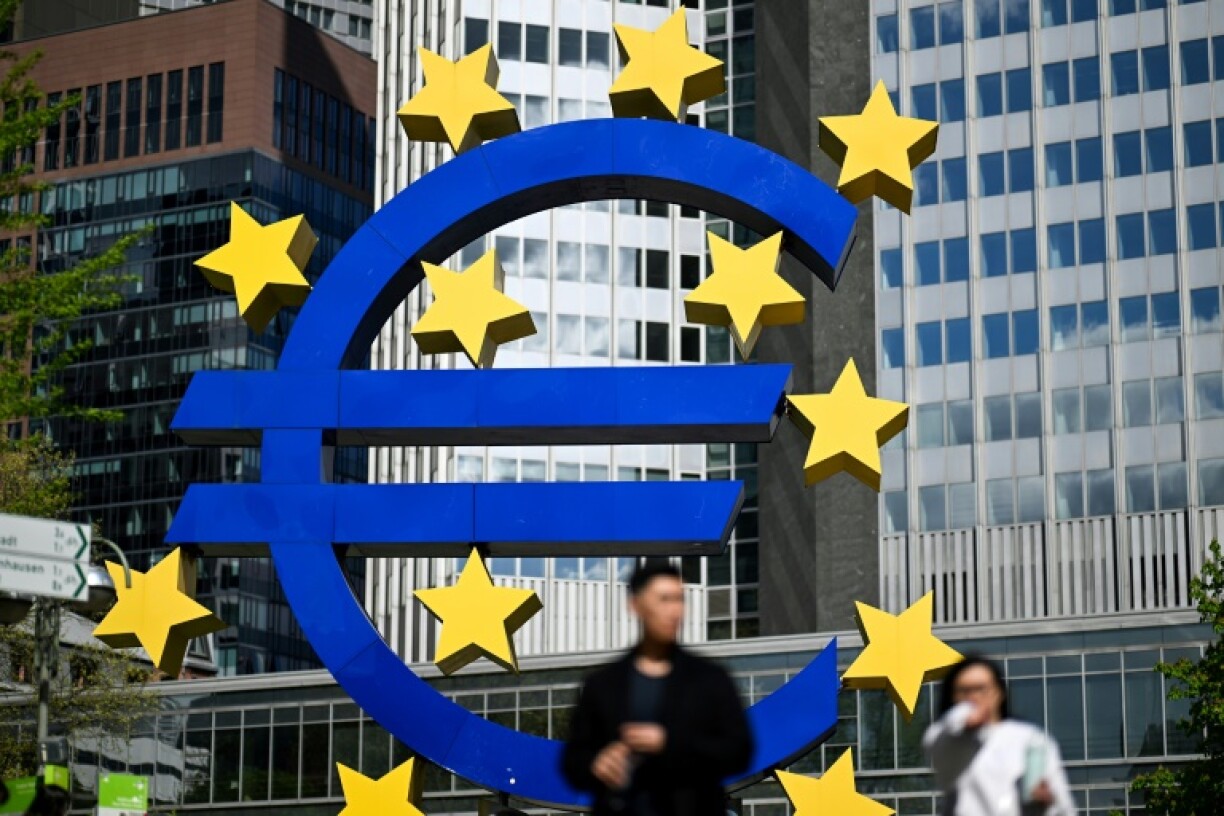
In an interview with RTL, Nicolas Weber, director of the Central Bank of Luxembourg, explains how and where people will be able to pay with the digital euro and how this new form of payment is intended to strengthen European independence.
Weber describes the digital euro as "a digital version of the wallet you carry, either on your phone or potentially on a physical card". The European Central Bank (ECB) aims to introduce the service in early 2029.
Shops would be required to accept both cash and digital euros, while individuals would also be able to transfer digital euros directly to one another.
The digital euro would be available free of charge through banks. "The digital euro will be free for what we call basic services", Weber explained. He said that end users would also face no additional charges for electronic payments made using the digital euro.
As with card payments, merchants would still pay fees, but Weber said that "the fees currently paid to international credit card companies would disappear, because the Eurosystem will not charge fees for this service between banks".
One reason for introducing the digital euro is that "most payments, more than 70%, are processed through systems or offered by companies that are not European", Weber said. "This means that the costs and revenues associated with payments do not remain in Europe, and control over the ability to make payments is also not in European hands", he stressed.
The aim, he said, is not to push anyone out of the market, but to provide a European alternative that would allow Europe to act independently in the field of payments whenever necessary.
On privacy, Weber acknowledged that a digital payment can never be fully anonymous. "Today, when I pay with cash, it is anonymous. That is very clear. A digital transaction is never 100% anonymous", he said.
Banks would continue to have access to the information required under existing regulations, according to Weber. However, he stressed that "the Eurosystem will not receive any information about the payments".
Weber noted that although it is not 100% anonymous, it is still much more private than the card payments currently available.
Even without internet access, a mobile signal or electricity, users would still be able to make payments up to a certain amount. These offline transactions would be "completely anonymous, just like cash", according to Weber.
He also highlighted the digital euro's potential role in financial inclusion, noting that some people in Europe still do not have a bank account. The digital euro could allow them to make digital payments using "a card that can be topped up", he said.
This, Weber said, would enable everyone to participate in economic life and make the digital euro an inclusion project as well as a payment system.
Despite the introduction of the digital euro, Weber stressed that there is "absolutely no initiative to abolish cash".
Weber stressed that cash would remain important and that there were no plans to phase it out, adding that its continued use ultimately depended on consumers. The digital euro would, however, have a so called holding limit, restricting how many digital euros a person could keep in their wallet at any one time.
Weber said that this limit had not yet been determined. There would be no corresponding limit on the size of individual payments, he explained. If a purchase exceeded the amount of digital euros available in a user's wallet, the difference could simply be drawn from their regular bank account, according to Weber.





