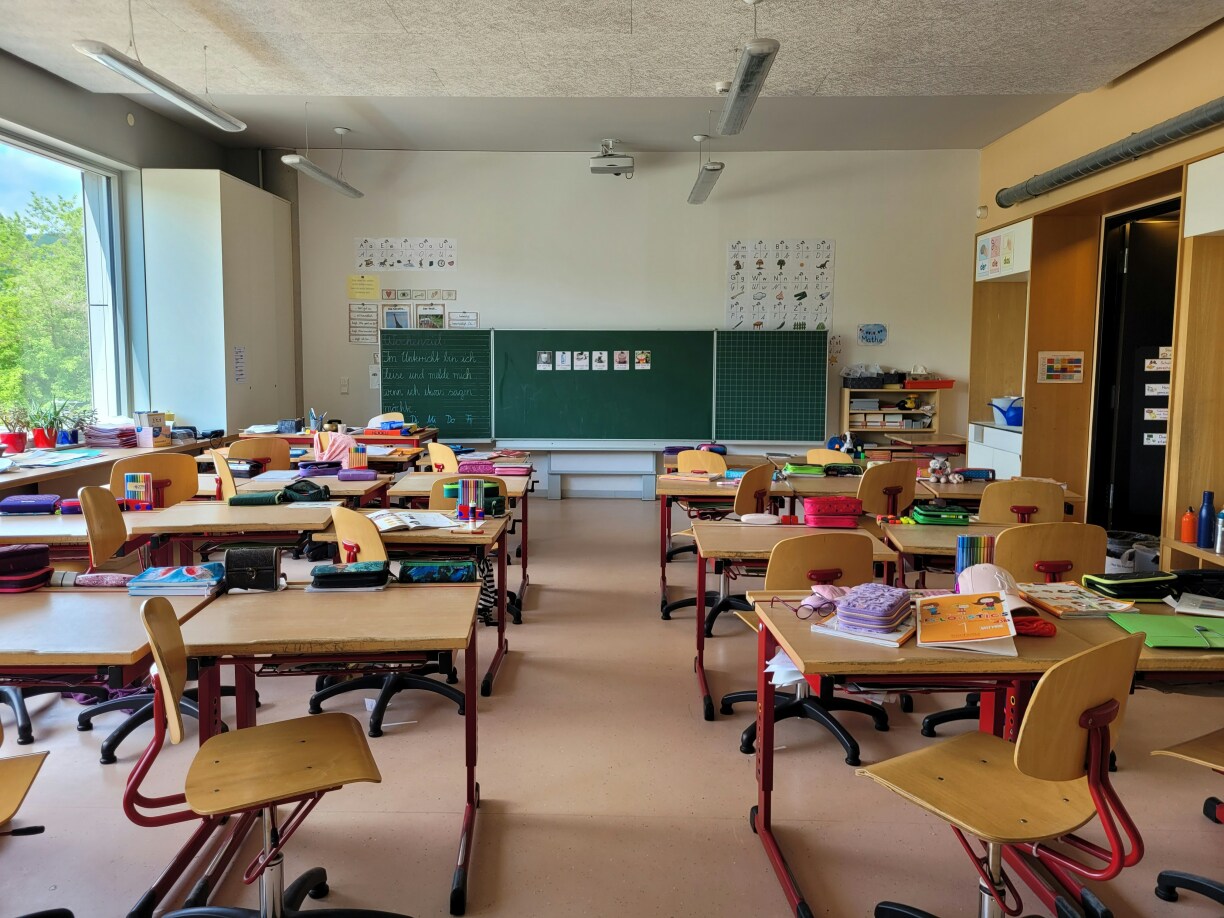
Luxembourg's secondary education system is far more diverse today than it was just a few years ago. For the upcoming 2026/27 academic year, the Ministry of Education reports that nearly 56,000 students are registered in secondary schools. Of these, around 45,400 attend public schools, while just over 10,500 are enrolled in private or European institutions.
After completing Cycle 4.2 in primary education, students in Luxembourg can choose between the Lycée classique and the Lycée général. The Lycée classique is more academically oriented and prepares students primarily for university studies. In the upper years of the Lycée classique, students can specialise in one of eleven sections, depending on the school they attend.
At the end of the Lycée classique programme, students receive the Diplôme de fin d'études secondaires classiques, which opens the door to further studies or employment.
By contrast, the Lycée général is considered more practice-oriented, although the term "général" does not necessarily mean vocational training. In Year 7 (septième), students are guided into either the "Voie d'orientation" or the "Voie de préparation," depending on their skills and aptitudes.
After Year 5 (cinquième), students face several possibilities: they can opt for vocational training or continue their general education. In the upper years of the Lycée général, students can choose a specialisation among five divisions.
Upon reaching the final year (première), students can take their final exams to obtain the Diplôme de fin d'études secondaires générales. This diploma, like its classique counterpart, qualifies graduates for further study or entry into the workforce.
Students who complete Year 5 (cinquième) in the general stream can also choose to enter a vocational path. There are three main vocational diplomas on offer: the Certificat de capacité professionnelle (CCP), the Diplôme d'aptitude professionnelle (DAP), and the Diplôme de technicien (DT). Training for the CCP and DAP lasts three years each, while the DT programme takes four years. All these qualifications prepare students for working life, but with certain diplomas and additional modules, further study remains an option even after vocational training.
In addition to the traditional Lycée classique and Lycée général, students in Luxembourg can also pursue international and European programmes.
Luxembourg now has six public international schools operating according to the European School model. These schools are open to all students free of charge and offer French, English, and German-language sections, among others. The curriculum leads to the European Baccalaureate.
As of the 2020/21 school year, nearly 2,400 students in Luxembourg's public secondary schools were enrolled in international programmes. For the 2026/27 school year, the Ministry of Education expects around 6,900 students to be registered in these tracks, a near tripling in just six years.
There are also the Schola Europea Luxembourg I and II, which are the traditional European Schools. Admission to these institutions is governed by specific criteria, often linked to the parents' employment status or workplace. Families not employed by European Union institutions may be required to pay tuition fees.
Among private schools, some follow the national Luxembourgish curriculum, such as Fieldgen, while others use their own or international programmes, like the International School of Luxembourg. Tuition fees vary depending on the specific school.
Another unique model is the Schengen-Lyzeum in Perl, a cross-border public school that operates jointly under the German and Luxembourgish systems.
One of the most significant changes in the current school year within the national public system is the expansion of language options. Until six years ago, French-language classes were primarily intended for newly arrived students. In 2021/22, the first French-language Year 7 (septième) classes opened for students coming from the Luxembourgish primary system. This year, the French-language offer has been further expanded to more secondary schools across all regions of the country.
The system is not moving exclusively toward French, however. The Lycée classique is set to introduce German-language sections as a pilot project in three schools, the Lycée classique de Diekirch, the Lycée de Garçons Luxembourg, and the Lycée Hubert Clément Esch, from the 2027/28 academic year. Traditionally, French has been the main language of instruction in the upper years of the Lycée classique.
With a growing population, ongoing and future investment in school infrastructure remains essential. The government plans to build 11 entirely new secondary schools by 2050 and has also mapped out 17 short- and medium-term construction and expansion projects.





