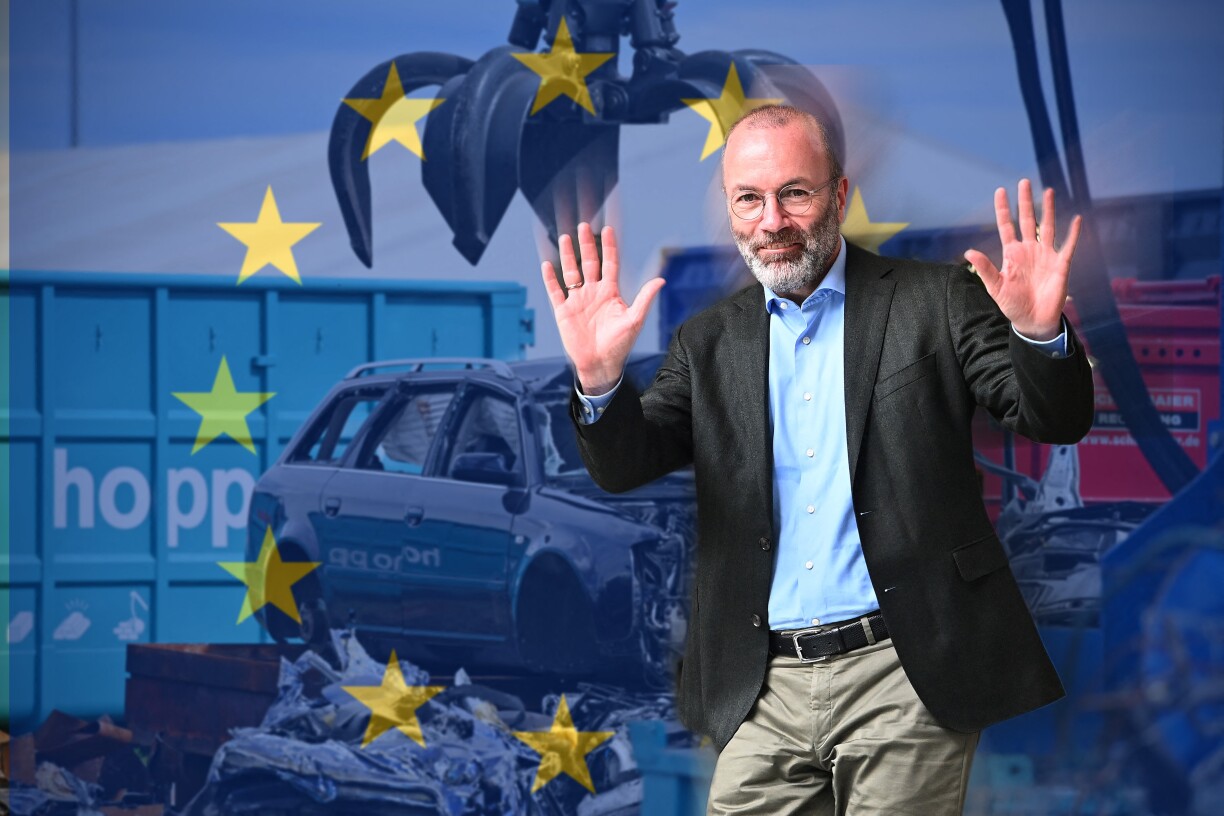
Petrol and diesel cars, as well as classic hybrids, were set to gradually disappear from the market under EU plans to ban the sale of new combustion-engine vehicles from 2035. The measure was a key pillar of the European Green Deal and aimed to put the transport sector on a path towards climate neutrality. However, that plan is now under pressure.
As widely reported by the media, the European Union is likely to reconsider the directive banning new petrol and diesel cars from 2035, although a final decision has not yet been taken.
Under the proposals currently being discussed, manufacturers would still be allowed to produce combustion-engine vehicles after 2035, but only in limited numbers. European People's Party (EPP) President Manfred Weber said he sees a possible compromise following talks with European Commission President Ursula von der Leyen. Speaking to the German newspaper Bild, Weber suggested that instead of a complete ban, car manufacturers could be required to reduce CO2 emissions from new registrations by 90% from 2035 onwards, rather than 100%.
Luxembourgish MEP Charel Goerens (DP) criticised both the substance and the way the debate has unfolded. "It cannot be that Mr Weber of the EPP announces such developments in the Bild newspaper", Goerens said. He pointed out that the regulation already includes a revision clause, which should be preceded by an impact study under the Green Deal framework. "An impact assessment should be carried out before such a discussion even begins", Goerens added. "This study could have been accelerated and then discussed properly in Parliament. But if things continue the way they have with other laws, where a majority made up of right-wing extremists and Mr Weber's followers already approve something, Parliament will soon no longer have a role to play."
Goerens also warned that the debate undermines planning certainty for those working in the automotive and infrastructure sectors. Many companies, he said, have already adjusted their strategies in anticipation of the phase-out of combustion engines and have invested heavily in the transition to electric mobility.
Even from within the EPP's own ranks, there is not much understanding for Manfred Weber's statements. MEP Martine Kemp (CSV), who voted against the combustion-engine ban in 2023, nonetheless believes in the importance of sticking to decisions once they have been taken: "This back and forth creates uncertainty, also for everyone else. Even if not everyone was happy with the combustion-engine ban, there was at least clarity."
MEP Marc Angel (LSAP) warned that reopening the debate could weaken Europe's position on the global market, particularly compared with China and other countries that are already a step ahead in electromobility. Calling for a clear line, he states: "I find it a bit complicated, the meandering course that is currently being taken in the EU", Angel said. To Angel, it seems already-adopted laws are being undone in the spirit of remaining competitive in a global market. Ironically, however, those calls to reverse course are coming from those who constantly harp on competitiveness and innovation, instead clinging to technologies that reinforce the status quo.
A final decision is expected no later than next week, following further negotiations between the European Commission, the European Parliament and the member states. The issue is also likely to feature on the agenda when EU heads of state and government meet in Brussels at the end of next week.





