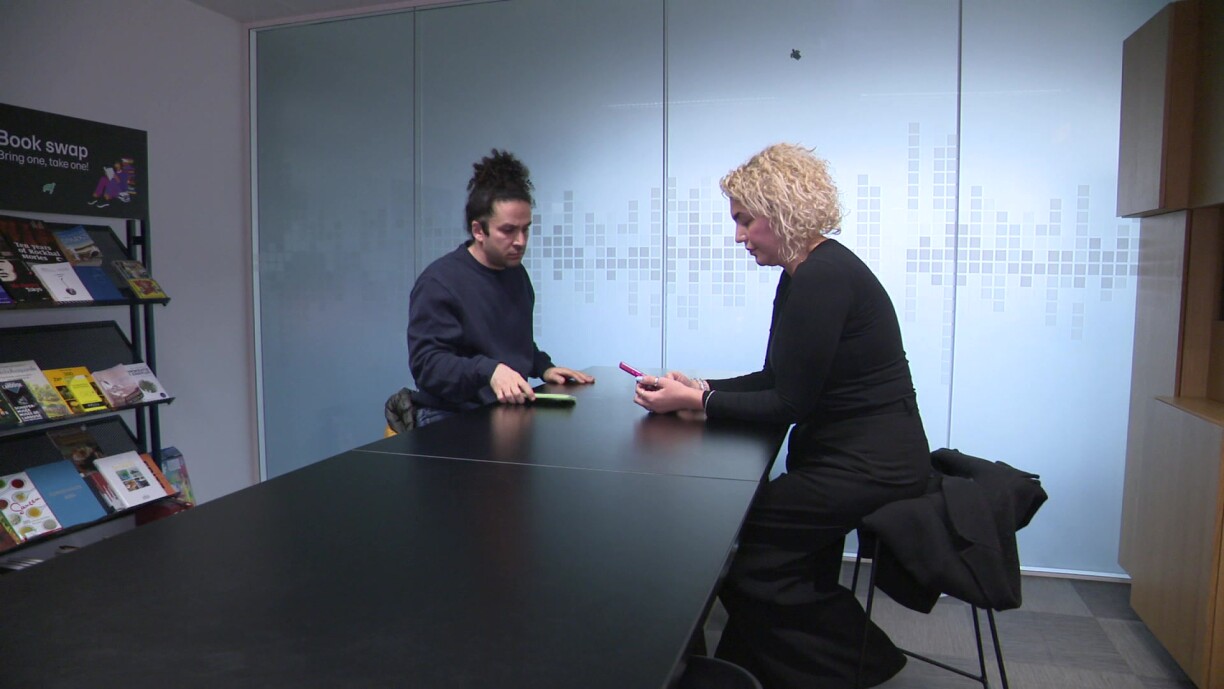
Elmira Najafi was born in Tehran but moved to Luxembourg with her parents as a child. Many members of her family, including uncles, aunts and cousins, still live in Iran. She last spoke to them on Thursday via FaceTime. They described the scale of the protests as unprecedented, saying they had never seen so many people on the streets, even during previous protest movements such as the Women, Life, Freedom demonstrations or the Iranian Green Movement. They told her that many people, including themselves, are now taking part in the protests.
It is difficult to determine exactly what is happening, how many people are taking to the streets, and how the authorities are trying to keep the situation under control, as very little information is coming out of the country. This is particularly worrying for Iranians living abroad who still have family in Iran.
Najafi said she feels both worried and encouraged that her family is joining the demonstrations, adding that remaining silent is also unsafe. She explained that people can be accused of crimes they did not commit, with espionage often used as a pretext. She referred to the past executions of the Swedish-Iranian young brothers as examples. Communication with people in Iran is currently extremely difficult, as internet access, telephone lines and even electricity are often cut. Although satellite systems such as Starlink can provide limited internet access, these connections are unreliable.
Farshad Afsharimehr left Iran in 1986 as a political refugee and headed for Belgium. After staying in the US and Qatar, he eventually settled in Luxembourg with his wife and their two daughters. He still has many relatives and friends in Iran. His parents died a month ago, which was the last time he was in contact with his family:
"In fact, it was when my father died that I was last in contact with my uncle who prepared the ceremony. Two days later the protests began. I was waiting for my cousin to call me because I still had some things to sort out remotely, but since then, I have not been able to contact them."
Like Elmira Najafi, he feels distressed at being so far from his family and unable to help. Afsharimehr believes other countries should increase political, economic, and even military pressure, arguing that this would be in the international community’s interest. He said that if the Iranian regime were to fall, it would have positive repercussions worldwide, claiming that the current system fuels extremism and terrorism.
Both Najafi and Afsharimehr hope that the protests will lead to democratic elections. While they cannot yet say what a new political system might look like, they agree that religious leaders should no longer hold power.
Estimates of the number of deaths vary widely. Official figures put the death toll at around 2,000, while opposition sources claim it could be as high as 12,000. Both counts include civilians and members of the security forces.





