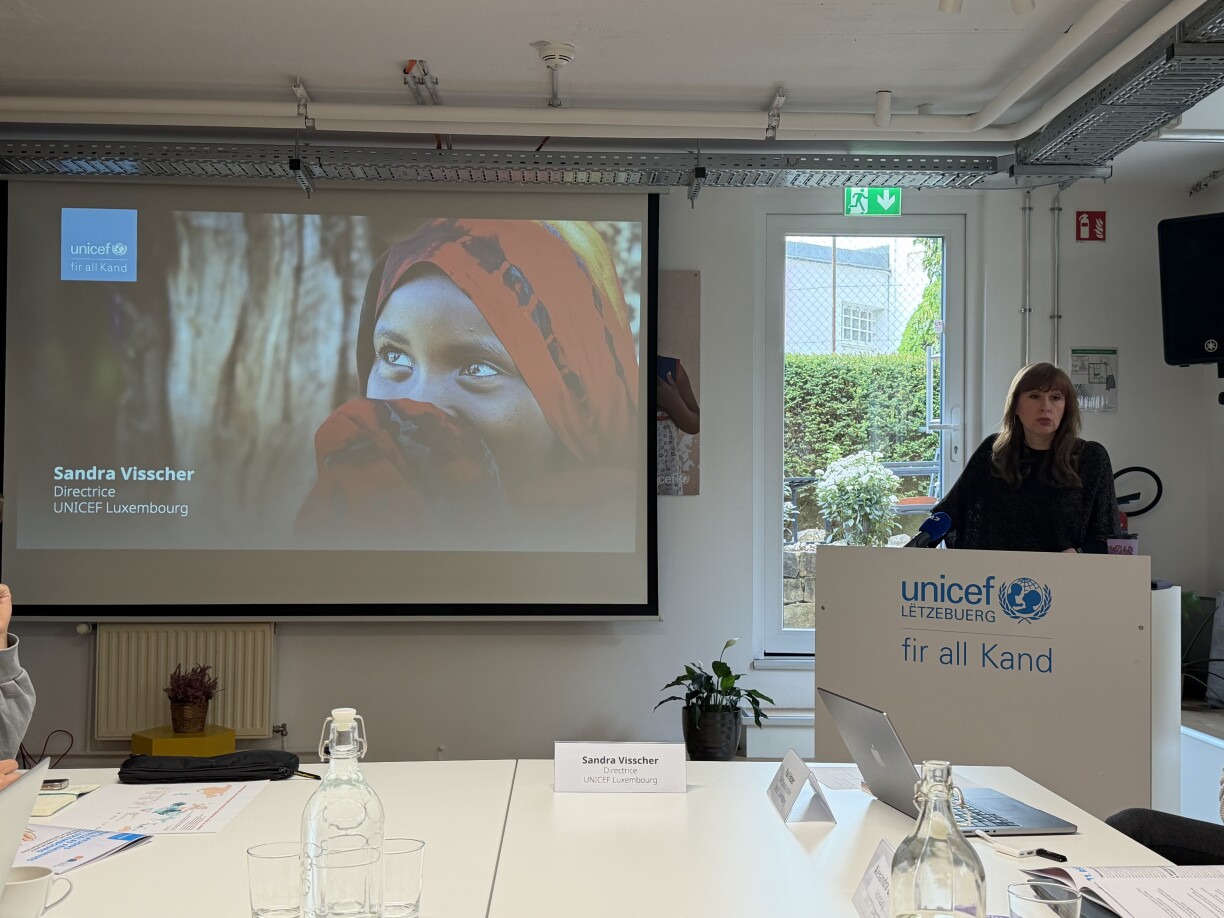
On Tuesday, 21 April, the United Nations International Children's Emergency Fund (UNICEF) Luxembourg published a groundbreaking study estimating, for the first time, the number of girls and women affected by or at risk of female genital mutilation (FGM) in the national context.
According to the report, around 3,300 girls and women living in Luxembourg are affected by this issue, either having already undergone the procedure or being at risk. Of these, approximately 2,200 have already experienced it, while about 1,100 are girls and adolescents considered at risk.
The study, carried out with GrewIA, brings together data from Luxembourg’s population register and international estimates from organisations like UNICEF and the World Health Organisation (WHO). This approach provides useful overall figures, while recognising that such estimates have their limits.
“It is not about identifying individual cases, but about providing reliable overall estimates to help guide public policy, better target prevention, and strengthen the protection of the girls concerned”, emphasises Dr Ivan Nourdin, co-founder of GrewIA.
The report also brings attention to concrete ways for prevention, early identification, and support services. It also serves as an important resource for understanding how to respond and seek help if someone is told they must undergo this procedure.
“To be effective, prevention efforts must be tailored, inclusive, and developed in partnership with the communities concerned. Peer-to-peer awareness work is essential to create lasting change”, explains Pascale Zaourou, coordinator at the Luxembourg Group for FGM Abolition (GAMS).
Globally, more than 230 million girls and women have undergone a feminine genital mutilation, and around 4 million girls are at risk each year. Most cases are observed in Africa (144 million girls and women) , where in countries such as Somalia, 99% of women ages between 15 and 49 undergo the procedure in 2024.





