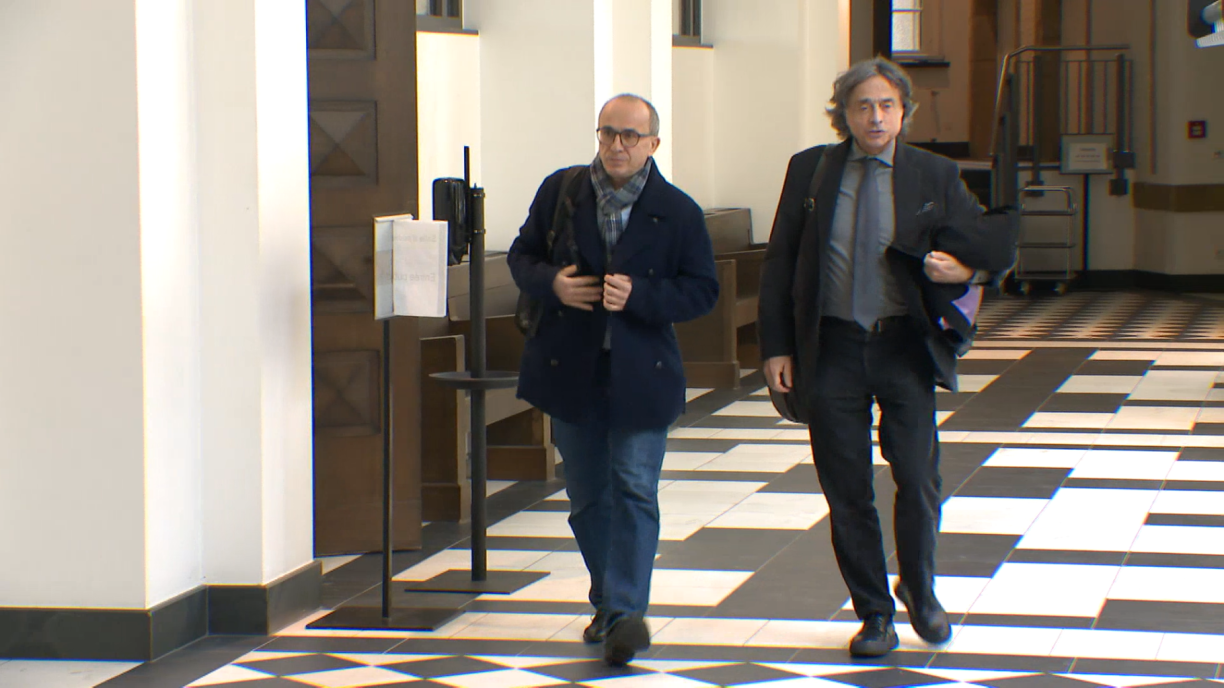
Roberto Traversini, along with two co-defendants, has been standing trial since Monday, 19 January, before the seventh correctional chamber of the Luxembourg District Court, where they face charges including illegal conflict of interest, misuse of public funds, fraud, and breach of trust.
One possible sanction being considered in the case against Roberto Traversini could involve community service in a clinic, a care home, or at the non-profit association Centre for Local Initiative and Management (CIGL). This is one of the options his lawyer, Rosario Grasso, says could be envisaged if the court were to impose a sentence of no more than six months.
Grasso explained to RTL after the final day of the trial on Monday evening that such a measure could amount to up to 240 hours of work, which is legally equivalent to a six-month prison sentence. He noted that the question of whether Traversini could be assigned to an organisation such as the CIGL had already been raised in court, but stressed that it would ultimately be up to the court to decide both whether this option applies and what type of work would be required.
However, Grasso's primary request was for the court to apply a suspension of the pronouncement of the sentence. This would mean that Traversini would be found criminally responsible and guilty, but that no penalty would be imposed for the time being due to mitigating circumstances.
Grasso explained that such a decision would not close the matter entirely: if Traversini were to appear before a court again in the coming years, the current case could be reopened and taken into account.
Grasso also pointed out a major legal obstacle in the case, namely the charge of forgery in Traversini's capacity as a public official. He explained that if this accusation were upheld, the minimum sentence would rise to three years imprisonment, making a suspension of the pronouncement of the sentence legally impossible.
In his plea, Grasso emphasised that Traversini had fully cooperated throughout the investigation and had answered all questions from both the Judicial Police and the investigating judge honestly. From the outset, he had acknowledged having made mistakes, Grasso said, while maintaining that these errors were not necessarily criminal in nature. He conceded that they could be seen as moral and political failing, but insisted that his client had never intended to enrich himself or favour people close to him.
According to Grasso, Traversini acted transparently and never instructed anyone, for example, not to issue an invoice. Grasso nevertheless acknowledged that under Luxembourg law, proving an illegal conflict of interest does not require much: once private and public interests overlap, the offence is already considered to have occurred.
Last week, the prosecution requested a four-year prison sentence, fully suspended, along with a fine and a five-year ban on holding public office. Addressing the fact that nearly six years passed between the investigation and the trial, Grasso said this was not unusual in a state governed by the rule of law.
He also highlighted that Traversini stepped down from his various political roles very early on when the affair emerged, describing this as a responsible decision and a sign of respect towards his party colleagues, adding that it is the correct thing to do in politics.
Whether Traversini intends to seek public office again in the future remained unclear during the proceedings. When asked about it last week, he reportedly shook his head.
The court's verdict in the case is due to be delivered on 12 March.





