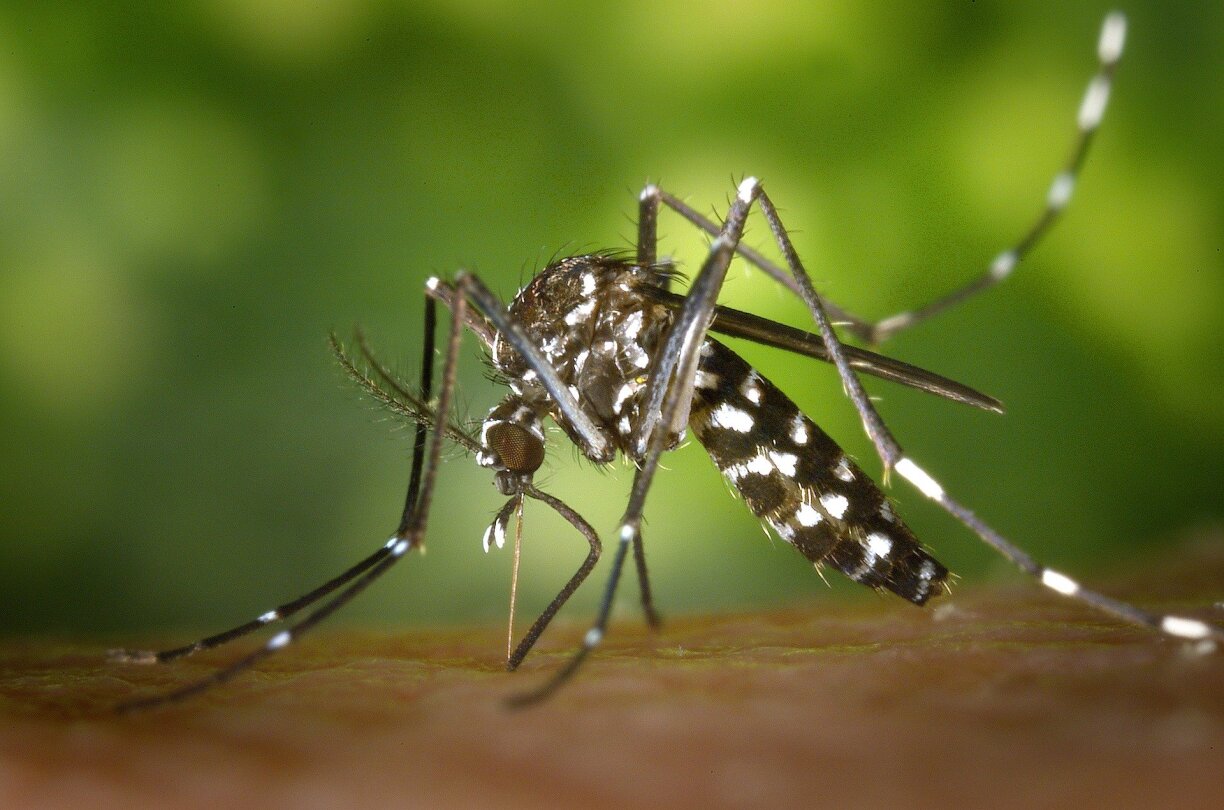
The so-called tiger mosquito has been detected for the first time in Luxembourg, according to a statement released by the Ministry of Health on Saturday morning. The presence of the mosquito has been confirmed in two locations in the municipality of Roeser. However, according to the latest information, the phenomenon is currently contained.
According to the ministry, the tiger mosquito moves "little" and rarely travels "more than a hundred metres" from its birthplace. The "first appearance" on Luxembourgish territory was confirmed by "an international expert in the field," the ministry said in a press release.
Do's and Don'ts: How not to get bitten to bits
The tiger mosquito is native to the tropical regions of Southeast Asia and is recognisable by its black silhouette with white stripes on its legs and body. It is on average less than one centimetre long and has been sighted in other European countries. However, this is the first time that the tiger mosquito has been discovered in the Grand Duchy.
The use of insecticides is "under consideration" but the authorities are leaning towards "eliminating potential habitats," a solution that could potentially guarantee its eradication.
In the next few days, the authorities will assess the situation on site with the help of an expert before implementing a prevention strategy to prevent the spread of the species.
The tiger mosquito can transmit certain tropical diseases. To transmit such diseases, the mosquito must first become infected itself by sucking blood from a sick person.
The National Health Directorate has no evidence to suggest that this is the case.
Nevertheless, it is advisable to put in place preventive measures and attempt to eradicate the species. Unlike indigenous mosquitoes, which usually bite at night and inside homes, the tiger mosquito bites during the day, mainly in the morning.
To avoid mosquito bites, the most effective preventive methods remain wearing loose, long, covering clothing and applying mosquito repellent. There is no need to treat tiger mosquito bites any differently than native mosquitoes.
Mosquitoes (tigers or not) lay their eggs around the edges of small bodies of stagnant water that are rich in organic matter and lack natural predators (breeding grounds or egg-laying sites).
They are particularly fond of water that has accumulated in saucers, flowerpots, clogged gutters, and old tyres. Thanks to their rapid larval development (ten to 20 days), they can colonise very ephemeral habitats.
Constant vigilance is required to prevent their spread, including draining stagnant water and removing any object that may become a water container.





