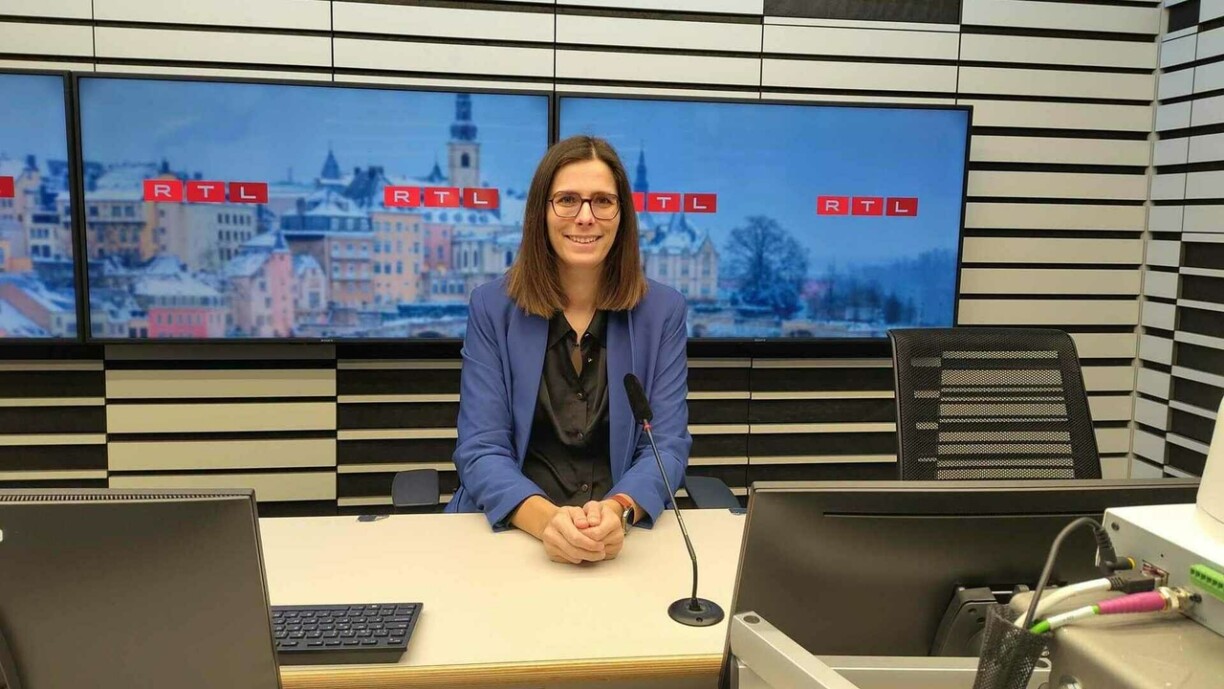
The rightward shift within the European Parliament is unmistakable, said CSV MEP Martine Kemp, speaking to RTL Radio on Friday morning. Her return to the European Parliament, following a brief stint in the last legislature, marks a change in tone. Kemp, who rejoined in December after Christophe Hansen moved to the European Commission, has noted a distinct shift in the political mood since her return.
During the election campaign, Kemp had ruled out any cooperation with the right-wing conservative European Conservatives and Reformists (ECR) group. However, the reality has been somewhat different. Without the support of the ECR, the new Von der Leyen Commission would not have been able to secure a majority.
The priority, Kemp explained, was to ensure the formation of a Commission capable of moving the European Union forward. In this context, not only the European People's Party (EPP) but also the liberals and socialists collaborated with the ECR to approve the Commission.
When asked if there was concern about the influence of far-right positions, especially with the appointment of post-fascist Vice-President of the Commission, Raffaele Fitto, Kemp remained confident. She dismissed such fears, stressing that it was now up to the commissioners themselves to deliver on their mandates. Echoing her party colleague Christophe Hansen, Kemp reiterated that commissioners must "hand in their party cards" upon taking office to ensure impartiality.
Kemp was also quick to address criticism of EPP leader Manfred Weber. Some have accused Weber of not sufficiently countering the rise of radical elements within the European Parliament, instead forming new majorities with the far-right. Kemp rejected these accusations. According to her, consensus with the right-wing conservatives is not always necessary. What matters most is having clear goals and upholding the core values of the EU: strengthening democracy and preserving the social order.
She argued that the EPP should continue to prioritise alliances with the Greens and Social Democrats, advocating for a "coalition from the centre" that seeks compromise while remaining committed to European values. She added that if other parties chose to follow this approach, no one would stand in their way.
In a broader discussion on the future of the EU, Kemp emphasised the need to strengthen the Union’s competitiveness. While acknowledging that Germany and France, two of the EU’s most influential member states, are currently in a position of limited action, Kemp argued that the EU must take steps to create a more dynamic business environment.
She pointed to the "Draghi report," which calls for closing the "innovation gaps" within the EU and scaling back outdated or overbearing regulations. According to Kemp, many well-intentioned regulations have ultimately hindered innovation. To foster a more competitive environment, she said, Europe must create conditions that encourage innovation rather than pushing companies to relocate to more business-friendly markets, like the US.
On the subject of billionaire Elon Musk, Kemp voiced her concerns over Musk's recent call for voters in Germany to support the far-right Alternative for Germany (AfD) party. She described his actions as "very problematic," accusing him of using his vast influence and position of power to sway political outcomes in ways that could undermine European democratic values.
Turning to the issue of the EU's trade relations, Kemp addressed the ongoing debate within the EPP regarding the proposed free trade agreement with the Mercosur countries (Brazil, Argentina, Uruguay, and Paraguay). While the agreement would be the largest of its kind ever negotiated, and its failure could open the door to Chinese influence in the region, Kemp acknowledged the concerns of European farmers.
The EPP has yet to take a definitive stance on the agreement. While Kemp suggested that the EPP would likely support the deal in principle, she stressed that the final decision would depend on whether European farmers' concerns are adequately addressed. In her view, the EPP would give a "tendential yes" to the agreement, provided it is revised to accommodate the needs of the agricultural sector.





