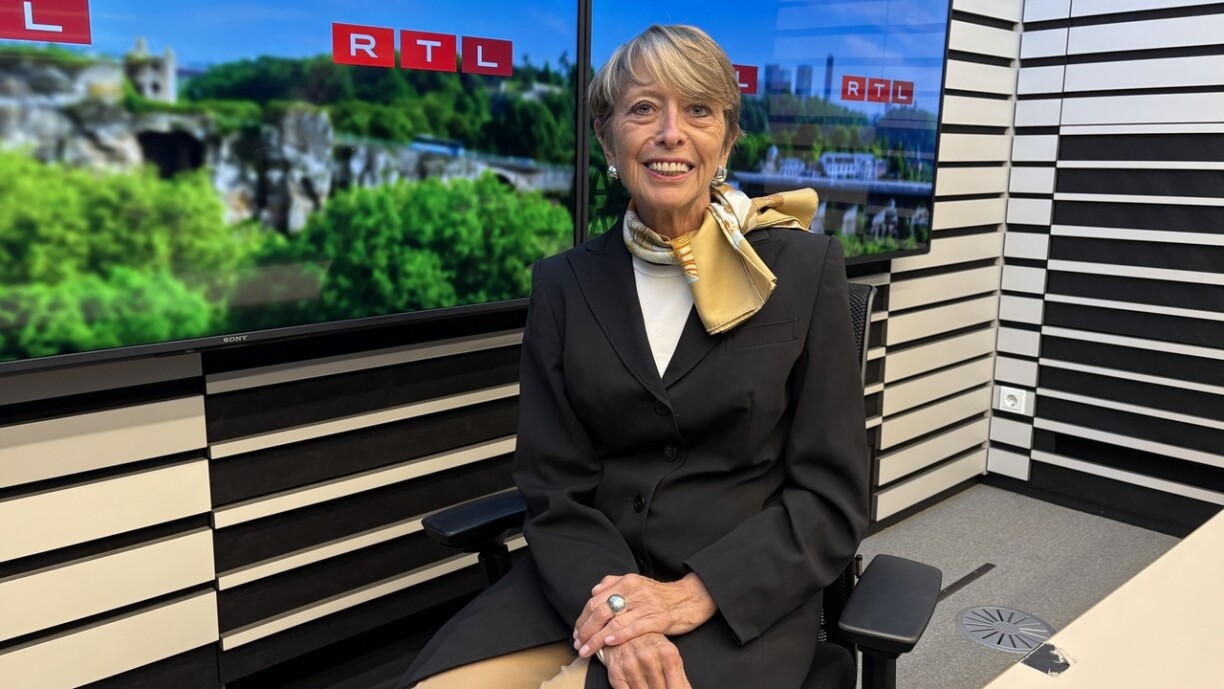
In her conversation with RTL Radio, Simone Beck, Chief of Luxembourg's UNESCO Commission, expanded on the organisation's broader role in education, science, and environmental protection. She pointed to Luxembourg's own ecology initiatives as examples, notably the Minett UNESCO Biosphere Reserve in the south and the Natura Geopark in the Müllerthal, both of which promote biodiversity and sustainable development.
Education is another important pillar. Beck noted that Luxembourg has 16 UNESCO schools, ranging from four primary schools to several secondary schools, including the National School for Adults (ENAD). These institutions commit themselves to projects that promote UNESCO's values and vision each year, from mutual respect and peace to environmental awareness. She gave an example of primary schools organising city rallies to help pupils discover and engage with cultural heritage.
The conversation turned to the United States, where president Donald Trump has criticised universities and museums, calling for Smithsonian exhibitions to be reviewed. Beck argued that such moves risk rewriting history. She stressed that slavery, Native American displacement, and colonisation are essential parts of US history and cannot simply be downplayed. Ignoring these elements, she warned, alienates many Americans whose ancestors were enslaved or Indigenous.
Beck recalled examples from early colonial history, including an incident in New Amsterdam (later New York), where English settlers allegedly spread smallpox intentionally, which she described as one of the earliest instances of biological warfare. She added that women's rights were also under strain in Trump's America, pointing to misogynistic attitudes that gained visibility on social media.
Asked whether the US is experiencing a cultural shift, Beck agreed with the use of the term. What surprised her most, she said, was the silence of leading Democrats, including Barack Obama and Kamala Harris, who she felt had not spoken out strongly enough.
Beck also questioned calls to nominate Trump for the Nobel Peace Prize. She argued that such awards should not go to politicians seeking to end specific conflicts, but rather to individuals or organisations dedicated to building long-term peace. She recalled that Alfred Nobel himself, in correspondence with Bertha von Suttner, the first woman to receive the Peace Prize in 1905, envisioned the award as a recognition of those who work actively for peace, not as a political tool.
Shifting the conversation to Luxembourg, Beck pointed to the Commission's involvement in the Luxembourg Urban Garden exhibition (LUGA), which includes a series of conferences on nature and sustainability. She explained that sustainability and environmental protection are now inseparable from education and science, which are core elements of UNESCO's mandate.
One upcoming event will be a conference on ecological architecture on 24 September. Asked whether today's buildings might one day be considered heritage sites, Beck replied that it is impossible to predict. She reminded listeners that even Versailles was once just a modern building of its time, only later becoming recognised as cultural heritage. In her view, the architecture of today may well be judged differently in the future.





