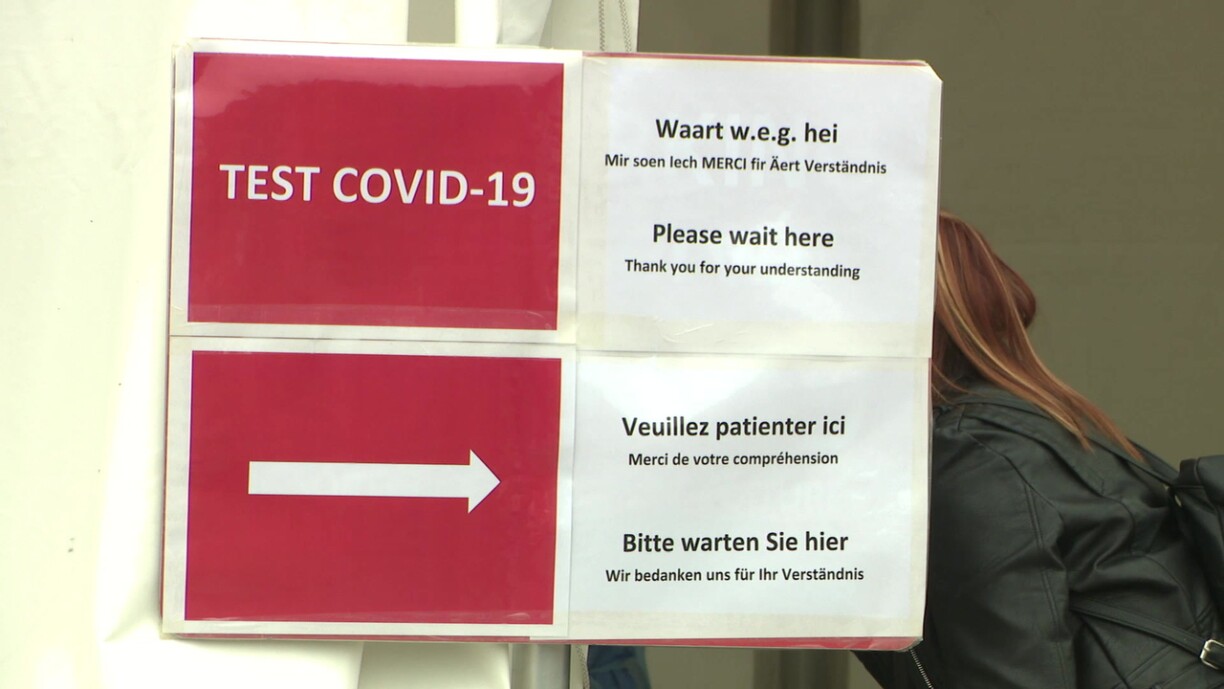
Several thousand patients are tested every day in Luxembourg; some as part of the government's large-scale testing efforts and others following the appearance of symptoms or while waiting for a result for work or school. This can lead to long queues and some people with symptoms sometimes have to wait outside in the rain, while people participating in the large-scale testing are waiting in their cars and tested on time, according to a precise schedule.
Patients are constantly queuing at a branch of Laboratoires Réunis in Junglinster to be tested for Covid-19. Most of them because they show symptoms or as a result of contact tracing. This lab has far exceeded its working capacity since March. Normally, the facility can carry out 1,500 blood tests per day. At present, however, they have to deal with an additional 2,000 daily Covid tests. This situation could become even worse as people travelling to a country that requires a negative Covid test can once again benefit from free tests.
When one considers that large-scale screening has a capacity of 10,000 tests per day and that only 3,500 tests are carried out there, some might wonder why patients are not redirected to the drive-in stations. According to explanations from health officials, the intention is to separate the two tests: on the one hand, those suspected of having the disease, and on the other, the systematic screening of the population. The lab will analyse the samples differently, depending on where they come from: The sample of a suspected case will automatically be analysed intensively, whereas large-scale testing will be less targeted.
Blood testing continues as usual in the labs, but the two activities are clearly separated in some branches, while in others, Covid patients and people wishing to carry out a blood test sometimes wait in the same queue. While Ketterthill has decided to carry out Covid tests exclusively in the afternoon, Laboratoires Réunis does not want to impose a precise schedule on patients.
However, additional staff members must be hired to alleviate the situation and in preparation for autumn, a season in which work is expected to increase with the arrival of the flu.





