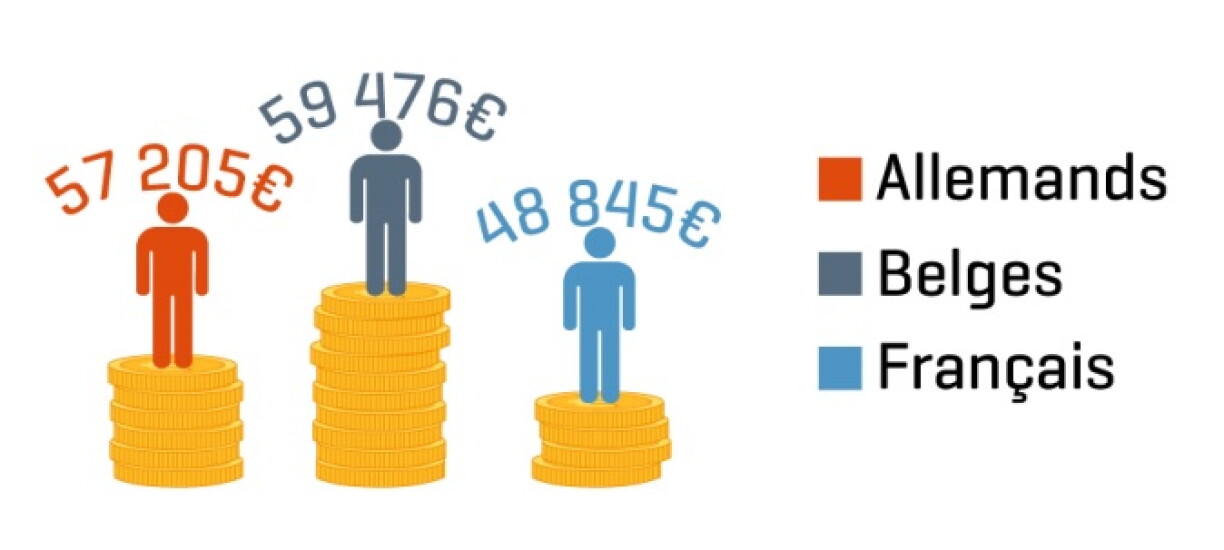
Last August, we explained that of the three groups of cross-border workers, the Belgians were earning the most, followed by their German and French counterparts. The hierarchy hasn't changed since.
In its latest report "Regards" released in August 2019, the STATEC estimated the average annual salary in 2018 (excluding the social contributions of the employers) of a Belgian cross-worker to be €59,476. Their German counterparts' average annual salary was at €57,205 and the French earned an average annual salary of €48,845.
The STATEC explained that this significant wage gap is mainly caused by the over-representation of the French cross-border commuters in low-income employment areas such as the HoResCa or trade. Another reason according to the institute is their difference in age - the French are notably younger than their German and Belgian neighbours.
It has also been noted that the wage gap is increasing, depending on the country of residence: a difference of €9,776 between the Belgians and the French in 2017, and a startling €10,631 in 2018.
The positive news for all 192,000 cross-border commuters despite all the above: their revenues are rising. Between 2017 and 2018, the average salary of the French has increased by €2,089, by €3,249 for the Germans and by €2,944 for the Belgians.
Wages: Of all cross-border commuters, the French earn the least





