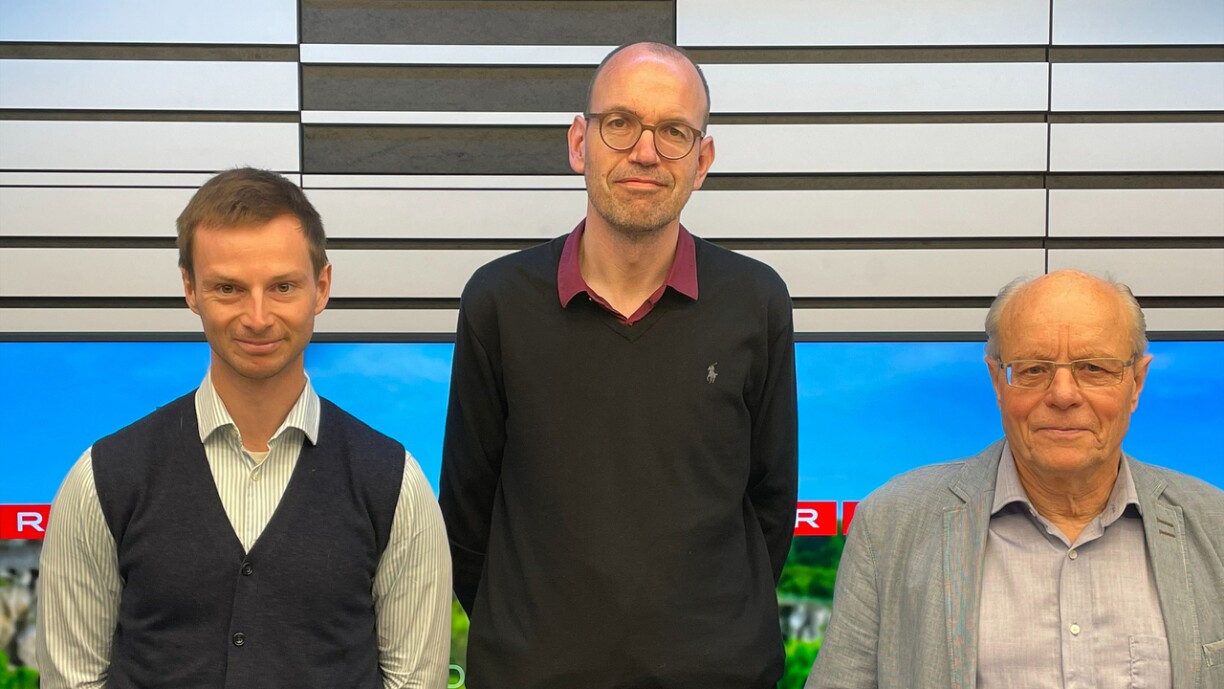
The date of 7 October marks a distressing turn of events in the ongoing Middle East conflict. On this day, Hamas, an organisation listed as a terrorist group by the EU among others, attacked Israel. Up to 1,500 people were brutally murdered by Hamas on Israeli territory, over 4,000 were injured, and almost 200 were kidnapped.
Within the Jewish community, emotions run deep, with David Weis emphasising the magnitude of the shock experienced. He noted that these attacks inevitably evoke historical cruelties against the Jewish population.
Henri Grün, President of the Committee for a Just Peace in the Middle East (CPJPO), extended his sympathies to the Jewish community, acknowledging the human cost of these events. He underscored the importance of maintaining a humanitarian perspective, stressing that human suffering is never a desirable outcome.
The Israeli government has responded to the crisis with extensive military operations in the Gaza Strip. Human rights expert and lawyer Frank Wies referenced Article 51 of the UN Charter, which grants the right to self-defence. While recognising Israel's right to self-defence, Wies emphasised the significance of the "how" in executing this right. He aligned with US President Biden's counsel to Israel, urging against reactionary decisions driven solely by emotions.
Grün raised questions regarding the proportionality of Israel's response, drawing attention to the tragic loss of innocent lives in the Gaza Strip. In his view, negotiations remain the sole viable path forward.
Weis stressed that Jews are not to be equated with the Israeli state, even though they naturally have a connection to the country. Progressive Jews, like himself, prioritise human rights and advocate for "anything that leads to peace." However, Weis expressed uncertainty about whether it is even possible to negotiate with an organisation like Hamas. He also highlighted the societal divisions within Israel, which further complicate the situation. He observed that the Hamas attacks have unified the Israeli populace, much like the newfound cohesion seen among Palestinians, as noted by Grün.
The aid that was finally delivered to the Gaza Strip via the Egyptian border on Saturday was merely a drop in the ocean, Wies regretted. The risk of humanitarian aid falling into the hands of Hamas had to be taken, according to Grün. He argued that negotiation was the only route to ending the conflict and securing the release of hostages.
Weis, however, also warned against trivialising the actions of Hamas.
According to Grün, the underlying driver is predominantly territorial. Weis highlighted that religious extremists exploit the situation from both sides.
The CPJPO demands that the Western world push for a two-state solution that would allow Israelis and Palestinians to coexist in separate states with equal status. However, the presence of Israeli settlers in Palestinian territories presents a challenge to this vision. Alternatively, a one-state solution would necessitate substantial Israeli concessions, a prospect Grün deems equally unlikely. Nonetheless, he stressed the need to reinitiate negotiations.
Debates about the future would dominate the social discourse in Israel as well, Weis explained. What he, as a European Jew, did not want was for hatred from the Middle East to be "imported" to Europe. He regretted that economic and political cooperation, akin to the post-World War II European model, would often not find resonance in Israel.
Weis highlighted that there is "a lot of fear" in the Jewish community. He noted that Jews in Luxembourg also experience threats and insults.
While other European countries have made considerable efforts to enhance building security in collaboration with law enforcement, Luxembourg's measures appear comparatively limited, which Weis laments. Relations with the police were good, but the Jewish community still relies on private security services during the holidays, Weis explained. Addressing these shortcomings and fostering a greater understanding of the seriousness of these concerns is vital, according to Weis.
Grün affirms that the CPJPO remains vigilant at pro-Palestinian events they help organise, ensuring that anti-Semitic rhetoric or symbols do not make an appearance.
Wies warned against lumping all Arab migrants together. He stressed that tackling any anti-Semitic tendencies within the Muslim community hinges on effective integration efforts.





