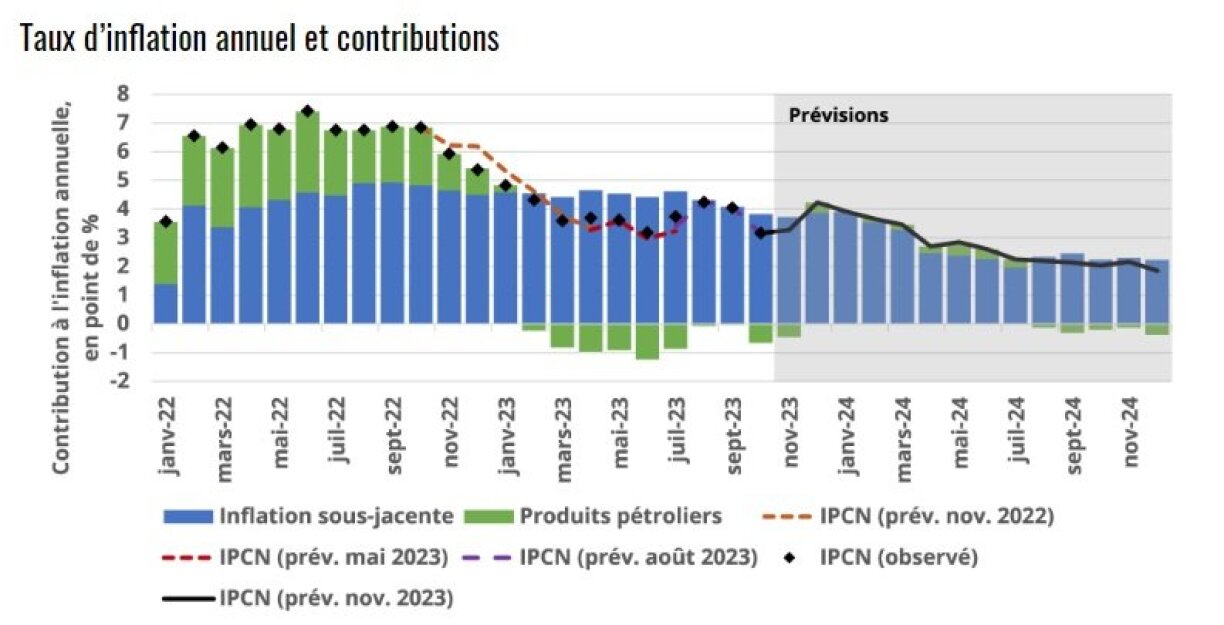
Price inflation in Luxembourg has recently hit a "two-year low," with October figures standing at 3.2%. STATEC's analysis suggests this will translate into a yearly price surge of 3.8%, tapering down to 2.6% in 2024.
On Tuesday, STATEC noted that energy prices and the underlying inflation rate, particularly when excluding petroleum products, are following "opposite trends." Despite a decline in oil prices earlier this year, there has been a notable resurgence since the summer, a trend that is expected to contribute to the rise of annual inflation in the first half of 2024.
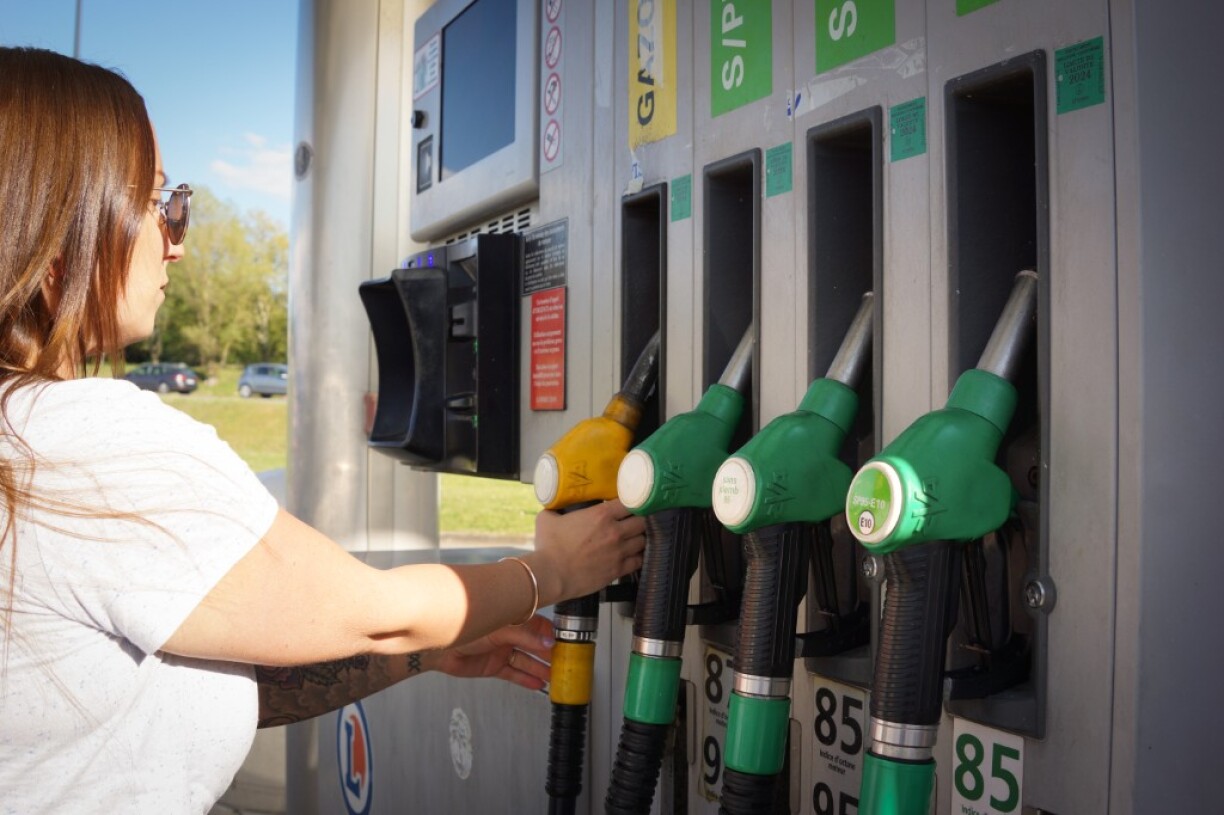
The dwindling oil production in the Middle East has driven up the cost per barrel, and STATEC anticipates a ripple effect on fuel and heating oil prices within the Grand Duchy. As of 7 November, diesel was priced at €1.614 per litre, while petrol and 10 ppm heating oil stood at €1.577 and €1.069 per litre, respectively. Notably, STATEC has reported a "slight fall" in energy prices, including gas and electricity, compared to the previous year. For instance, in October 2023, the average electricity price on the German market, closely linked to the Luxembourg grid, reached €85/MWh, a significant drop from the €155/MWh recorded in July 2022. Similarly, the Dutch TTF, a benchmark for natural gas consumption, traded at €42/MWh in October 2023, down from €72/MWh in October 2022.
However, this decrease in energy prices is somewhat precarious, attributed to reduced demand for gas. So far, Luxembourg has been doing well when it comes to reducing its gas consumption, but the outlook could change if the next winter proves to be "less mild" and "gas consumption returns to pre-war levels in Ukraine." External factors, such as escalations in the Israel-Hamas conflict, could also trigger market responses.
In terms of gas and electricity, STATEC envisions a more favourable scenario in the near future. They anticipate that Luxembourg residents may experience gas prices below the current €0.83/m3 ceiling at the beginning of the next year. As for electricity, prices are expected to remain stable, as the energy supply has already been secured at 2021 and 2022 rates. These prospects are reinforced by the continuation of tripartite measures in 2024, encompassing State-covered network costs and a €0.15 per litre fuel discount, aimed at mitigating inflationary pressures.
Related
STATEC: New inflation forecasts show slight decline, wage indexation expected for Q3 2024
Gas consumption: Luxembourg maintains strides in energy-saving efforts





