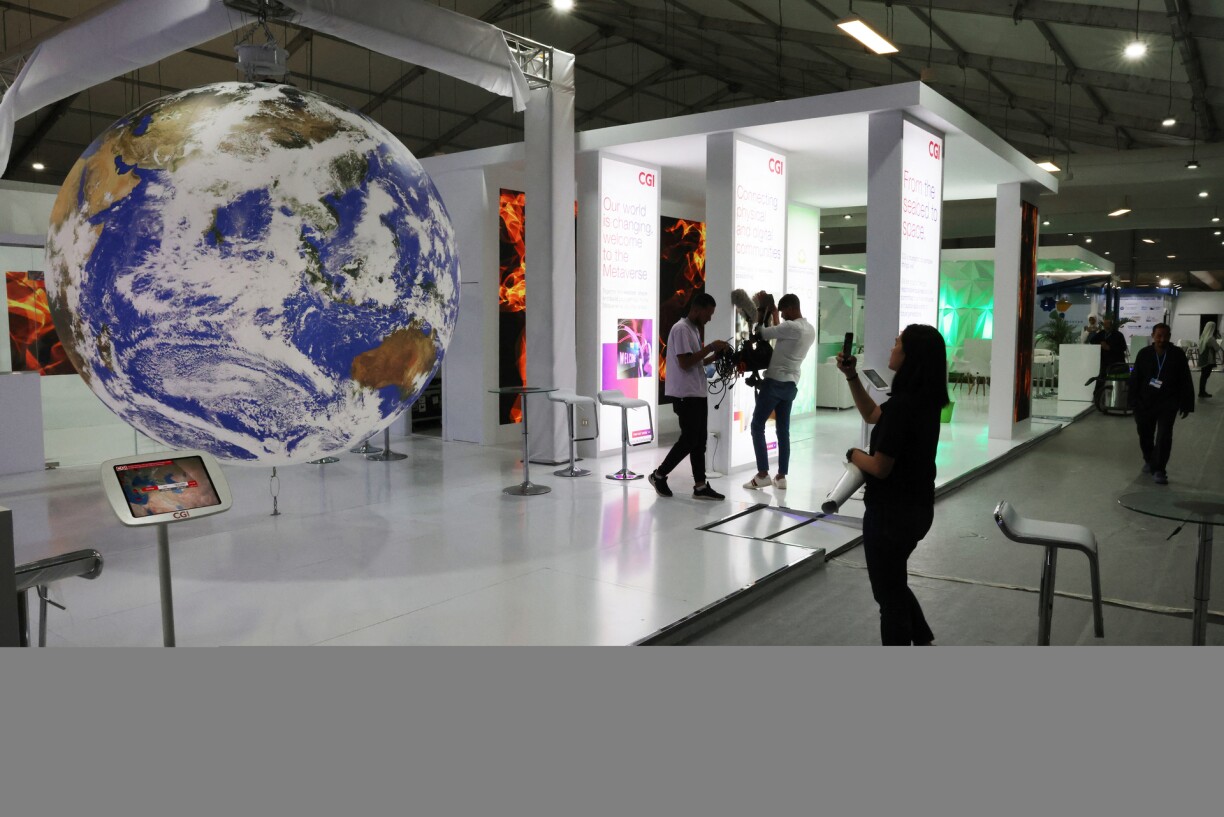
On Saturday afternoon, one day before the start of the 2022 United Nations Climate Change Conference (COP27), our colleagues from RTL Radio hosted a roundtable discussion on the subject of climate change and protection.
At COP27 in Sharm El Sheik, Egypt, world leaders will discuss the implementation of the goals stipulated in the Paris Climate Accords, which was celebrated as a major breakthrough in 2015.
According to André Weidenhaupt, Chief Advisor at the Ministry of the Environment, the euphoria of that time has not faded.
Read also: Amsterdam Schiphol - Climate activists block private jets from taking off
The two other guests, Ariane König from the Observatory for Climate Policy and Birgit Engel from the association Solidarité Tiers Monde ("Third World Solidarity"), said that the implementation of the climate pact and the different national climate plans takes far too long. Different ministries slow each other down, while local actors are often excluded, according to König and Engel.
Senior civil servant Weidenhaupt argued that the key to more collective climate protection is changing individual behaviour.
All three guests agreed that "something drastic" must be done to limit global warming to 1.5 degrees.
Read also: Luxembourg rates well for climate policy despite high emissions
Engel and König voiced dissatisfaction with the fact that many people lack adequate access to information on how to change their behaviour. Meanwhile, Weidenhaupt claimed that "the beginnings of change" in our society are already apparent, even though "we can absolutely go further."
Clear progress has been made in the area of mobility: a quarter of all newly registered cars are electric. Renovation works also increasingly focus on sustainability, owing mostly to the energy and gas crisis.
The "enormous consumption" in Luxembourg is a big issue. "We are living large," König stressed, adding that wealth is inextricably linked to consumption. Engel argued that consuming less could be viewed positively as well, as it is beneficial to one's health, for instance.
World leaders will also discuss financial issues at COP27, such as dealing with crisis-related damage and losses. As the primary polluters, the industrialised nations have to expect high reparation demands from developing countries, who are generally the most affected by the direct repercussions of climate change.





