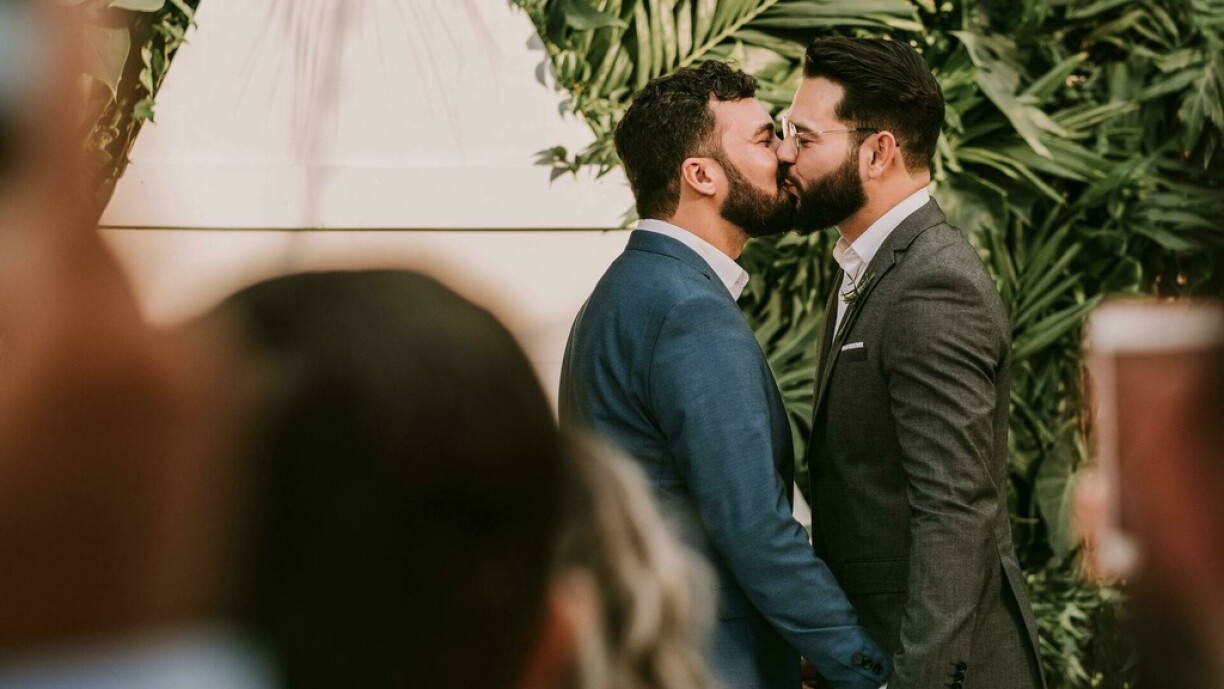
Over the past decade, marriage equality has become a widely accepted feature of Luxembourg’s social landscape, and the country’s first same-sex wedding was officiated on New Year’s Day 2015 in Differdange, where then-mayor Roberto Traversini highlighted the symbolic importance of the occasion.
"It was crucial to show that our city is an open place where everyone is accepted as they are," Traversini said. "It may seem like a small gesture, but it carried immense significance."
The marriage equality law, championed by then-Justice Minister Félix Braz, extended not only the right to marry but also the right to adopt. It enabled both simple and full adoption for all couples, regardless of sexual orientation.
"This was a huge step forward for Luxembourg," Braz declared when the Parliamentary Commission approved the bill in January 2014.
In June of the same year, the law passed with overwhelming support, with 56 deputies voting in favour. The Alternative Democratic Reform Party (ADR) was the only party to oppose the legislation.
While Luxembourg has made strides in fostering acceptance, challenges persist. For Rosa Lëtzebuerg, the association advocating for LGBTQIA+ rights, adoption remains a contentious issue.
Andy Maar, a representative of the organisation, acknowledges Luxembourg’s progress but points to significant gaps, such as the lack of automatic parenthood recognition for same-sex couples. "There's also a need to extend parental leave to 12 weeks for both parents," Maar suggested. The recent inclusion of the right to start a family in the new Constitution raises questions about legalising altruistic surrogacy ('gestion pour autrui' – GPA).
In this context, GPA refers to surrogacy, where a person (the surrogate) carries a pregnancy for someone else, often with the intention of giving the child to the intended parents after birth. The term "altruistic" indicates that the surrogate does so without financial compensation beyond reasonable expenses.
In 2023, 47 same-sex couples tied the knot, a significant drop from the 140 who married in 2015. The trend mirrors a broader societal hesitancy to marry, observed among both heterosexual and same-sex couples.
As Luxembourg reflects on a decade of marriage equality, advocates stress that while much has been achieved, further progress is needed to ensure true equality for all families.





