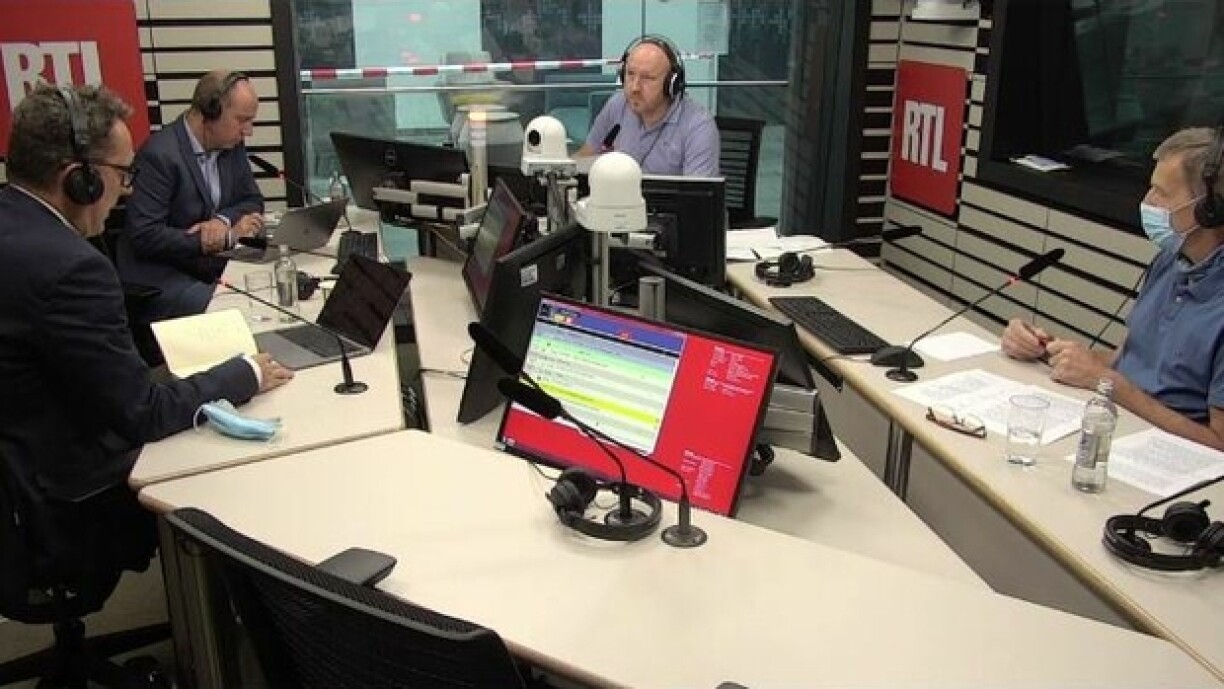
Dr Vic Arendt, a doctor at the CHL in Luxembourg City, stated 18 out of 20 beds are taken in the hospital. 4 places are available in the intensive care unit, 2 patients are currently being treated there.
He stressed that not only elderly people are at risk of experiencing a severe course of the disease: 10 to 15% of patients have to be rehabilitated with over half of them being under 50 years of age.
During the first wave, 60 of CHL's staff members were infected while on duty. 10 have been infected as of right now.
Dr Arendt suggested to increasingly test young people who have a more active social life and frequent bars and cafés. Discussions are still ongoing about whether further bans are necessary, or if people should be forced to get tested if they are changing locations frequently.
The researchers agreed that it was more important to raise awareness and call for people to assume self-responsibility. Dr Arendt expressed scepticism and countered that you could not always rely on common sense. Belgium for instance recommends restricting contact to 15 people per week.
The general director of the Luxembourg Institute of Health, Dr Ulf Nehrbass, stated that between 30 and 40% of positive cases are being detected indirectly through large-scale testing as contact tracing is applied to the positive cases, which make up 15%.
The focus of the tests will be narrowed down in the near future. Every household in the 9 municipalities that are currently most affected will receive an invitation to get tested – about 42,000 households in total.
Researchers of the Covid-19 task force also published projections on Friday which indicated a less severe development of the second wave than what was initially feared a few days prior. However, the country could still end up with a shortage of places in intensive care units at the end of August or the beginning of September, if the number of new cases does not go down.
More young people are currently getting infected compared to the first wave. Dr Arendt stated that this could lead to only 10% of patients requiring treatment in hospitals compared to 20% during the first wave.
On the subject of a tracing app, Prof Paul Wilmes argued that while an app could be an additional tool to help trace infections, it would never replace analogue tracing.
The researchers also agreed that the large-scale testing efforts are effective. As the number of new cases increases, more and more people are willing to participate. However, Dr Nehrbass admitted that the efforts were not explained well enough at the beginning.
Another question that was discussed was whether Covid-19 tests at the airport should be made mandatory. While the guests agreed that this was mainly a political issue, they did also state that these tests were also very effective, stating that the virus also came into the country from outside in February/March.
Researcher Alexander Skupin stated that the second wave was initially only expected for after the summer period. He explained that the researchers expected figures to evolve differently. However, he also agreed that it was good that the second wave seems to be developing slower than expected.





