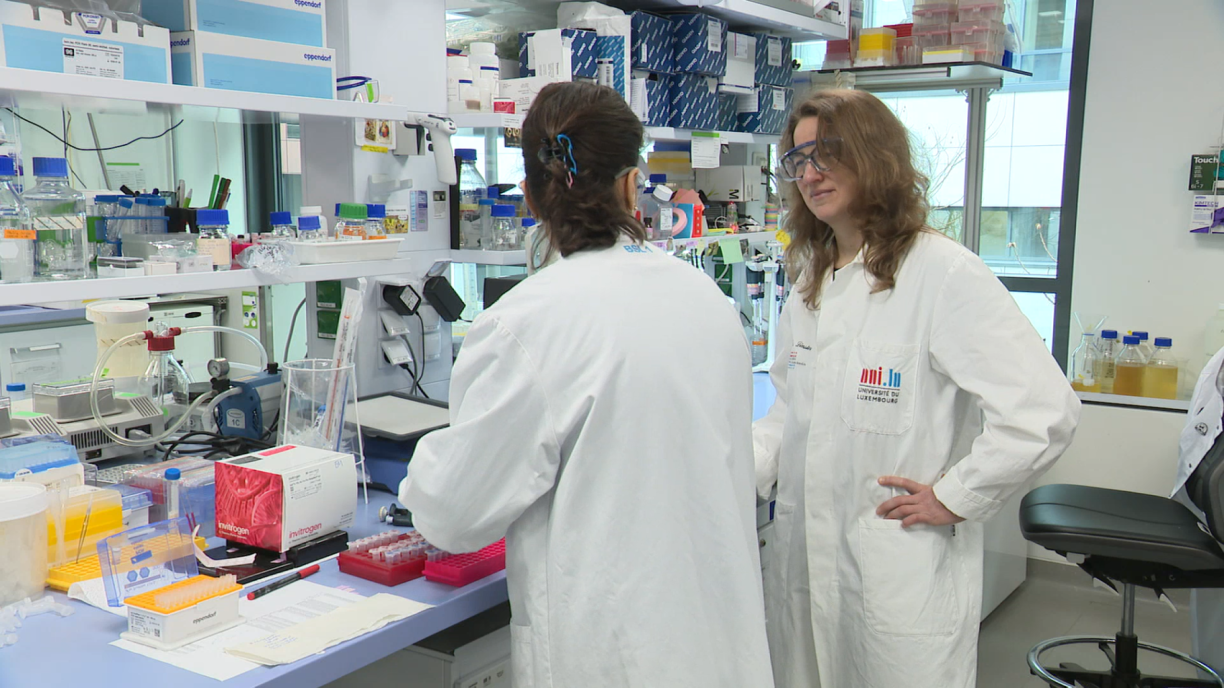
Research may often be an abstract and theoretical field, but in Professor Linster's case, the research conducted by her and her team can be extremely helpful to patients with specific rare diseases. "A lot of the rarest diseases are linked to issues with metabolism," Professor Linster explains. If just a single reaction at cellular level does not function as it should, it can trigger "very serious consequences". These conditions are often detectable at an early stage following birth. Out of around 7,000 rare diseases, over 1,000 are linked to metabolic issues.
As in any field, basic research is a vital part of the professor's work, but her team is often contacted by families of patients hoping the laboratory can help manage their loved one's condition. One such example is Zellweger syndrome, which the research group has been focused on for a number of years. "The starting point was a family with multiple children affected by this rare syndrome". As is the case for many rare diseases, so far there is no cure or chance of healing. But Professor Linster and her team hope to be able to change this through their research and develop a treatment.
Conducting research on real life cases, with a close-up view into their patients' lives and destinies, is what makes the work so special for Professor Linster and her team. They are well aware of the fact their work can change lives. "It's a strong motivation, it gives the whole thing a concrete meaning," she says. The families are often sent from doctor to doctor for years before obtaining a diagnosis. Conferences give people a chance to give the disease a face. "They help bring researchers into contact with patient families who want to raise awareness."
In the case of Zellweger syndrome, which is a rare congenital disease with low survival rates, the team has analysed over 2,000 molecules and tested medications used for different illnesses to see if they are effective against the disease. "These are our candidates and we are working to continue validating them. For some of them it looks promising so that we can keep developing solutions," Professor Linster explains in terms of potential treatment with medication.
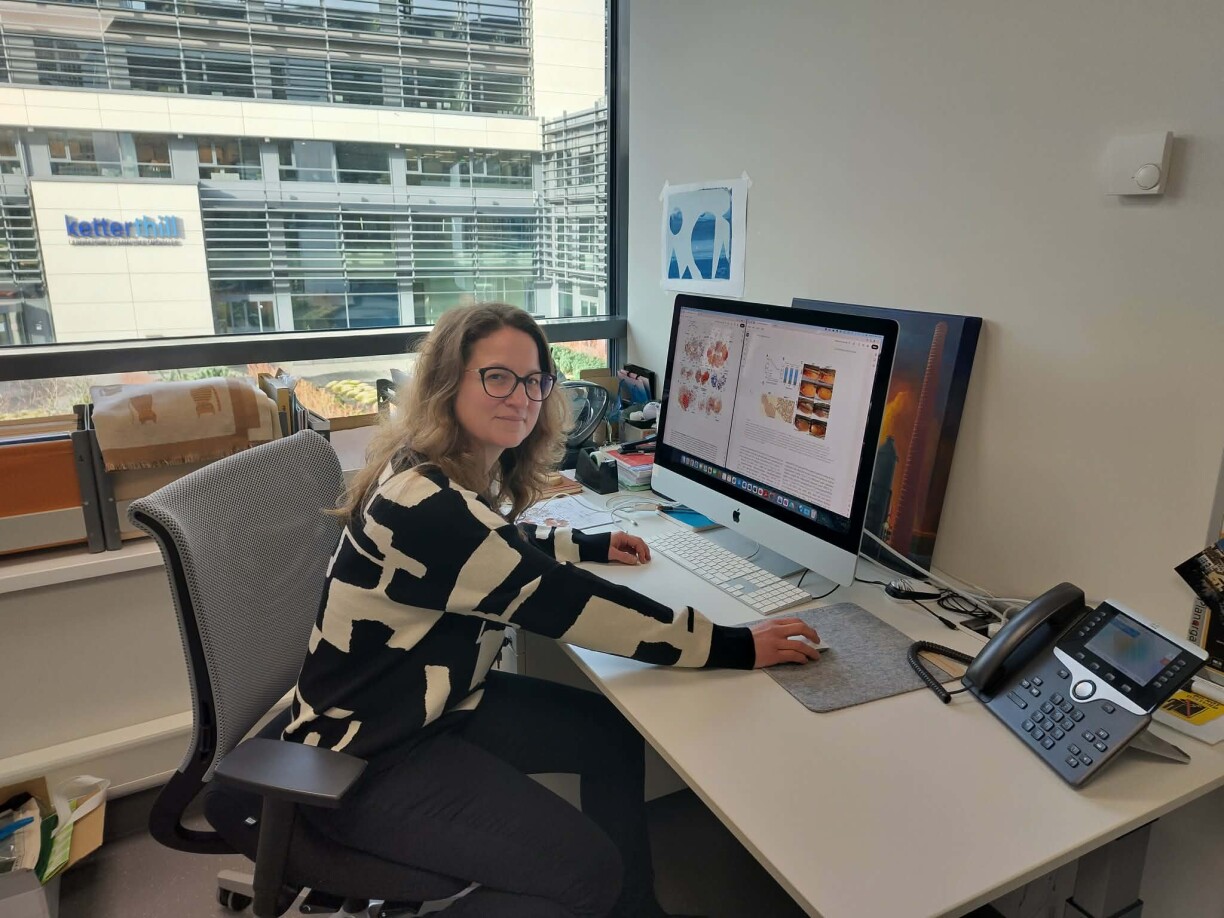
Research into rare diseases has a lot to do with detective work, which Professor Linster and her colleagues in the laboratories of the University of Luxembourg can pursue in a number of ways.
Research often begins with the isolated protein or enzyme. Once the biochemical processes in the isolated environment are understood, it is necessary to examine the test objects in their larger system in order to better understand the interplay of the various factors. "In some cases we go all the way to the living organism," she explains. "If you isolate work to a cell, you can't recreate the whole picture and complexity of a whole organ in a body, with blood flowing through it, for example." In order to draw reliable conclusions, researchers have to analyse the gene defect in a living organism.
This is where the zebra fish comes into play. These fish are not only surprisingly genetically close to humans and develop very quickly, but they are particularly useful for observation in the early development phases which are so vital for rare diseases. "We have a good chance of reproducing the gene defects in zebra fish and we can also reproduce the symptoms we see in humans." Unlike mammals, fish develop outside the womb and their larvae are fully transparent in the first few days. This is a huge advantage for specimens under the microscope. "We can observe exactly how all the organs develop."


Professor Linster was able to carve out a niche in her profession that she had always been passionate about: "I was always interested in nature and living things, but specifically human biology and the development of diseases. I didn't want to be a doctor though." She pursued the research path very early in her studies. "The direction I took was influenced by the professors at my university, who inspired me with their passion for research."
Following clues and developing hypotheses is what Professor Linster enjoys most, especially when they result in a breakthrough. "There's always uncertainty involved and it's not always pleasant. But I think the satisfaction when things come together, when you solve the questions and suddenly understand the issue – it's just so great, when we've become so used to uncertainty, and are driven by this satisfaction of pushing things forward and creating better understanding."
Over the course of her career, Professor Linster has worked at a number of international laboratories. Alongside Brussels, she spent several years at UCLA in California, a period of which she has fond memories. "It was a good experience because they have such a different approach." While her studies in Europe had a bit of a "top-down" approach, the American "go for it" mentality was a refreshing experience for her as a student. "I got the necessary self-confidence to believe in my ideas, and you really need that in research."
The current situation in the US, in which President Trump has entered into disagreements with a number of universities and cut funding for political reasons, is an "exceptional situation," says Professor Linster. "There was one lab I worked with at UCLA which was going well, but effectively they have had their main funding source cut without real reason. This is dramatic of course and we are seeing the effects on people applying here."
To date, Professor Linster has not encountered any poor experiences from being a woman in research. "I never believed that men and women should be treated differently. And I've never found my ideas have been taken less seriously because I'm a woman." But it was only when she arrived at a higher level that she realised there was still room for improvement. "The more responsibility one has, the bigger projects can be worked on. So here I have noticed that a woman has to work much harder to achieve the same or to reach the same positions." In her own team, she has no quotas, and decides solely on the candidates' profiles.





