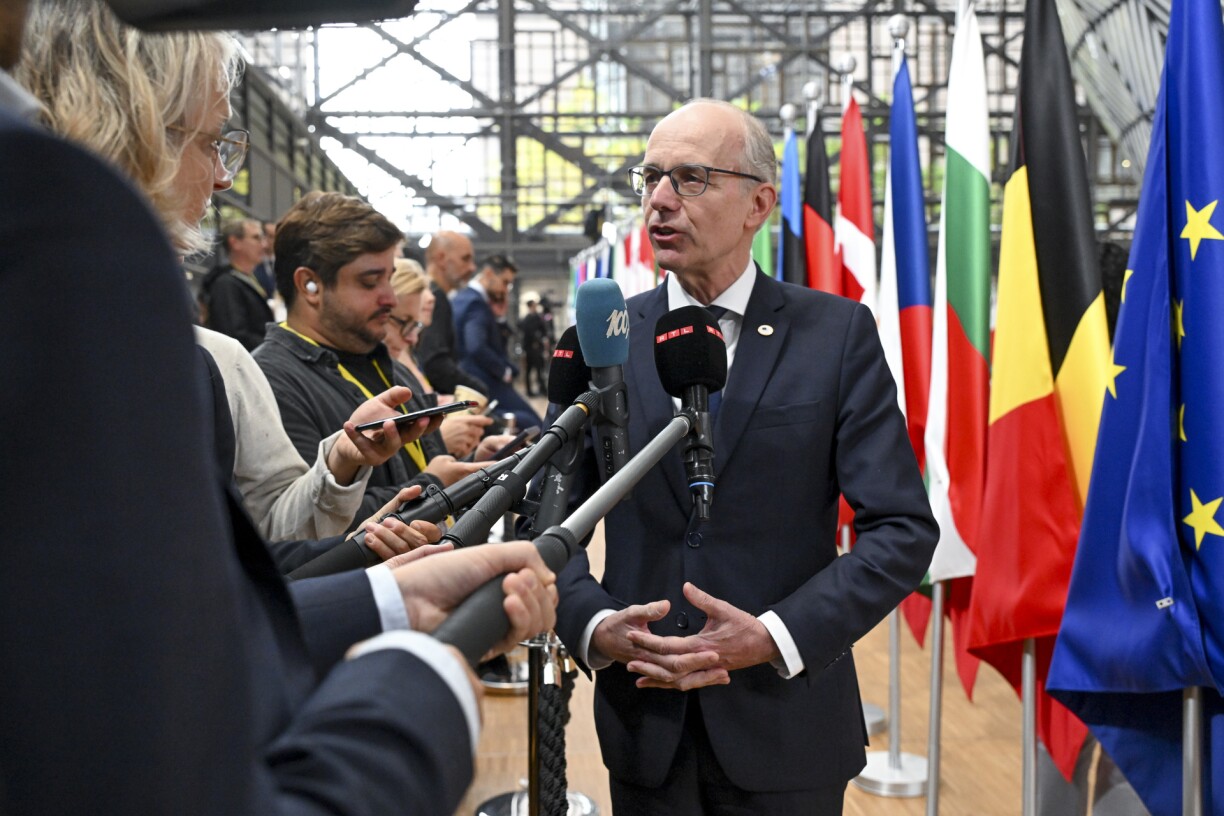
RTL: As the US heads to the polls, it’s still too close to call. However, it’s looking like a victory for Donald Trump. What’s your initial reaction?
FRIEDEN: As you mentioned, we don’t have the final result yet, so it’s important to remain cautious. That said, the outcome so far isn’t entirely surprising. If you look at the current map, it reflects a familiar divide in the US: the east and west coasts tend to be more liberal and vote Democratic, while the central regions, which Europeans generally know less about, lean Republican. So, in that sense, it’s not entirely unexpected.
Of course, it’s the Americans who are choosing their president, not us Europeans. But it’s certain that if Donald Trump becomes president, things will become more complicated for Europe. Trump’s style is very different from my own, and it differs from that of many European leaders. I’d say he’s more unpredictable than, say, a President Kamala Harris, who would likely follow a tradition upheld by Joe Biden and others that prioritises the transatlantic partnership.
What would a Trump presidency mean for Europe? I see two main areas where it could become more difficult. First, cooperation on Ukraine. This is a very serious war happening on European soil, and we don’t know exactly what Trump’s stance will be. The US plays a crucial role in this conflict, and while I don’t believe a Trump administration would pull out immediately, it does mean more responsibility would shift to Europe.
The second area is economic. The US is a vital trade partner for both Luxembourg and Europe. Trump, as a businessman, will likely push for what he sees as further American economic growth. For us Europeans, already struggling with competitiveness, this means we must strengthen our own economic and security frameworks to stand on our own.
Tomorrow, European heads of state will gather at a European Council meeting in Budapest. We’ll be discussing our relations with the US intensively, especially since the meeting will be in Budapest, a country that sometimes causes concern within Europe. The meeting will be chaired by Viktor Orbán, who, unlike many European leaders, has actively sought relationships with both President Trump and President Putin. This presents a complicated geopolitical situation for Europe and our relationship with the US. Nevertheless, we will have to work with every American president, as the US remains an essential ally.
RTL: Speaking of allies, the US is also NATO’s most important partner. Trump has already suggested reforms. You mentioned the war in Ukraine—how complicated would it be to negotiate with Trump on issues like ceasefires and lasting peace, compared to the Democrats?
FRIEDEN: I believe it would be very complicated. Relations with the US, even though they’re our friends and allies, have always been complex. As NATO’s strongest military power and a leading economic force, the US has often taken a dominant role. Both under Obama and Biden, the Democrats have further advanced the economic lead over Europe. For these reasons, it’s essential for the US to adopt a constructive yet determined tone in its relations with Europe.
What’s unique about Trump, and what concerns me the most, is his approach to politics and communication. It’s unlike anything we’re used to, and it’s certainly very different from my own approach. Trump is quick-tempered and unpredictable, as we saw in his last term. He pulled out of the Paris Climate Agreement and various UN organisations. Yet, despite these actions, we managed to work within those agreements, and we’d likely have to do so again.
I don’t think the US would leave NATO—America also needs Europe. But the relationship would certainly not be an easy one. The world is complicated, regardless of who’s president. That’s why, once again, I believe Europe needs to strengthen its own voice and stand firm in promoting our values to help address the global challenges we face.





