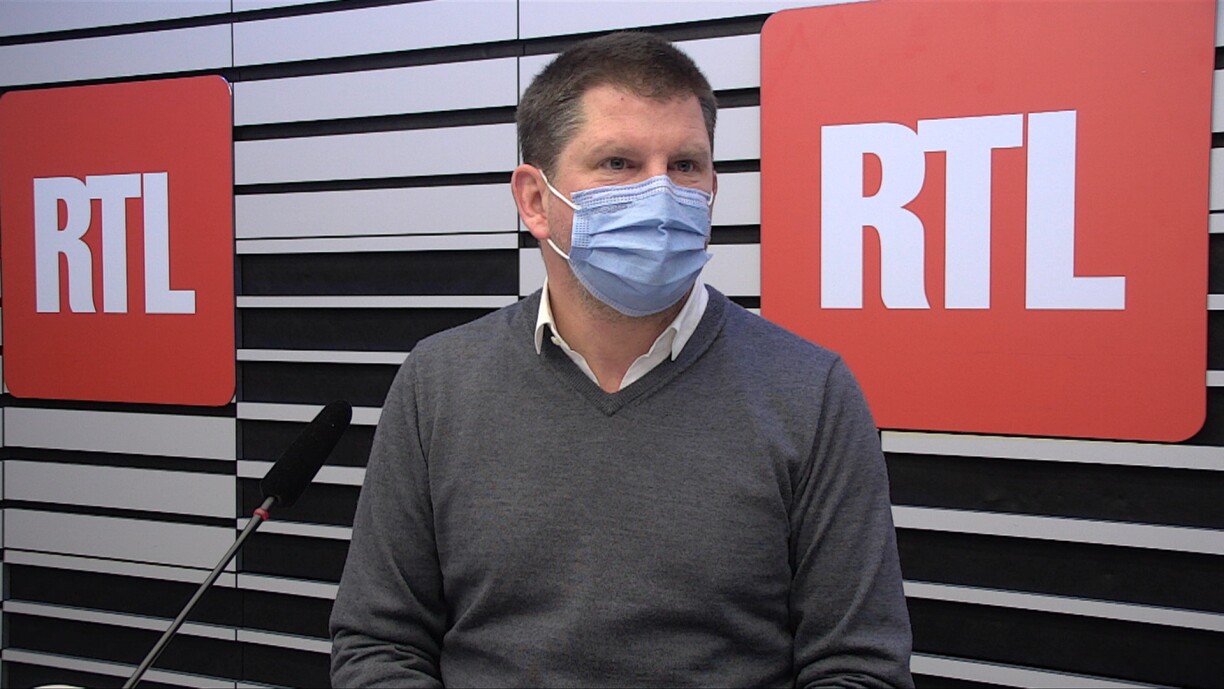
Paul Ewen acknowledged that the new preservation law that was passed by the Chamber of Deputies last week would bring "some improvements".
However, this does not mean that "all problems have been solved", Ewen stated. Among other things, the President of the Luxembourg Federation for the Protection of Historical Monuments regrets that the Chamber of Deputies has not also voted on the corresponding regulations for the implementation of the law. Because of this, there is still a risk of running into problems when classifying buildings in the future, Ewen criticised.
In addition, Ewen regrets that the scientific national inventory, which is meant to act as a record of all buildings worth preserving sorted by municipalities, will not be ready when the new law enters into force. In fact, the law stipulates that the inventory should be operational in ten years from now. Only three to four municipalities have completed the process so far and the 'safety net' provided for by the bill during the transitional phase is not enough, according to the President of the Luxembourg Federation for the Protection of Historical Monuments.
Ewen went on to say that it also remains problematic that the authority on preservation continues to be split between "two ministries with completely different mindsets", i.e. the Ministry of Culture and the Ministry of Home Affairs, as well as the State and the municipalities. The latter have at times completely different approaches regarding how they implement preservation, Ewen criticised, adding that the new law will not allow the State to intervene in any significant way.
For Ewen, this is "a clear lack of coherence". While some are highly invested in preserving their cultural heritage, others have different ideas and prefer to "let the past die", Ewen stated. The President of the Luxembourg Federation for the Protection of Historical Monuments cited Weiswampach as an example, criticising that the town centre and the locality of Beiler have been "completely disfigured". And this despite the fact that, in theory, every municipality knows which buildings should be classified and which should not, according to Ewen. Other municipalities, such as Remich, Esch-sur-Alzette, or Strassen have also decided to preserve only a very small number of buildings, Ewen stated.
Preserving buildings does not slow down the development of new housing projects, Ewen stated, pointing out that the percentage of what must be preserved is "relatively small". As such, "preservation is not a catalyst of the housing crisis", Ewen stressed. What is true, according to Ewen, is that the awareness of the need for preservation is not really developed in Luxembourg compared to other countries. However, this is "nothing new", Ewen noted. Despite the first laws reaching back to the 1930s, only a relatively small number of buildings have been placed under national protection, the President of the Luxembourg Federation for the Protection of Historical Monuments criticised.
The new preservation law will introduce the option of "preventive archaeology". For the Luxembourg Federation for the Protection of Historical Monuments, however, this preventive approach should also be used for buildings. According to Ewen, a better system would have been to introduce a moratorium for the roughly 27,000 buildings across the country, which have been flagged as "worthy of preservation", and lift the protection on a case-by-case basis. However, "political pressure" has prevented an idea like this to make it into the bill, Ewen explained.
Aesthetics are not relevant when it comes to classifying a building, Ewen stated. Whether a building is beautiful or not is "of no relevance whatsoever", the President of the Luxembourg Federation for the Protection of Historical Monuments said. Relevant criteria include a building's cultural history, social history, and authenticity. There are 15 criteria of classification overall. In this area, there is still a lot left to be done when it comes to raising awareness of these issues, Ewen concluded.





