Space is becoming increasingly cluttered – not just with active satellites but also with hazardous waste. A Luxembourg-based start-up aims to change that.
ClearSpace, founded in Switzerland in 2018 and now headquartered in Luxembourg, has developed a kind of tow truck designed to remove defunct satellites from orbit.
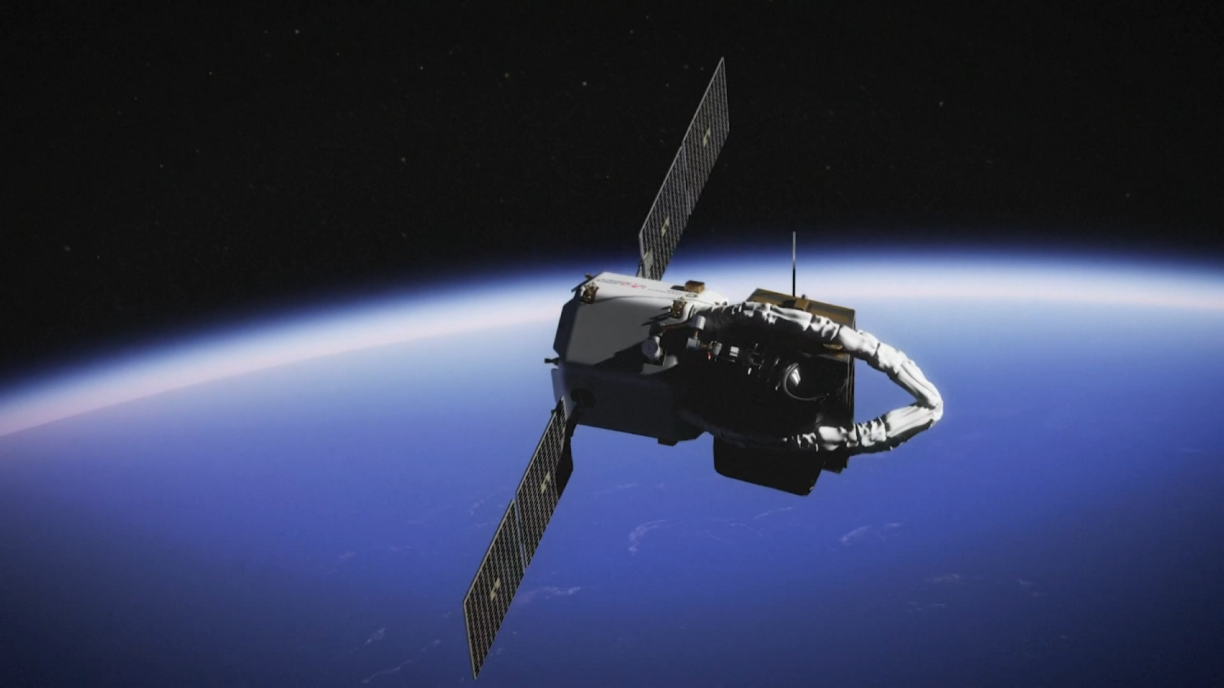
Images created to explain the project show a gripper catching space debris. Once an object is captured, several options exist, according to CEO Luc Piguet. It can be moved: for example, slowed down so that it drifts into Earth's atmosphere and incinerates. Alternatively, it can be pushed out of orbit.
Most satellites and space debris share the same orbit, at altitudes between 200 and 2,000 kilometres. Piguet noted that these objects pose risks both to operational satellites and to astronauts.
The surge in space debris is largely due to the sharp rise in the number of satellites since 2019. In the early 2000s, around 150 satellites were launched annually. By 2025, that figure had jumped to 3,500.
Satellites are essential for navigation, communication, and weather forecasting. SpaceX is currently the leading actor launching the most satellites into orbit. Through its Starlink project, Elon Musk's company aims to build a vast satellite constellation to provide fast internet worldwide. SpaceX launched its first Starlink satellites in 2019.
Collisions also add to the problem: when two objects collide, they fragment into many smaller pieces. The Inter-Agency Space Debris Coordination Committee (IADC) estimates that about 34,000 objects larger than 10 centimetres are in orbit, along with up to 1 million pieces smaller than 10 centimetres, and as many as 128 million pieces smaller than 1 centimetre. The IADC expects that even if satellite launches were to cease entirely, debris would continue to accumulate for many years to come.
Preventative measures to limit space debris also exist. Since 2002, regulations have stipulated how missions must be planned and how satellites must be constructed to minimise the creation of potential debris as much as possible. For example, objects that are no longer needed should be allowed to incinerate in Earth's atmosphere or be navigated out of orbit. While this approach reduces the generation of debris, it does not completely prevent it.
Additionally, little is known about how damaging the incineration process in Earth's atmosphere is for the environment. A 2023 NASA report pointed out that hazardous chemical reactions can occur during the incineration of space objects. What’s more, substances that may negatively affect the ozone layer are deposited in the upper atmosphere as materials evaporate.
At the same time, researchers are exploring ways to remove debris that is already in orbit. Ongoing projects include the EU's ALBATOR project, which uses a plasma beam to either send objects out of orbit or cause them to incinerate.
Several missions are planned in the coming years to remove obsolete satellites. In 2026 or 2027, Mission ELSA-M is intended to dispose of one OneWeb satellite. Meanwhile, the ClearSpace-1 Mission, led by the Luxembourg-based space start-up, is expected to remove a Proba-1 satellite on behalf of the European Space Agency (ESA).
In parallel, ClearSpace is working on technologies to repair objects in orbit or refill their fuel tanks, allowing for an extension of their operational lifespans.





