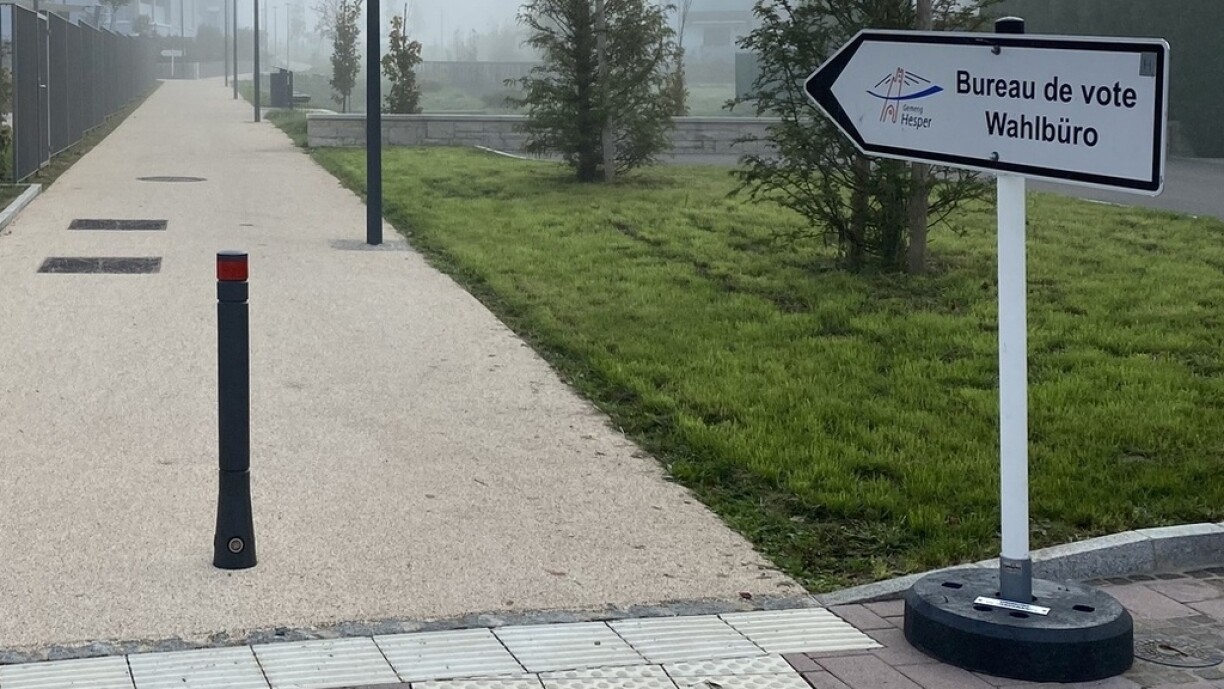
Léon Weber, who has been serving as the chairman of the Alzingen polling station for four decades, remains as enthusiastic as he was on his first day in the role. However, he acknowledges the increasing difficulty in finding volunteers to fulfil various tasks within the station. He reminisces, "When I first did this, 30 or 40 years ago, it was considered an honour to help out in a polling station. Today, it has become exceedingly difficult to find people willing to take up this responsibility."
Despite the recruitment challenges, Weber has managed to assemble a robust team for the legislative elections. "I have a complete team, with some long-serving members. But I also always try to include young people in each election so they can learn the ropes and eventually take over when we are no longer able to carry out these responsibilities," Weber noted.
Weber further highlighted the fact that the voters themselves have also changed over the years, stating, "Many years ago, we knew the voters who visited our station. Nowadays, we have to ask for their identity card or passport to find out who they are. A lot of things are changing in the municipalities due to population growth. It's not as easy as it used to be."
At the same time, fewer people are turning up in person at polling stations, with roughly a quarter of voters already having cast their votes through the postal ballot system.
Regarding the vote-counting process, Weber explained that each polling station employs its own technique. "Our method involves opening the ballot papers and organising them into piles. First, we look for blank or invalid ballots, that's the first pile. Then, for valid ballots, we create piles corresponding to the different parties. With ten parties in the running, we create ten separate piles, each comprising ballots cast for respective party lists. We then create a second row for ballots from voters who selected a single party but voted for individual candidates within that party. Finally, a third pile is formed for voters who have chosen individual candidates from various parties."
Recent elections have witnessed a rise in party list votes, which has made the work of Weber and his team easier.
Link: Check out our dedicated page for the national elections.





