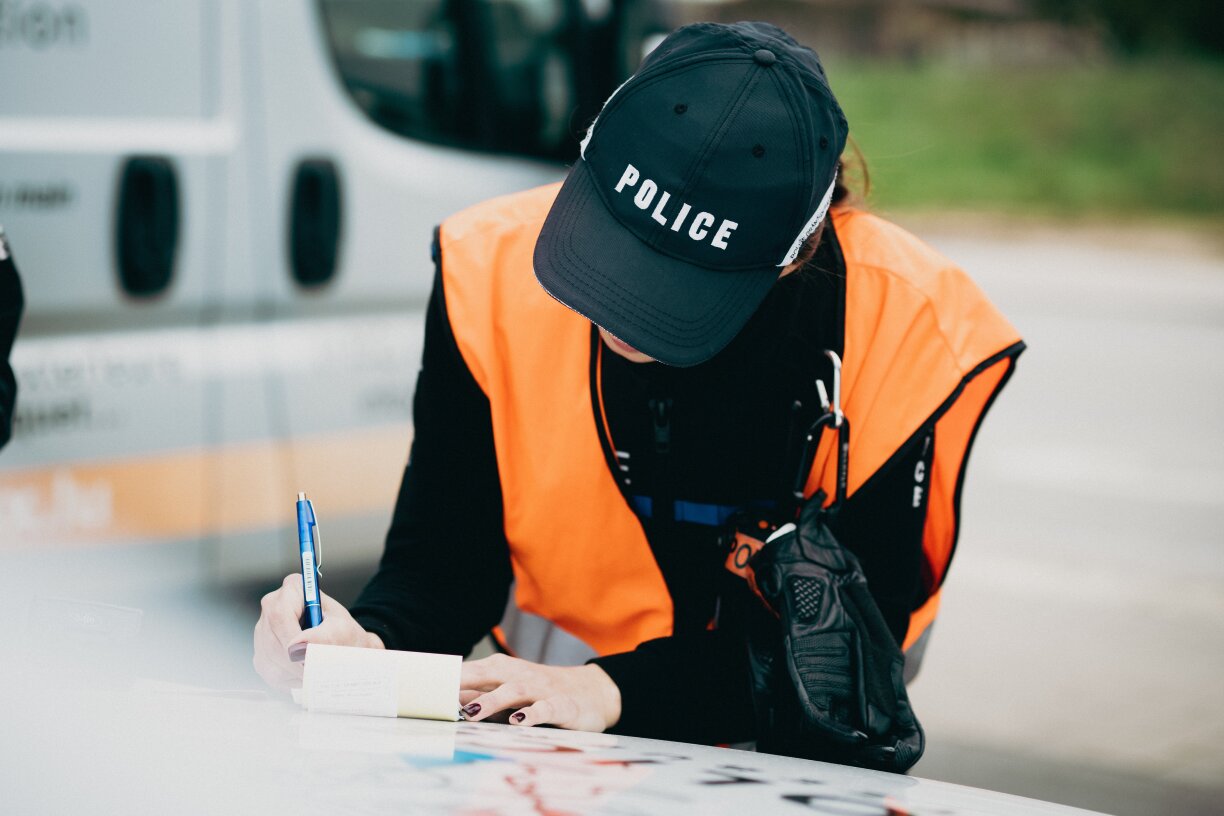
A sharp increase in recruitment has led to major changes in police training in Luxembourg, with class sizes rising well beyond previous levels. While between 40 and 80 police students enrolled each year in the past, around 200 recruits have joined annually over the past three years. This rapid growth quickly made it clear that the old police school in North Bonnevoie-Verlorenkost would no longer be able to hold capacity.
Although a new training facility was built in Findel, it was not large enough to accommodate the previous two-year training model. As a result, the structure of the programme has been adapted.
Training at the police school now lasts one year, with recruits moving into the field in their second year. To ensure that all trainees can be accommodated during the first year, training hours have been reduced from 1,700 to 1,350.
Christian Gatti, director of training, explained that some subjects had been combined or removed entirely. However, he clarified that only non-essential topics had been affected, citing language and swimming courses as examples. These were also difficult to organise for such large groups, particularly as the police do not have their own swimming facilities.
During the second year, recruits complete what is known as practical initiation, which consists of three internships lasting four months each. Internships were already part of the training before the reform, but they used to be limited to 12 weeks of observation.
Under the new system, trainees take a specific oath after passing their exams at the police school. This allows them to begin working in the field under the supervision of a tutor.
According to one trainee, Lynn B., who began her internship this year as part of a group of 182 students, this extended field experience provides a very different level of preparation for the job. She noted that while theoretical training helps prepare recruits to deal with people, real-life situations often differ from what is taught in the classroom.
Recruitment processes have also been adapted to reflect the demands of the profession. In addition to general education, language and physical tests, candidates undergo psychological assessments.
Bob Zovilé, deputy director of human resources, explained that these tests, combined with interviews and background assessments, help determine whether candidates possess the necessary skills for police work. He said that psychological tests, together with a candidate’s background and interview, allowed for the best possible assessment of their suitability for the profession. They also helped determine whether candidates possessed key skills relevant to the role, such as social competencies, while identifying those who may not be suited due to a lack of these abilities.
Candidates whose appearance is not considered neutral, for example due to tattoos indicating political or religious affiliations, may also be excluded from the recruitment process.





