Here are five things you should know as we approach the end of the week:

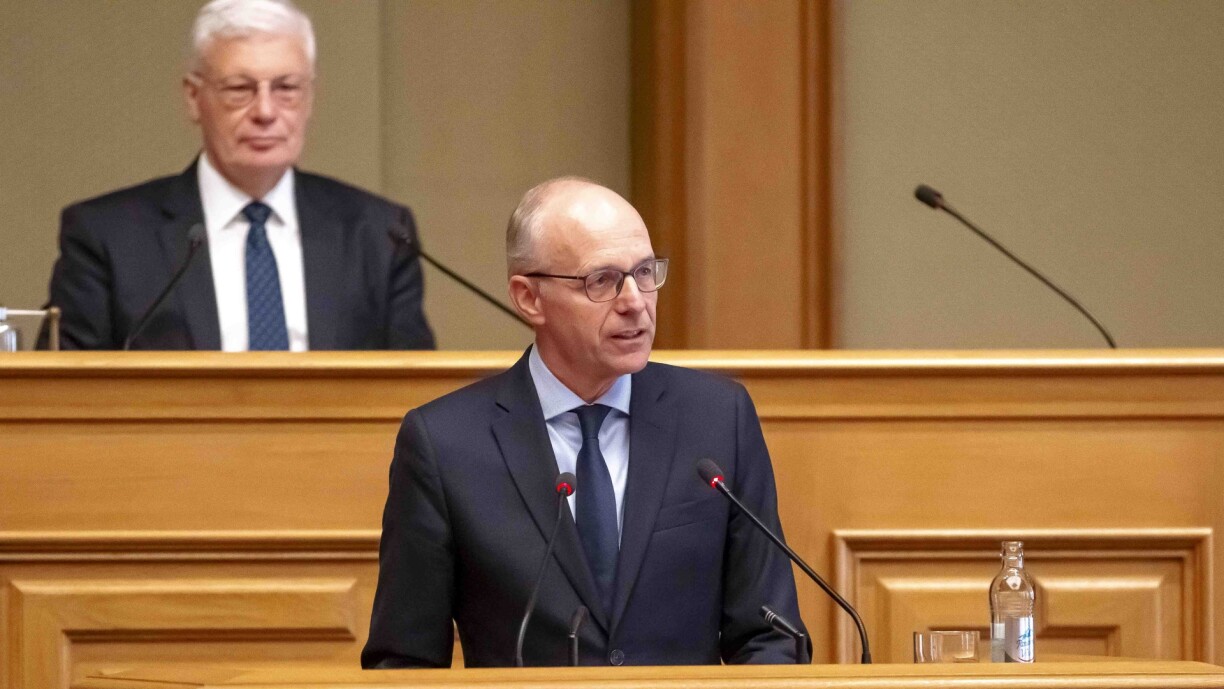
Prime Minister Luc Frieden, in his State of the Nation address, announced a phased pension reform, gradually extending required contribution years by three months annually while keeping the legal retirement age at 65.
Long-anticipated announcement – Prime Minister Luc Frieden used his State of the Nation address to outline the government's long-anticipated pension reform, which centres on a gradual extension of required contribution years by three months annually. While the legal retirement age will remain at 65, the reform aims to close the gap between that threshold and the current average effective retirement age of around 61.
Frieden argued this change is essential to maintain the pension system's sustainability in the face of demographic shifts and rising life expectancy, and ruled out raising contribution rates or drawing from the €27 billion pension reserve. Instead, the reform will be financed in part through redirected consumption taxes like the CO2 levy and by encouraging private savings through third-pillar pension incentives.
No explicit timeline – The reform will apply across both the public and private sectors, marking the first such unified adjustment since 1999. Public sector employees will also see their required contribution periods gradually extended, though current pensioners and those nearing retirement will not be affected.
The government committed to preserving important provisions, such as credited years for study and parental leave, which will continue to count toward pension eligibility. While no precise timeline has yet been set, Frieden suggested the changes could come into effect around 2030, with transitional mechanisms to ease the impact on workers currently in their 40s and younger.
Sharp criticism – The reform announcement was met with sharp criticism from trade unions and opposition parties, who argue that the plan places an unfair burden on younger generations and lacks sufficient transparency and dialogue. The OGBL and LCGB trade unions accused the government of sidelining the traditional tripartite model of social negotiation, asserting that genuine dialogue has been replaced with top-down decisions.
Unions also raised concerns that extending working lives – especially without specific protections for those in physically demanding jobs – could undermine social justice. Opposition MPs echoed these concerns, warning that the reform, while necessary, risks eroding trust, weakening worker protections, and failing to account for broader systemic inequalities unless adjustments are shared more evenly across society.

Luxembourg's population grew by 1.5% in 2024 to 681,973 residents, the slowest annual growth rate in a decade.
Net migration contributed the most to this increase, with 25,725 arrivals and 16,444 departures.
The natural population balance was +1,988, as births rose by 2.2% and deaths increased slightly by 0.9%.
Slowing population growth – Luxembourg's population reached 681,973 as of 1 January 2025, reflecting a 1.5% increase over the previous year. This marks the slowest rate of annual population growth in the past ten years.
Typically, the country has seen growth rates between 2% and 2.5% annually, with the only comparable slowdowns occurring in 2020 and 2021 during the Covid-19 pandemic.
Migration a key driver – The primary factor behind the population increase continues to be immigration. In 2024, Luxembourg welcomed 25,725 new arrivals, while 16,444 people left the country, resulting in a net migration gain of 9,281 individuals.
This positive migratory balance has consistently played a crucial role in sustaining population growth, especially in a country where natural increase alone does not account for much of the annual rise.
Modest natural increase – Alongside migration, Luxembourg saw a natural population increase of 1,988 people in 2024, the result of 6,459 births and 4,471 deaths. The number of births rose by 2.2% compared to 2023, while deaths increased by a smaller margin of 0.9%.
Life expectancy remained relatively high, with women living an average of 85.3 years and men 81.2 years, further contributing to demographic stability.

Laura Thorn secured Luxembourg a spot in the Eurovision final after an emotional and powerful semi-final performance.
She expressed relief and exhaustion, saying she now wants to enjoy the final without pressure.
Thorn is now focused on Friday’s crucial jury rehearsal and maintaining her voice ahead of Saturday’s performance.
Overjoyed – Laura Thorn secured Luxembourg a coveted spot in the Eurovision Song Contest final following a heartfelt and intense performance in Thursday night's semi-final. Her ability to deliver under pressure stood out, especially in a year marked by surprising results and unexpected qualifiers.
Intense performance – Speaking to RTL after the show, Thorn described the evening as an emotional whirlwind, full of laughter and tears, ultimately leaving her feeling physically and emotionally drained. Despite the intensity, she said she now feels a sense of relief and plans to enjoy Saturday's final without putting additional pressure on herself. For her, simply being part of the final is already a significant accomplishment.
Precious points – With little time to celebrate, Thorn is already focused on Friday's all-important jury rehearsal, where performances are evaluated ahead of the public vote. She emphasised the need to prioritise her health and vocal care to ensure she performs at her best. Thanks to rigorous rehearsals, much of her routine now feels instinctive, allowing her to concentrate more on presence and emotion during the final performance.
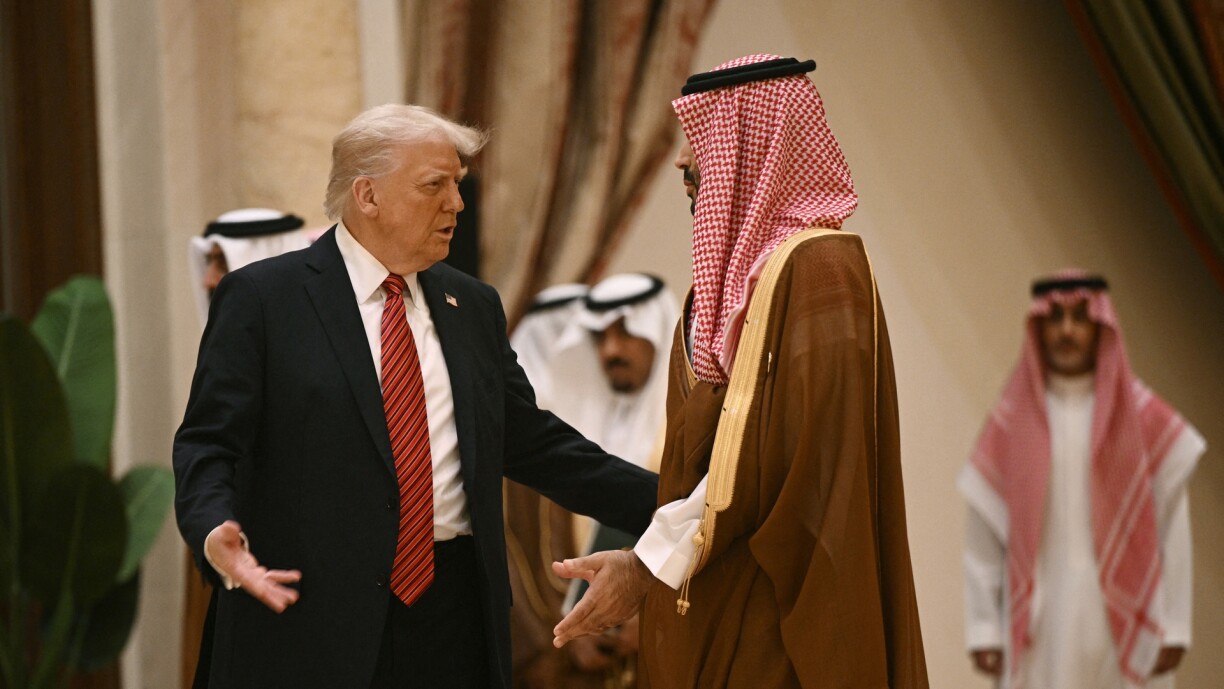
On his Gulf tour, President Trump secured over $1.4 trillion in investment pledges, lifted US sanctions on Syria, and expressed optimism for a renewed nuclear deal with Iran.
Trump signed a record-breaking $142 billion arms deal with Saudi Arabia, received lavish receptions in Riyadh, Doha, and Abu Dhabi, and faced criticism over personal gifts like a luxury jet from Qatar.
As Gaza endures relentless Israeli bombardment and humanitarian collapse, hostage negotiations continue, with the US playing a key role amid growing global outrage over the war's civilian toll.
Deepening ties – US President Donald Trump concluded a high-profile tour of the Gulf with sweeping diplomatic and economic achievements, including a staggering $1.4 trillion investment pledge from the UAE and a $600 billion commitment from Saudi Arabia. Among the standout deals was a $200 billion aircraft order from Qatar Airways and what the White House described as the largest arms deal in US history.
In a dramatic foreign policy pivot, Trump announced the lifting of longstanding US sanctions on Syria following appeals from Gulf allies, and said he was optimistic about a new nuclear agreement with Iran, potentially easing regional tensions and averting military conflict. The tour marked Trump's first foreign visit of his second term and reinforced his administration's deepening ties with Gulf monarchies.
Corruption allegations – Throughout his visits to Saudi Arabia, Qatar, and the UAE, Trump was welcomed with elaborate pageantry and personal praise from Gulf leaders, including public declarations of strong ties and shared visions for regional cooperation. The arms deal with Saudi Arabia alone totalled nearly $142 billion, and the trip featured business summits and announcements of significant technology investments, particularly in AI.
However, the tour drew ethical scrutiny back home, especially after Qatar gifted Trump a luxury Boeing jet for both official and personal use – a move that critics on both aisles decried as blatant corruption. The visits reinforced the perception that Trump's Gulf ties are both politically strategic and personally beneficial, with figures like Elon Musk and Trump family members making notable appearances alongside regional leaders.
Escalating war – While Trump engaged in high-level talks in Doha about hostage negotiations, the situation in Gaza deteriorated rapidly, with at least 80 Palestinians killed in a single day of Israeli airstrikes amid a deepening aid crisis – access nearly impossible due to an ongoing blockade. Gaza hospitals reported being overwhelmed and under-resourced, as civilians – many of them children – continued to die from strikes, hunger, and lack of medical care.
Amid global calls for a ceasefire and criticism of US-led efforts to restructure aid delivery outside the UN system, Trump's lack of focus on a Gaza breakthrough stood in stark contrast to his economic triumphs in the Gulf. Israeli officials have meanwhile vowed to expand the military campaign and the "conquest" of Gaza, prompting international concern over the worsening humanitarian catastrophe and the displacement the civil population.
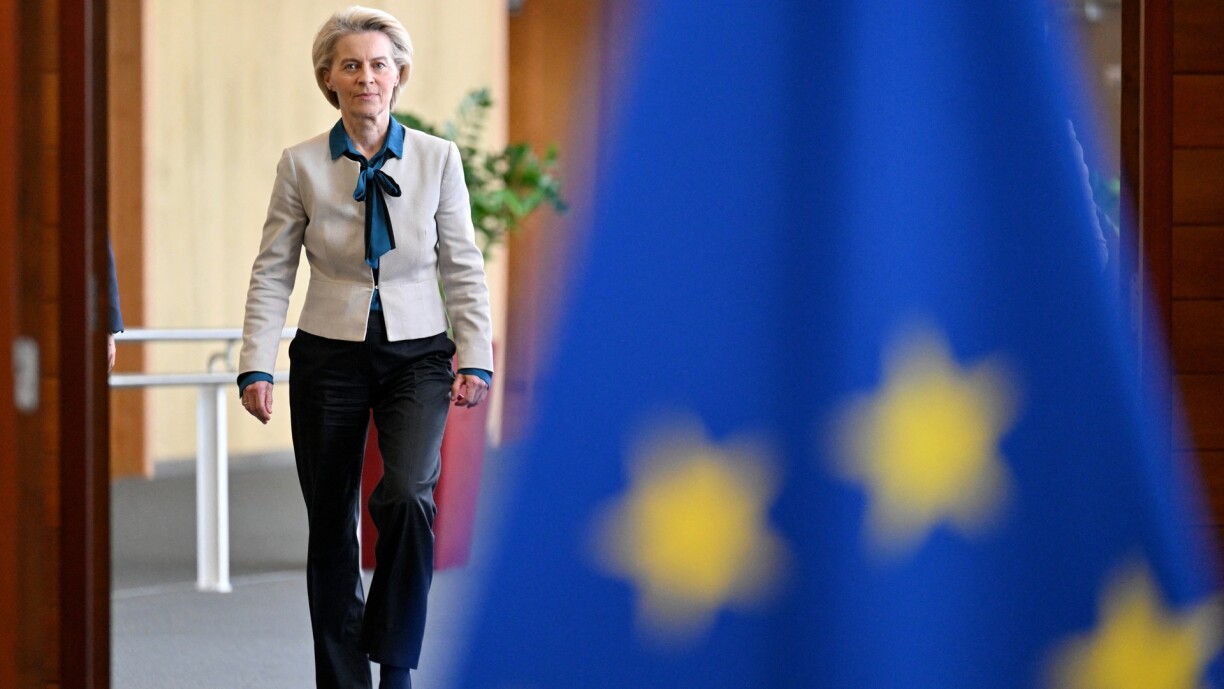
The EU's top court ruled that the European Commission failed transparency rules by refusing to release text messages between Ursula von der Leyen and Pfizer's CEO during Covid-19 vaccine negotiations.
The court sided with The New York Times, criticising the Commission for not plausibly explaining the texts' absence and ordering a new response to the paper's request.
The ruling adds pressure on von der Leyen amid ongoing accusations of opaque decision-making and raises concerns over institutional accountability within the EU.
Commission rebuked – The Court of Justice of the European Union ruled that the European Commission breached transparency obligations by not releasing text messages exchanged between Commission President Ursula von der Leyen and Pfizer CEO Albert Bourla during Covid-19 vaccine procurement talks. The case, brought by The New York Times, challenged the Commission's refusal to hand over the messages, which were reportedly exchanged at a critical point when the EU was negotiating vaccine supply contracts.
The court found that the Commission had not provided a valid legal basis for withholding the texts, nor had it justified its claim that the messages were not recorded or did not contain important information.
No plausible explanation – In siding with The New York Times, the court issued a sharp rebuke of the Commission's handling of the freedom of information request, stating that it failed to plausibly explain why the messages were not archived or disclosed. The ruling invalidates the Commission's previous decision and requires it to issue a new, more detailed explanation.
However, uncertainty remains over whether the messages still exist, were deleted, or were never archived, raising further questions about the EU's internal record-keeping and communication protocols during a major public health crisis.
'Ephemeral' messages – The verdict has significant political implications for von der Leyen, whose leadership has already been criticised for centralising power and lacking transparency. Anti-corruption advocates and watchdog groups, including Transparency International, have welcomed the ruling as a much-needed step toward institutional accountability within the European Union.
The case has reignited debate over how digital communications – particularly informal or 'ephemeral' messages (messages that disappear after certain time) – should be handled in high-level public decision-making, especially when those decisions involve vast sums of public money and affect millions of EU residents.
Business & Tech – The US government rested its case against Facebook-owner Meta on Thursday, as it tries to persuade a US judge that the tech giant bought Instagram and WhatsApp to neutralize them as rivals.
Science & Environment – The feverish diseases dengue and chikungunya could soon become endemic in Europe as the tiger mosquitoes that transmit these viruses spread farther north due to global warming, according to new research published Thursday.
Entertainment – Attorneys for Sean 'Diddy' Combs on Thursday tried to chip away at the credibility of Casandra Ventura, the music mogul's former girlfriend, after two days of her grueling testimony in his trial on sex trafficking charges.
Mobility – Payments for Luxembourg's extended climate bonus scheme for mobility are currently on hold due to pending legal adjustments, though applications are being processed in the meantime, while the separate bonus for housing remains unaffected.
Border checks – Germany's decision to reintroduce border controls and turn back asylum seekers has drawn strong criticism from affected towns on both sides, where officials warn the move undermines European unity and the spirit of the Schengen Agreement.
Brutalist landmark – Luxembourg's government is moving to classify the historic Schuman building as a national heritage site, recognising its symbolic role in European integration and seeking ways to preserve and repurpose it meaningfully.

Your Weekly Recap is published every Friday at noon. Read earlier versions.





