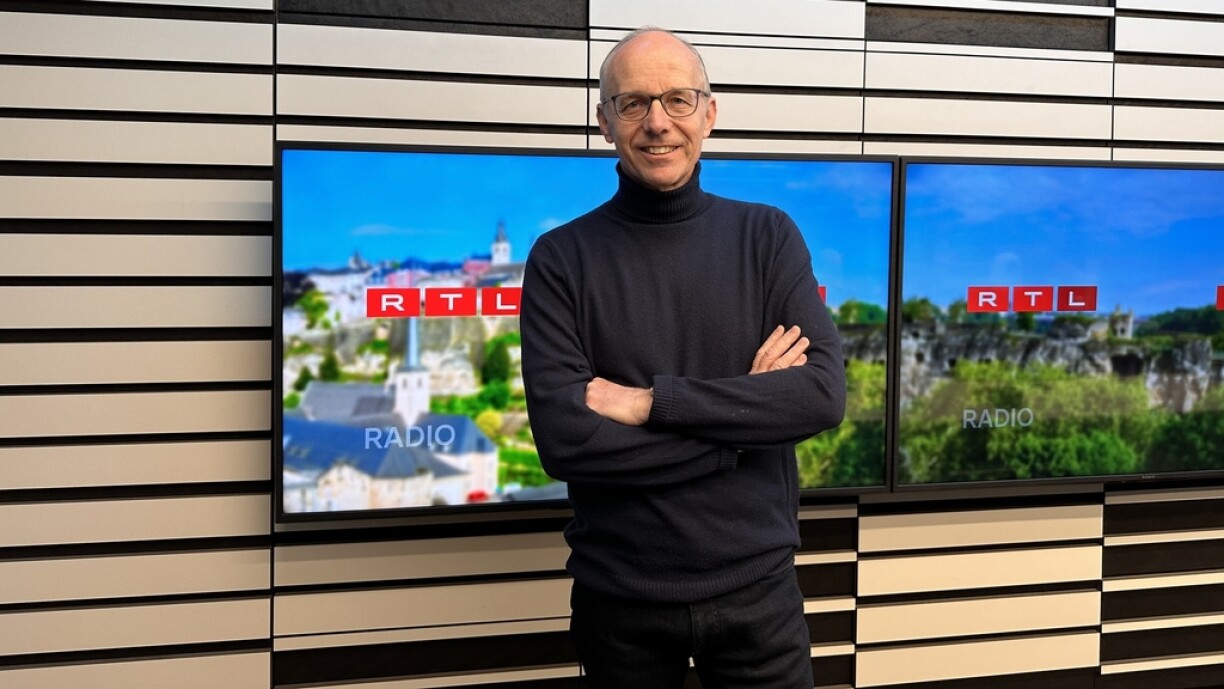
On Saturday, Prime Minister Luc Frieden discussed his government's progress during an interview with our colleagues from RTL Radio, marking a year since the coalition between the Christian Social People's Party (CSV) and the Democratic Party (DP) took office.
The Prime Minister expressed satisfaction with the government's work so far. He acknowledged that the first few months were a period of adjustment, particularly for new ministers, but emphasised that significant progress had been made over the past nine months. According to Frieden, the government successfully injected momentum into the economy and housing sector, with Luxembourg's economic forecasts for 2025 surpassing those of its neighbouring countries. He stressed that a strong economy is crucial for effective social policies, noting that many residents will benefit from a 10% to 15% reduction in taxes next year.
Frieden also confirmed that trade unions should retain their exclusive right to negotiate collective agreements. However, he raised the question of whether "every single detail" needs to be included in such agreements, clarifying that this view is shared by the entire government.
Addressing recent news about potential job losses at satellite operator SES, Frieden sought to reassure the public about the company's future in Luxembourg. On Friday, it was reported that 80 jobs at SES are at risk. The Prime Minister stated that the government had been informed by SES management that several hundred employees would remain based in Luxembourg. However, he acknowledged that companies like SES are facing increased pressure to adapt, citing the growing influence of Elon Musk on the US government as a factor.
Frieden declined to comment on whether the government would push for a job retention plan at SES.
The Prime Minister emphasised the need to address child poverty in Luxembourg, a topic he believes has been overlooked in recent years. According to Frieden, his government is the first to prioritise this issue, which he said resonates with many ministers, "some of whom are parents." A comprehensive plan to combat poverty is set to be unveiled in 2025, but Frieden noted that initial measures are already in place or have been announced. These include the introduction of an automatic mechanism to streamline access to certain financial aids.
While the energy price cap will be reduced by half next year, Frieden highlighted that aids such as the energy allowance have been increased and adjusted to be more socially selective, which he argued is a fairer approach. He also announced that pre-financing for photovoltaic systems would be available in the first half of next year, independent of the energy roundtable scheduled to present its proposals in April.
Frieden expressed confidence in the public's support for the energy transition and climate protection efforts, even if progress is gradual. He stated his preference for a slower, consensual approach over implementing measures that might face public resistance.
Regarding pension reform, the Prime Minister confirmed that the government would present proposals in the first half of 2025, aiming to build broad consensus.
On the recent announcement that Spuerkeess, the Luxembourg State Savings Bank, had been fined approximately €1.7 million for errors in reporting to the European Central Bank's banking supervision, Frieden said he was not familiar with the specifics of the case. However, he acknowledged Spuerkeess' assurance that necessary corrections had been made and that clients' assets were not at risk. Frieden noted that banking regulations are complex and can lead to varying interpretations.
Earlier this week, the European People's Party (EPP), the parent party of the CSV in the European Parliament, voted alongside far-right groups to support an extension of less stringent forest protection regulations. However, the CSV's MEPs broke with the EPP's stance and voted against the measure.
Prime Minister Luc Frieden reiterated his firm opposition to collaborating with extremist parties, stating that such partnerships should never occur. He acknowledged, however, that there may be instances where shared views on specific projects align with those of extremist groups. Frieden emphasised that such cases do not signify an abandonment of core values or principles.





