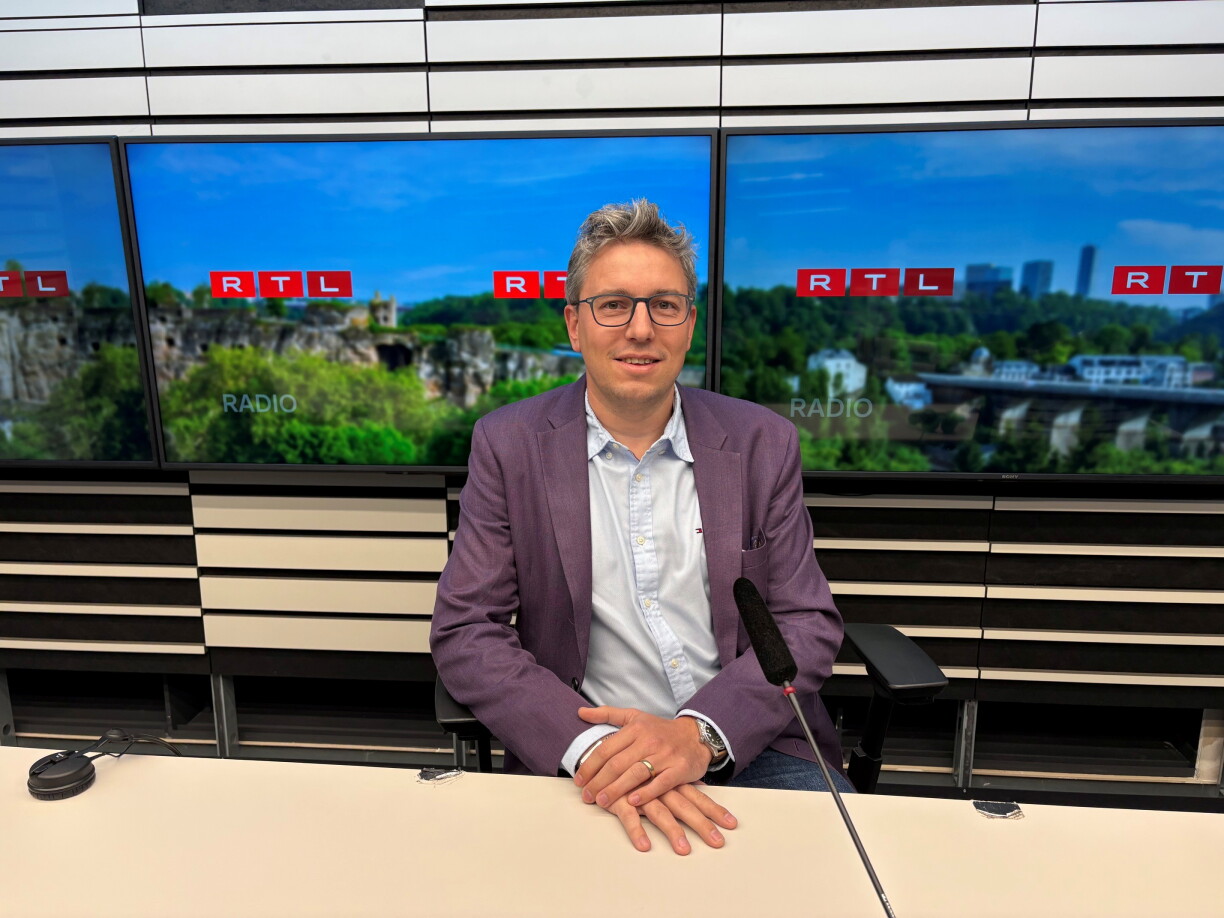
Pirate Party MP Sven Clement has strongly criticised the Luxembourg government’s response to recent drone incidents, calling its communication "catastrophic" and warning that the country is increasingly exposed to new forms of hybrid attacks.
Clement argued that officials were neither transparent nor forthcoming about what they did not know, stating that even admitting uncertainty "would have been a reasonable communication".
He was not surprised by the recurrence of such security incidents, despite earlier assurances from the government that all necessary measures had been taken.
The government "has already stumbled twice", according to him, as even after more than six months since the first incidents, the country was caught off guard again.
He questioned whether enough had been done after the initial incidents and emphasised that being caught by surprise might be understandable the first time, but not the second.
Both opposition and majority parties previously debated the adequacy of the government’s actions, but only a few months later, "we are facing the same catastrophe."
Clement pointed out that the threats facing Luxembourg mirror a wider trend in Europe and globally, as hybrid and cyberattacks become more common.
Luxembourg can no longer rely solely on its allies for security, and in today’s fast-changing world, such attacks "reach Luxembourg much quicker" than before.
He also cited examples of cyberattacks and disinformation campaigns, saying Luxembourg has already been a victim of such campaigns more than once.
The Pirate Party MP cautioned against overreacting to drone sightings. Such incidents are disruptive, particularly given the sharp increase in reports to the police.
However, he noted that not every sighting is a real threat, referencing circulating videos that were later identified as commercial aircraft rather than drones.
On Luxembourg’s defence strategy, Clement stressed the need for intelligent, targeted security investments rather than simply increasing spending without a plan.
He cautioned that one "can’t just go across the country with a watering can and hope that flowers of defence or peace will grow", warning this approach rarely works and often results in expensive contracts for the same suppliers.
He insisted that investments must have a real economic impact, arguing that tax money should not be spent without "a concrete application in Luxembourg".
Clement said the Pirate Party supports increased defence spending only when it benefits the country directly and is used efficiently.
Regarding hybrid threats such as disinformation campaigns, Clement said these attacks are often aimed at undermining trust in institutions and politics as a whole.
He argued that no democrat should accept online manipulation, regardless of whom it targets, because ultimately, everyone suffers as a result.
On the EU’s proposed ban on social media accounts for those under 15, Clement said the Pirate Party opposes outright bans and instead favours early media education. According to him, young people have a right to form their own opinions and communication channels.
He favours reducing harmful features of social media platforms, such as endless scrolling or visible like counts, but maintained that social media should be addressed in schools, not banned. A ban would "restrict the recipient from being on a platform, because we cannot control the sender", he added.
Furthermore, he places importance on parental responsibility, arguing it is not the state’s role "to play mother or father".
Parents are best placed to decide when their children are mature enough for social media use, and age is not always a reliable indicator of readiness.
Discussing artificial intelligence, Clement repeated the Pirate Party’s longstanding warning that AI systems often behave problematically because they are trained with poor data.
Clement’s intervention underscores the growing complexity of security and digital policy in Luxembourg. He called for more transparency, better communication, and smarter investments in defence, warning against blanket restrictions on technology and advocating for stronger digital education.
He concluded that regulation should target toxic mechanisms and ensure people are well-informed about risks, reinforcing the need for a balanced approach to both security and digital freedoms.





