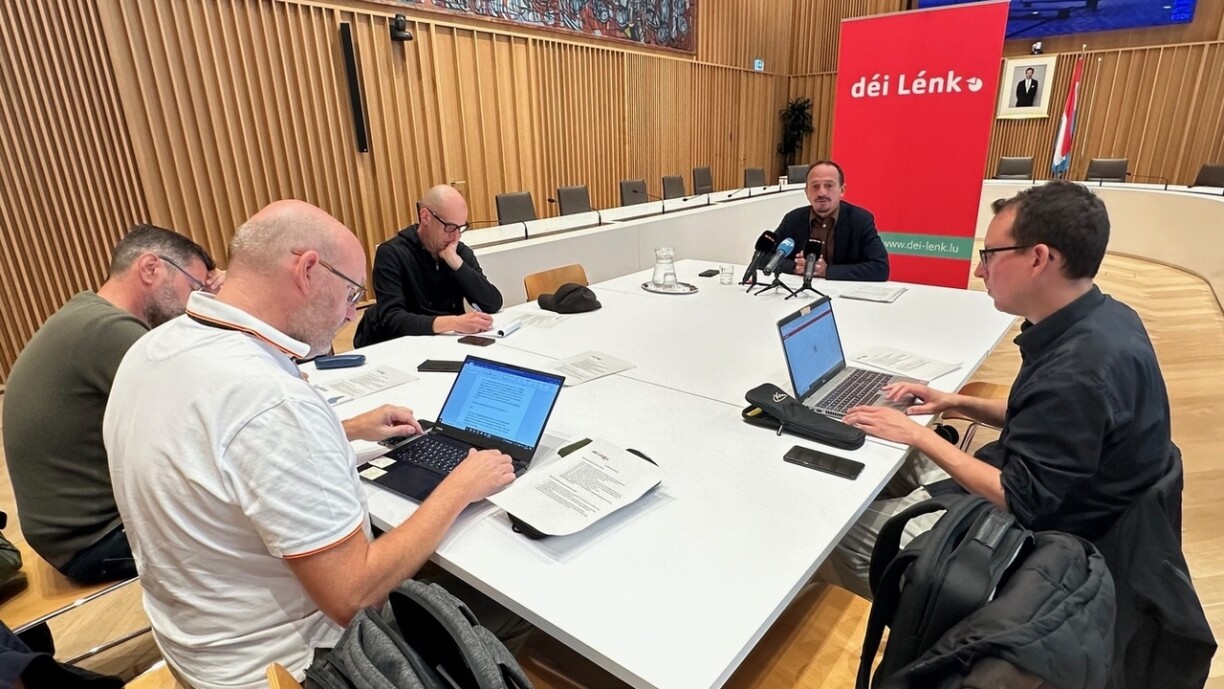
In June, Esch-sur-Alzette's mayor, Christian Weis of the CSV (Christian Social People's Party), rejected a motion from The Left (déi Lénk) that called for the voluntary resignation of DP (Democratic Party) council member Pim Knaff after his conviction for aggravated tax fraud. This decision led the opposition to walk out of the council meeting. Weis justified his refusal based on legal concerns, a stance that The Left strongly contested, prompting them to file a legal challenge.
The Left argues that the mayor does not have sole authority to decide on the admissibility of a motion and claims that only the municipal council can make such a decision. They also emphasise that the motion was not a disciplinary action but rather a voluntary request for Knaff to resign. Furthermore, they argue that Luxembourg's municipal law conflicts with the European Charter of Local Self-Government, which they believe should take precedence in this matter.
The main argument from The Left centers on the fact that the mayor alone does not have the authority to decide on the admissibility of a motion; they assert that only the municipal council can make such a decision. They further claim that the motion was not a disciplinary measure but rather an invitation for Pim Knaff to resign voluntarily. Additionally, they argue that Luxembourg's municipal law conflicts with the European Charter of Local Self-Government, which they believe should take precedence in this case.
By seeking a legal ruling from the Administrative Court, The Left aims to compel a vote on the motion within the municipal council. Marc Baum, a councillor from The Left, emphasised that their objective is to force The Greens and the CSV to clarify their stance on whether serious tax fraud is compatible with holding a position in the municipal council. "The matter is far from settled," declared Baum.
Weis has refrained from commenting on the argument regarding European law but stated that the town's legal experts had advised against holding a vote on the motion. According to Weis, these experts still believe the correct decision was made, though he acknowledged that The Left interprets the law differently. He noted that it is appropriate for a legal body to resolve this issue.
However, Weis did not speculate on what would follow if The Left were to win the case. If both parties fully exercise their rights to appeal, it could take the Administrative Court up to five months to reach a decision.






