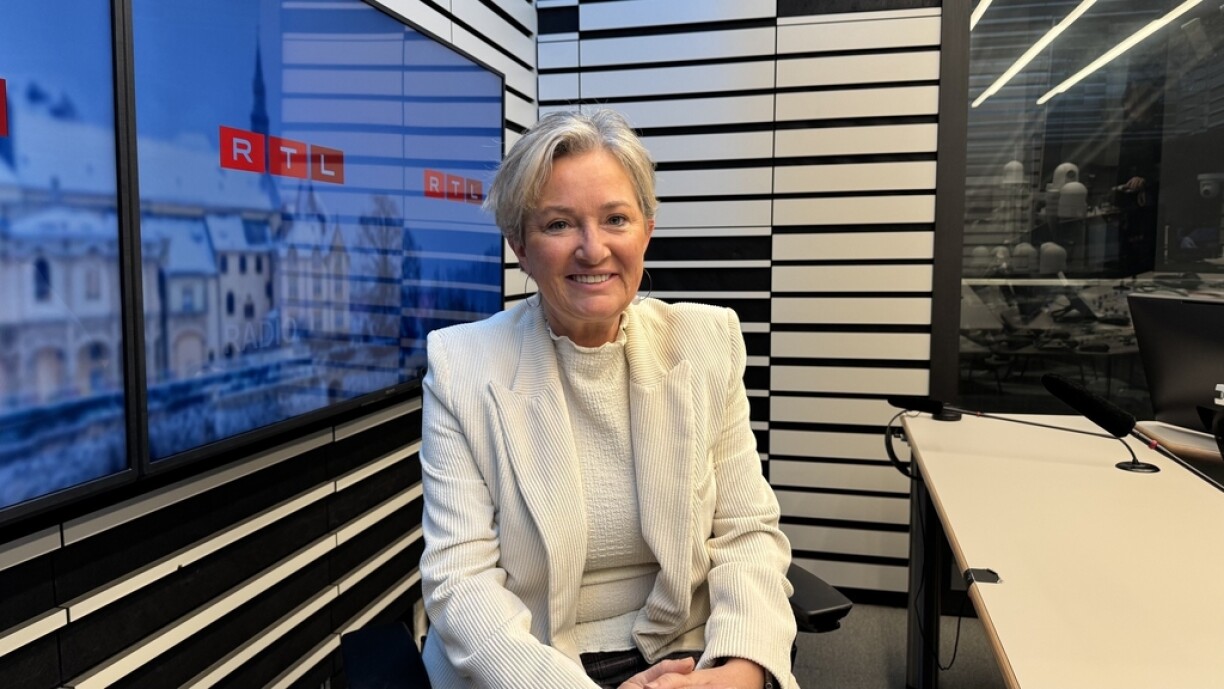
On Wednesday, MP and former Minister of Health Paulette Lenert of the Luxembourg Socialist Workers' Party (LSAP) discussed the government's migration policy and the Covid-19 pandemic during an interview with our colleagues from RTL Radio.
Reflecting on Luxembourg's handling of the pandemic, Lenert lamented the absence of a dedicated pandemic law. "We had a broad political consensus in 2023, but unfortunately, we still don't have a pandemic law," she said.
Lenert admitted that when the coronavirus first emerged five years ago, Luxembourg was unprepared. "We were simply caught off guard," she said, noting that valuable time was lost. While pandemics had been discussed in theory, the country lacked practical readiness. Lenert stressed the importance of "learning the lessons" from this experience, particularly as experts predict that pandemics will become more frequent. She questioned why the urgency to pass such a law "is no longer relevant."
According to Lenert, the groundwork for a pandemic law has already been laid, but current Health Minister Martine Deprez of the Christian Social People's Party (CSV) appears uninterested in pursuing it. Instead, Deprez is focusing on drafting a comprehensive public health law. While Lenert acknowledged that this approach has merit "in the medium term," she argued that it is not a quick solution. "It's not something that can be put together overnight," she said, emphasising the need for an emergency framework in the interim.
Lenert proposed that a pandemic law could be integrated into a broader public health law later. She also criticised delays in implementing the health policy promised by the CSV during the 2023 election campaign. "We expected more after a year," she said.
Regarding asylum and immigration policy, Lenert believes the situation has taken a troubling turn. "I find this concerning," Lenert remarked. "Red lines are currently being crossed," she warned.
She expressed disbelief that in Luxembourg, families, including women with young children, are being left out in the cold during the winter. "This is an unacceptable situation," she said, adding that it has nothing to do with partisan politics. "I expected us to agree across party lines that there was a line that cannot be crossed," Lenert continued, emphasising her inability to support the current immigration policy.
Lenert stressed the need to establish a commission to address "extreme cases," as outlined in the coalition agreement. She argued that such cases must be considered on an individual basis, criticising the current system for applying the law "blindly." Drawing on her experience as a former judge at the administrative court, Lenert acknowledged that asylum policy is complex, but she insisted that "this major debate needs to be conducted in the Chamber of Deputies," while the immediate crisis must be resolved.





