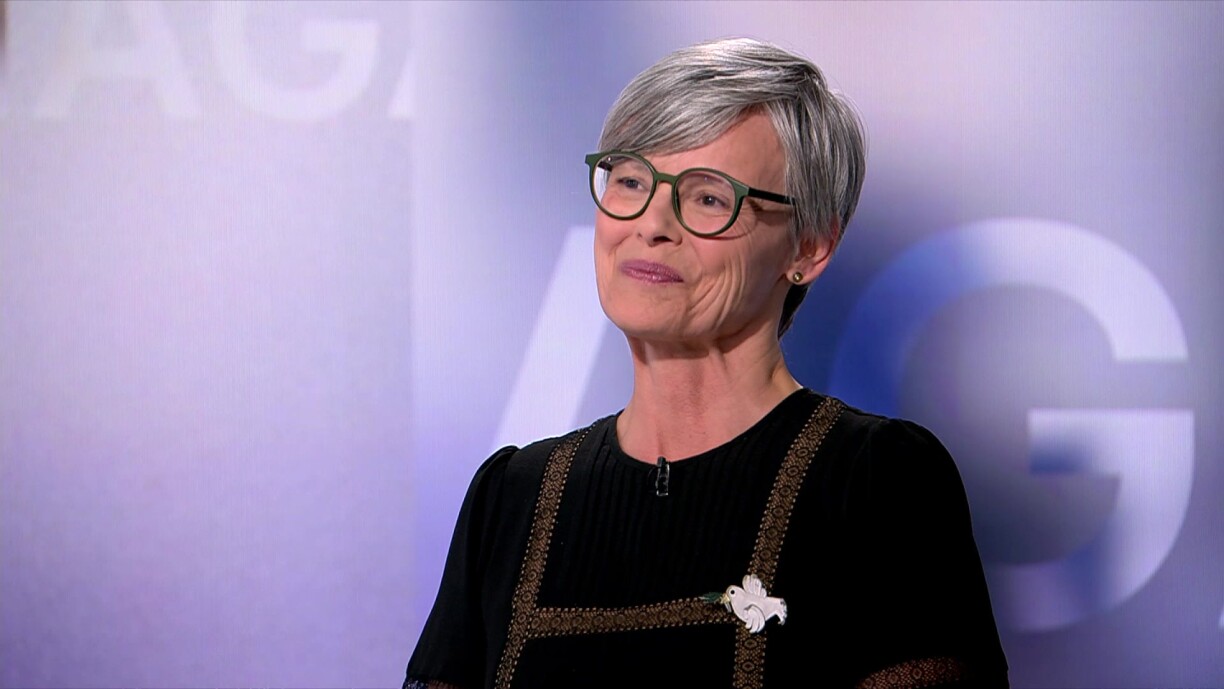
Marianne Donven, a civil servant at the Ministry of Foreign Affairs, has resigned in protest against the government's asylum policy, citing concerns over the treatment of vulnerable individuals.
In her resignation letter, Donven, who has over a decade of experience in humanitarian work with refugees, stated, "the most vulnerable are being treated in an inhumane and unscrupulous manner". Through her work, she has been actively involved in initiatives such as "Hariko", an artistic project managed by the Luxembourg Red Cross, "Oppent Haus", which connects refugees with local residents willing to provide housing, and the "Chiche" social restaurant. In addition to her role at the Ministry of Foreign Affairs, Donven has also stepped down from her position on the High Council for Civil Security at the Ministry of Home Affairs.
Donven highlighted significant changes in asylum policy since the new government took office. She pointed to a recent incident involving a single mother with a ten-month-old baby and a five-year-old child who was denied entry to a facility run by the National Reception Office (ONA), which falls under the Ministry of Family Affairs, and was left on the streets. "This is not an isolated case", Donven emphasised, adding that hundreds of people are currently in similar situations – a scenario she claims would have been unthinkable in the past.
In response to the criticism, Minister for Family Affairs Max Hahn defended the government's approach, stating, "no one is being made homeless". Hahn explained that many of these cases involve individuals whose legal status has been repeatedly upheld by the courts, confirming their presence in Luxembourg as illegal.
The minister also noted that such cases strain the already overburdened ONA network, which operates with waiting lists. To address the issue, Hahn pointed to the establishment of the Maison de retour, a facility designed to assist individuals in preparing for their return to their home countries. "This ensures that no one is left on the street", he said.
Donven countered that, in the past, individuals who could not be deported – due to some countries refusing forced returns – were not immediately expelled from reception facilities. Now, however, those who receive a final negative decision on their asylum application are given a five-day notice to leave their accommodation. "This really isn't serious. How can you find other accommodation in Luxembourg in five days?", Donven questioned. She expressed concern that NGOs are often left to step in and provide shelter for those who end up on the streets.
In response, Minister Hahn emphasised that the Maison de retour is designed to facilitate voluntary returns, offering support such as financial assistance to help individuals reintegrate into their home countries. He reiterated the importance of the right to asylum, calling it "very precious", but added, "We have to accept that some people are granted asylum and others are not".
Donven also raised concerns about the lack of communication and delays in processing immigration applications. She noted that family reunification applications often drag on for months, leaving families in limbo. Additionally, refugees working as apprentices face uncertainty, as their applications for residence permits go unanswered, jeopardising their ability to complete their training.
"They hardly pick up the phone anymore", Donven said, highlighting the growing difficulty in communicating with the Immigration Office. She explained that applicants submit the required documents but often wait months without any updates.
Donven speculated that the government may be intentionally slowing down procedures to discourage new arrivals and family reunifications. "I'm afraid that's the way it's going to be–that they don't want any more people to arrive or families to be reunited. They just don't want to say so officially," she said. She suggested that the delays might be a strategy to pressure individuals into giving up and leaving Luxembourg voluntarily.
When approached for comment on these allegations, Minister for Home Affairs Léon Gloden declined to respond on Tuesday.





