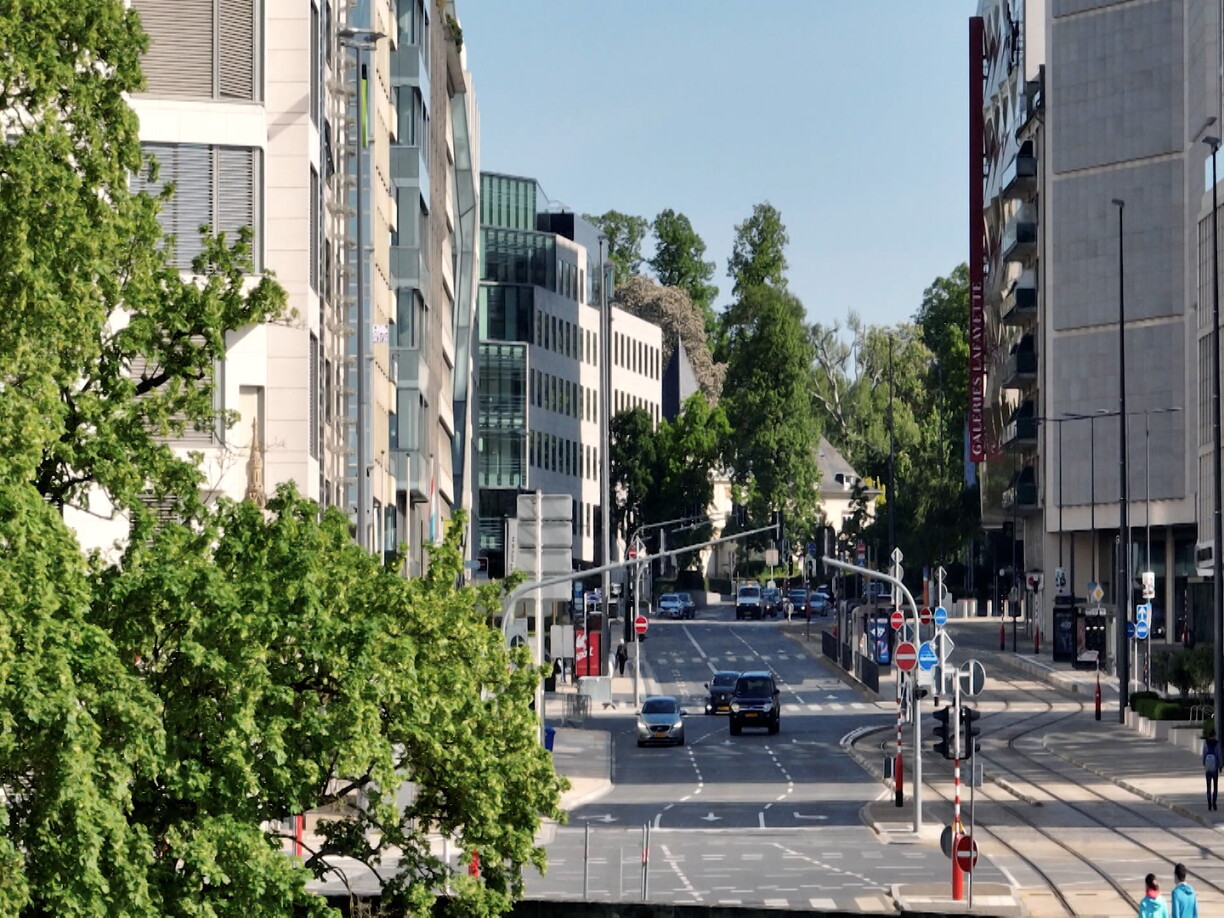
Is there an urgent need to adapt cities to heatwaves? For more than 85% of Luxembourg's residents, the answer is a resounding yes.
That is the finding of a study of more than 3,300 people carried out by the Luxembourg Institute of Socio-Economic Research (LISER), as part of TRANSITER, a research programme run in close cooperation with the Observatory of Territorial Development.
Adapting cities is all well and good. But how? To help answer that, Umberto Sconfienza, Antoine Decoville, and Frédéric Durand – three researchers from LISER – found that the vast majority of the population backs urban planning changes to make cities more liveable during heatwaves, with 85.2% of respondents saying it is urgent to adapt them to hotter conditions.
That, Sconfienza said, is already a notable figure. Decoville added that some of the remaining 15% had explained they felt relatively protected living in rural areas, where there was not necessarily much to adapt in the first place.
The results are all the more striking given that the survey was carried out this year in the middle of winter, well before the long heatwave at the end of June 2026. In people's minds at the time, Durand pointed out, the heatwave felt very, very far off.
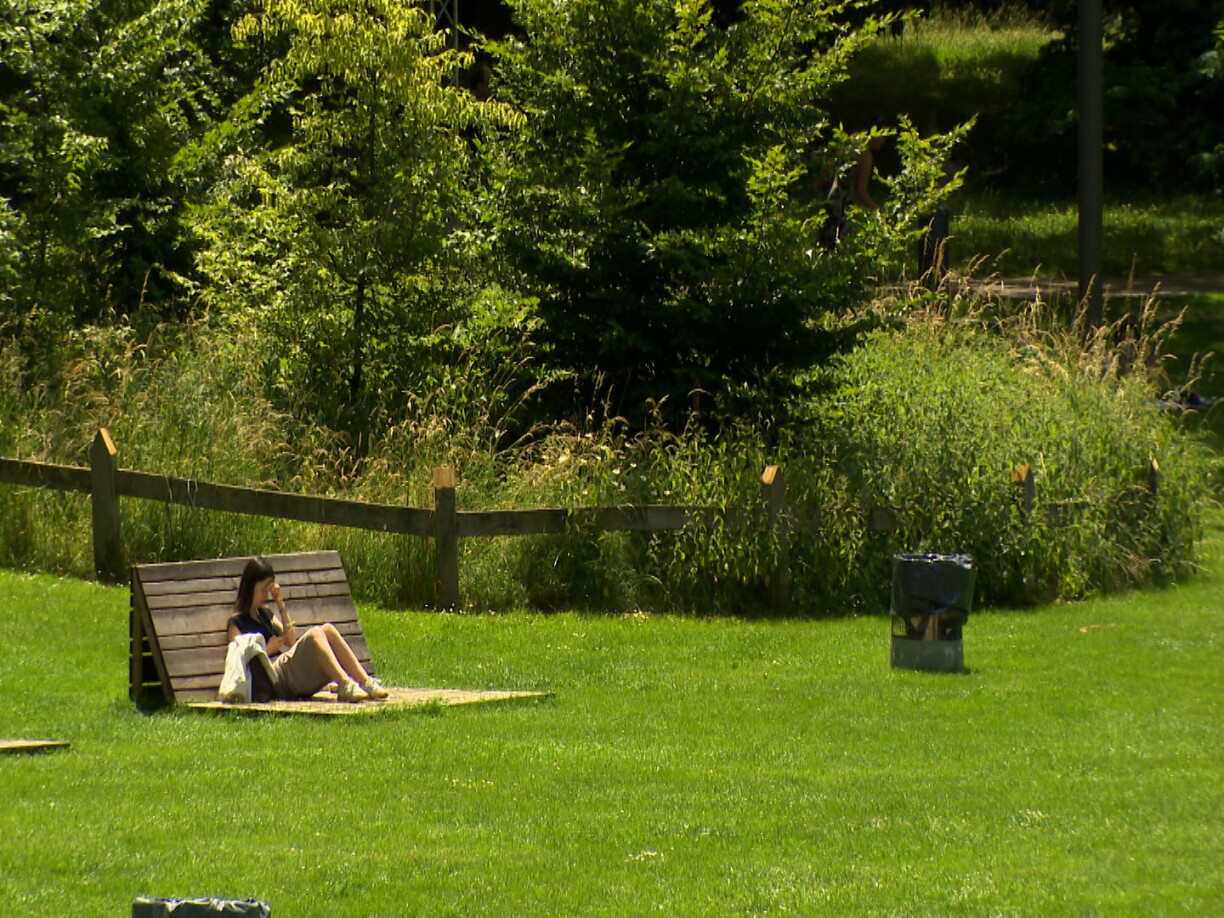
Luxembourg residents largely justified the need to adapt by pointing to social and environmental fairness, as well as to a sense of vulnerability in the face of heatwaves. The fairness argument stems above all from uneven access to outdoor spaces where people can cool off.
The researchers were also able to knock down some familiar stereotypes. Lower-income residents, for instance, are more interested in and more supportive of the measures.
To gauge what kinds of adaptation might work, researchers put four urban development options to residents, ranging from the easiest to roll out to the most far-reaching. The idea was to test their feasibility by measuring public support:
The question of air conditioning was quickly set aside. Some measures or solutions may look obvious but are not addressed at all in the study, Decoville explained, and air conditioning is one of them.
The researchers took a stance covering all urban spaces, in which air conditioning is as much part of the problem as part of the solution. While air conditioning has been at the heart of the debate around the heatwave in France, it remains a way to find comfort indoors by pushing hot air outside.
It fails to cool the streets, quite the opposite, fails to make outdoor activities any more pleasant, and fails to help buildings better cope with the unusual summer heat. During the June heatwave, the capital's ice-cream parlours noted that customers had simply stopped leaving home.
All four options cleared what the researchers call an acceptability threshold, meaning residents would accept the changes. Not all, however, were welcomed to the same degree.
Each depends on a set of complex factors, Sconfienza explained, from its effectiveness to the fairness it conveys and how easy it is to comply with. Shade sails and misting systems have been widely praised as urgent measures.
Support for them is broad, Decoville noted, and virtually no one is opposed.
Misting systems in particular are seen as a plus for the city that comes with no extra cost to residents, even though, in the end, every change has a cost for the taxpayers who fund such projects. That has not stopped several municipalities from taking matters into their own hands.
In Esch-sur-Alzette, the municipality offers subsidies to households that reduce impermeable surfaces and add greenery. In Luxembourg City, a greening plan has just been unveiled.
More marked differences emerged on the other two measures. Improving the albedo of buildings with light or reflective materials carries a potentially heavy cost for the party carrying out the work, in this case landlords. Tenants, by contrast, largely welcome the option.
The idea of replacing parking spaces with trees was the least well received of the four. It still commands a majority, but creates greater logistical difficulties for drivers, particularly those without private parking, as Durand noted.
The researchers found that the gap in support here was largely driven by how sensitive people are to climate issues. Those who place a high value on protecting the environment are considerably more supportive of the measure, while those less attuned to environmental questions sit closer to the acceptability threshold.
Residents chiefly said they wanted to be consulted before such a change is put in place. That fits with the wider goal of LISER's research, which, as Decoville reiterated, is to help elected officials identify impactful and useful measures and to find better policy solutions.





