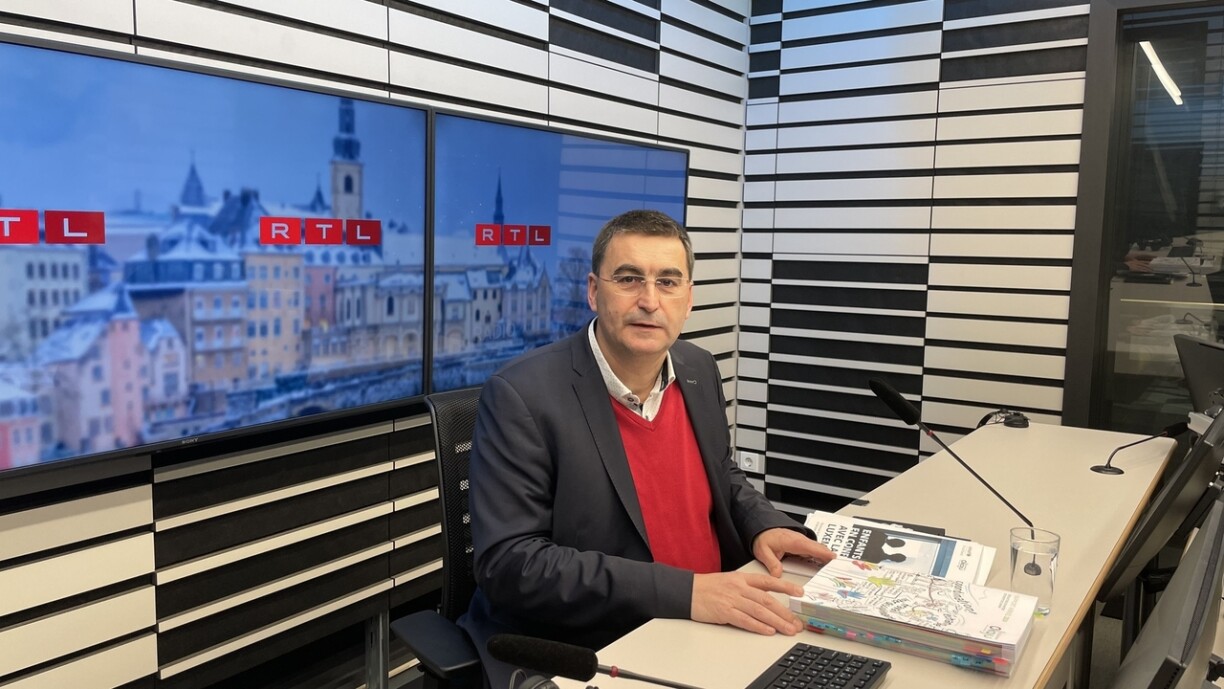
On Friday morning, our colleagues from RTL Radio spoke with Ombudsman for Children's Rights Charel Schmit about the recent murder incident in Esch-sur-Alzette on New Year's Day, and the broader reform of youth criminal law in Luxembourg.
The incident, in which two teenagers allegedly stabbed their father or stepfather, respectively, was described by Schmit as "a very gruesome domestic tragedy." He cautioned against hasty judgments, emphasising the need to consider whether other individuals were involved and whether victim protection measures are required.
Schmit also highlighted systemic issues within Luxembourg's justice system, noting its lack of adaptation to handle such cases and the absence of statistical data on youth criminality. He pointed out that the police have not released any statistics on juvenile delinquency for the past six years, making it difficult to identify trends or draw conclusions about delinquent behaviour.
"At least," Schmit added, "we know from the public prosecutor's office that 95% of delinquent adolescents are not incarcerated". However, he acknowledged that minors are capable of committing serious acts of violence, though this does not justify placing them in adult prisons.
The Ombudsman reiterated longstanding criticism from children's and human rights advocates, stating that minors do not belong in adult prisons. He described the current situation as "an ongoing scandal that has become normalised," stressing that the infrastructure of adult prisons is entirely unsuitable for young offenders.
In the case of the New Year's Day incident, the public prosecutor's office stated that the 16-year-old suspect had to be transferred to the adult prison in Schrassig to ensure physical separation from his half-brother during the investigation. While Ombudsman Charel Schmit acknowledged the reasoning behind this decision, he sharply criticised Luxembourg's politicians for failing to establish an adequate legal framework and infrastructure to prevent such situations.
Schmit pointed to the progress made at the Security Unit (UniSec) in Dreiborn following a highly critical report he co-authored with Ombudsman Claudia Monti in 2022. He noted that significant efforts have been made to improve conditions at UniSec, including upgrades to the infrastructure. However, Schmit emphasised that the necessary systemic changes must be decided and implemented beyond the confines of Dreiborn.
The long-delayed reform of Luxembourg's youth criminal law remains another pressing issue. Schmit expressed hope that the legislation will be finalised this year, paving the way for the creation of a dedicated youth prison, which he described as "desperately needed." At the same time, he reiterated that incarceration should only be used as a last resort for minors, in line with the principles of the Convention on the Rights of the Child.





