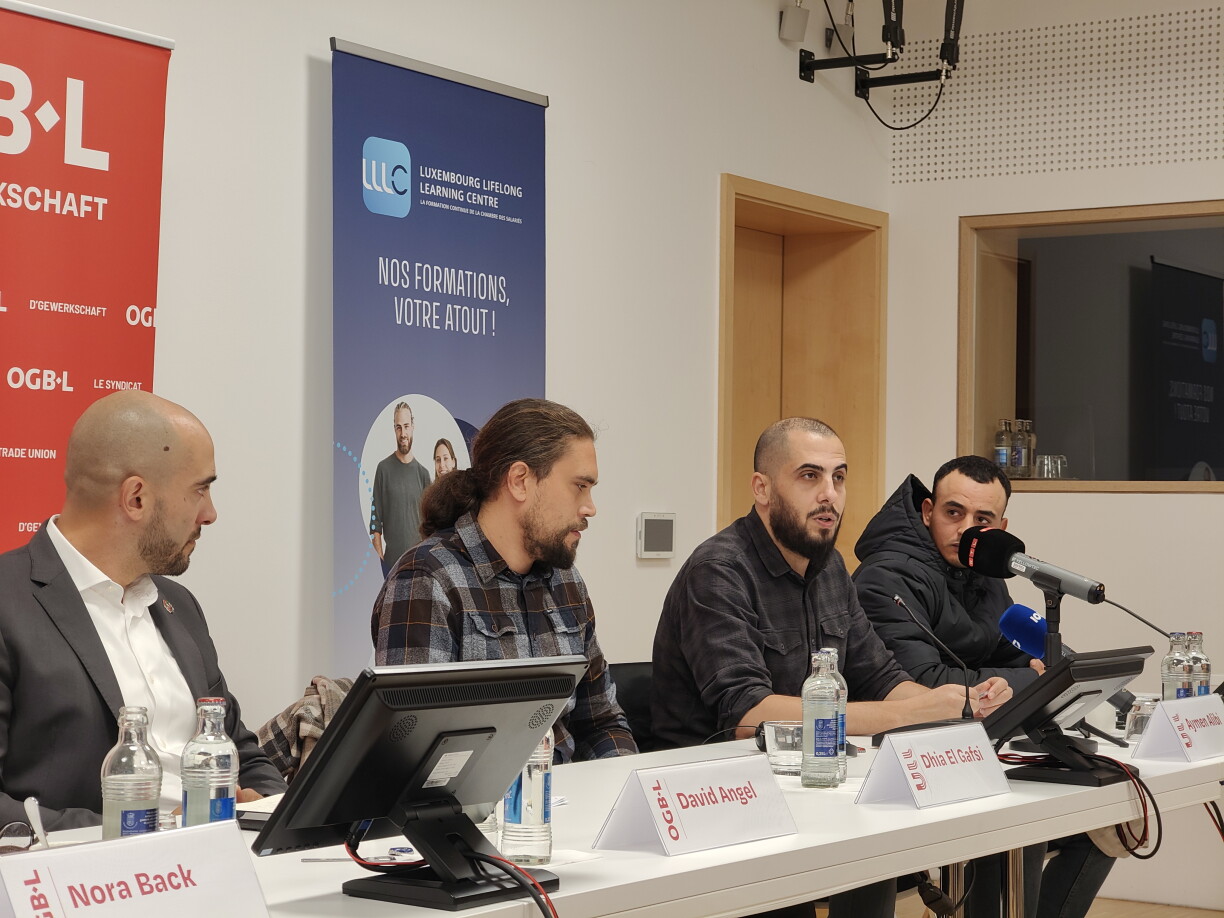
The Independent Luxembourg Trade Union Confederation (OGBL) and the Luxembourg Delivery Workers' Union (ULL) have joined forces to demand better protection of the rights of delivery riders employed by platforms in Luxembourg.
This is a crucial goal in the eyes of the two unions, who have come out strongly against the current working conditions facing delivery riders, likening the situation to "modern-day slavery".
The ULL has around 200 members, founded spontaneously back in June, when delivery riders decided to walk off the job.
Working 12, 13 or even 14 hours a day, and handing over, depending on the circumstances, more than half of their earnings to the employer: all of that points clearly to a failure to comply with labour law. Such conditions, union representatives argue, are only possible because the delivery riders are not permanent employees but are treated as independent contractors, according to David Angel, central secretary of the OGBL Health, Social Services and Education Syndicate.
He explained that the vast majority of those affected were people with a migrant background who had not been in Luxembourg for long. Because of their status and their situation, they could not take up other regular salaried employment.
As a result, they relied on this way of earning money to survive, since it was truly a matter of survival. These individuals, he added, were often recruited right outside, or even inside, refugee reception centres.
An estimated 2,000 people are affected, though precise figures are extremely difficult to come by. The sector as a whole is said to resemble the "Wild West", making it hard for the authorities to carry out proper inspections.
Three representatives of the ULL also attended the OGBL press conference. Knowing the situation on the ground better than anyone else, they shared their own experiences. Dhia El Gafsi explained why they should be considered "false self-employed" workers.
For a start, El Gafsi said, they did not handle their own invoicing, and they did not choose the routes for deliveries, since the platform picked the routes for them. Nor did they control waiting times; they had to wait until the order was ready. They faced indefinite waiting periods between orders, which was why their earnings at the end of the month were so low.
Aymen Alibi, meanwhile, drew attention to the health risks tied to these working conditions. Working long hours, too few breaks, and constant psychological pressure, Alibi said, increases the risk of traffic accidents, physical exhaustion, and mental strain.
Many delivery riders, he added, did not call in sick because they would lose their only source of income. No one, in his view, should be forced to choose between their health and their income.
At the end of the press conference, the OGBL and the ULL signed a cooperation and integration agreement. Under the agreement, the ULL becomes part of the OGBL while retaining its autonomy, so that decisions concerning the delivery riders are not taken over their heads.






