When talking about petrol stations in Luxembourg, many just hear one thing: money. And how could it be otherwise, in the land of so-called 'fuel tourism' and the largest petrol station in the world (Aire de Berchem)?
But when a heavyweight like Total announces that it would rather sell its Gasperich service station for a real estate project than continue to operate it… things may not be so simple anymore.
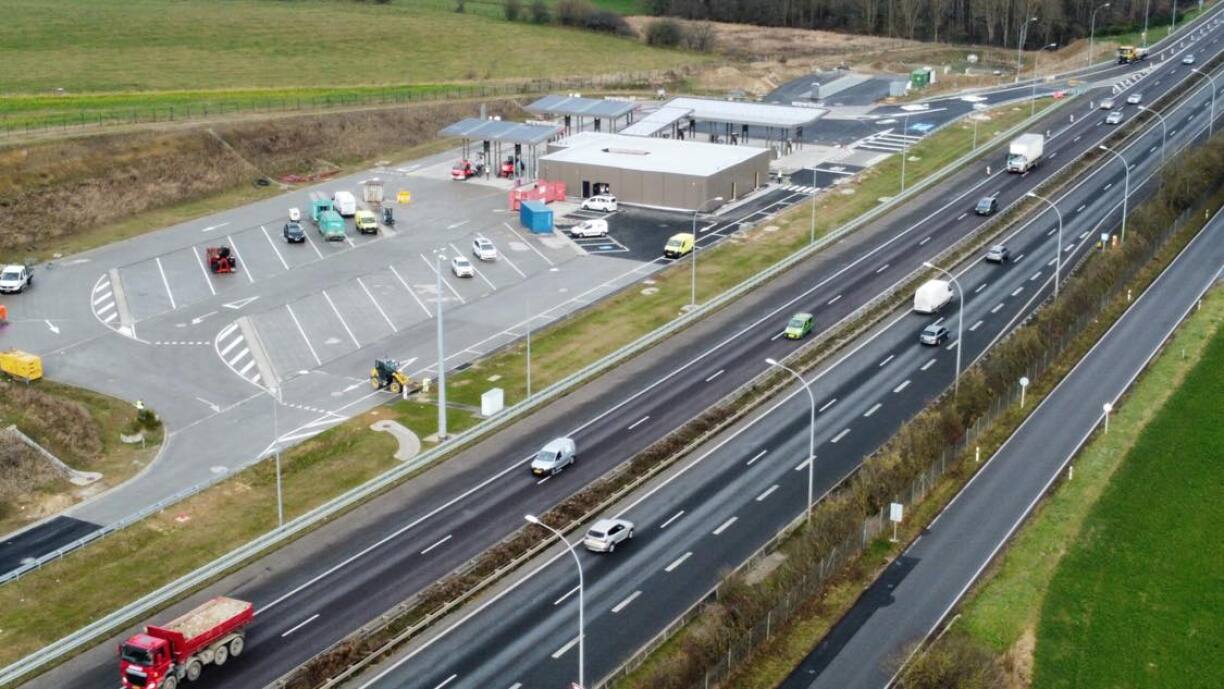
On the occasion of the inauguration of the new Pontpierre service station on the A4, our colleagues from RTL 5 Minutes discussed the sector's issues with Henri Pleimling, network manager at TotalEnergies.
Regarding the recent inauguration, Pleimling acknowledged that opening a new service station "has become rare these days". Including all brands, there are around 245 service stations in Luxembourg today but, according to Pleimling, "this number will certainly not increase any further". In fact, it seems that Luxembourg has reached a limit, as the figure has varied between 240 to 245 stations "for some years now".
The reason for this is that building land is increasingly becoming ever more "scarce and expensive", Pleimling explains. In fact, TotalEnergies has already announced the sale of its Gasperich site, including the service station. According to Pleimling, the station will be demolished, and the land sold for a "mixed real estate and residential project".
And there are no plans to replace the station with a new one in the vicinity, with Pleimling pointing out that the development plan of Luxembourg City does not allow for new stations anyway. There is more and more pressure on land that is "well situated in the urban area", the network manager at TotalEnergies explains. Pleimling thinks that this phenomenon will not necessarily be felt in the border regions, but instead near the "big cities and especially around Luxembourg City".
This does not necessarily mean that operating a service station, such as the one in Gasperich, has become less profitable than recovering its land value, but Pleimling acknowledges that this "land pressure" was not a "threat" five years ago, but is increasingly becoming one.
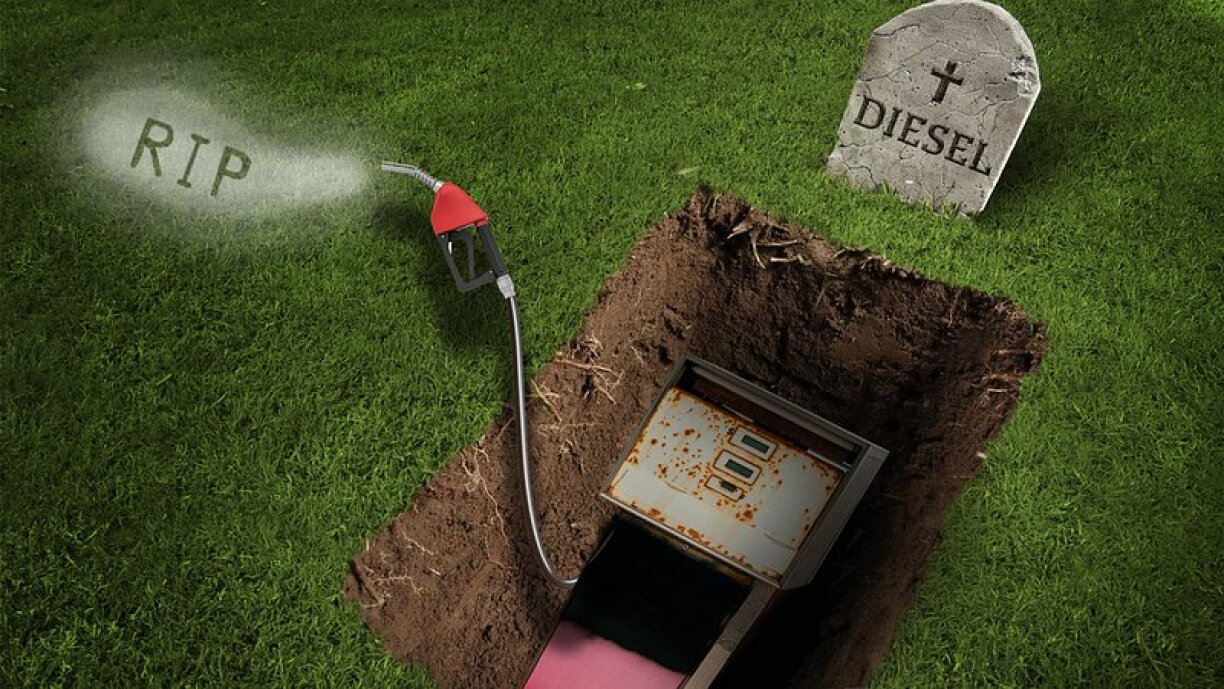
As such, Pleimling is convinced that the total number of service stations is not only likely to stagnate, but also to decrease. While this will not necessarily occur tomorrow or the day after tomorrow, Pleimling thinks that the number of stations will eventually decrease "in the next few years". With the volume of traditional fuel, i.e., petrol or diesel, decreasing, service station operators such as TotalEnergies will no longer be able to pay the rents to compete with a possible real estate offer, Pleimling explains, adding that "it is not with electric cars that we will pay these rents".
Another problem for service stations in Luxembourg is the increased use of telework. Even though the number of cross-border commuters is increasing, Pleimling points out that "they are also starting to work remotely, like everyone else". As the number of authorised teleworking days will increase, the volume of fuel sold will be affected, Pleimling states.
Read also: Is being a cross-border worker still worth it?
Compared to urban environments, Pleimling acknowledges that "motorways are quite simple". They belong to the state, which decides where the stations can be located. In urban areas, Pleimling thinks, new locations will be "increasingly rare" because of real estate development. "Fortunately,", Pleimling points out, "there is a great principle that says that if you are in a location, you can stay there. Even if you can't expand, at least your survival is assured."
Pleimling cites the 'Neischmelz' neighbourhood in Dudelange, the 'Arcelor' neighbourhood in Schifflange, and the Hesperange bypass as examples for the scarcity of locations for new service stations: all of these projects do not plan to include space for service stations.
On the other hand, Pleimling does not want to be too pessimistic, as there has been a "rather spectacular development of sales in shops", which means that most service stations are "still doing well".
While tobacco remains a popular product for the time being, Pleimling said that "sooner or later this will subside". Not because the tobacco consumer will become "more reasonable", which Pleimling considers "doubtful", but because of tax pressure or similar factors. For this reason, Pleimling explains, companies like TotalEnergies are trying to diversify and be less dependent on tobacco sales.
All petrol stations display the same price, i.e., the maximum price authorised by the state. When asked why some do not try to lower their prices to compete, Pleimling states that service stations feel that it is "not necessary to wage a price war on fuel". Instead, competition takes place through "the shop offer, through the equipment and through the services". Location and appearance are usually the deciding factors when it comes to which service stations work and which do not, Pleimling explains.
Pleimling rejects the expression "fuel tourism", describing it as "completely stupid". It may have been true thirty years ago, but today, the network manager at TotalEnergies points out, Luxembourg's working population includes a high proportion of cross-border commuters. These people do not come to Luxembourg for fuel tourism, they come here "to work and keep our economy going", Pleimling stresses, adding that "if by chance, or by misfortune depending on your point of view, the price is lower here, they fill up here".
Pleimling also points out that there are in fact no more service stations on the German or Belgian side and "just a few that survive" on the French side. As such, Pleimling concludes, motorists will continue to make their way to the Grand Duchy because "there are simply no alternatives".





